
Vandaag of morgen in huis

Kwaliteit gegarandeerd

Welkomstaanbiedingen ontgrendelen: GRATIS bezorging | Tot 80% korting | Gratis 30 dagen JoyPlus-proefperiode
Download de app
Choosing a new built-in oven might seem straightforward at first. But impressive-sounding features, unclear dimensions and bold energy claims can all lead to the wrong purchase. With a standard 60 cm kitchen, it’s not just the external dimensions that matter: the cavity size, power rating and available features all determine whether the oven will suit your kitchen and cooking style.
As Joybuy Product Recommendation Officer, I focus on the key information you can verify against the specifications. That way, you can quickly see which features matter and which marketing terms to take with a pinch of salt.
A 60 cm built-in oven usually has a front width of around 59.4 to 59.6 cm. The cavity may be narrower, so always check:
Measure the existing cavity at several points. A skewed kitchen cabinet or protruding back panel can make installation more difficult. If the power rating is around 3,000 to 3,600 watts, ask an electrician to check the electrical connection.
With an oven featuring EcoClean, hydrolysis or AquaClean, dirt is usually loosened or treated by a special coating. Bosch’s product description says that EcoClean Direct helps break down grease during baking. For light soiling, a water-based cleaning programme is also recommended.
A pyrolytic oven works differently: the programme heats residue to a high temperature, after which you wipe away the remaining ash. This can be handy if you use your oven a lot, but check first whether baking trays and telescopic rails need to be removed during pyrolysis. Always follow the manufacturer’s specific instructions.
An oven with an air fryer function, steam function, Wi-Fi and dozens of programmes sounds versatile. First, think about how you actually cook. A fan oven is worth considering if you want to bake on several trays at once. A built-in oven with an air fryer function is most useful if you regularly cook chips, vegetables or snacks on a dedicated tray. A built-in oven with a steam function is better suited to anyone who wants to cook with moisture and steam.
Also check what’s actually included. For example, an air fryer programme is less practical if there’s no suitable tray supplied.
If you have a family or like to batch-cook, a 71-litre oven is often a good starting point. But net capacity doesn’t tell you everything. Check the number of shelf positions, the size of the baking trays and whether you can cook on several levels at once.
A 45-litre oven may be enough for a small kitchen, but it won’t necessarily fit large oven dishes or let you cook several dishes at once.
3D hot air and similar fan functions circulate warm air around the oven cavity. Bosch’s product descriptions say this is designed for baking on up to three levels at once. In practice, the position of the baking tray still matters, and not every dish benefits equally from cooking on several levels.
Also check the temperature range. The models in this guide, for example, reach 275 °C or 300 °C. A higher maximum temperature is most relevant for pizza, grilling and certain baking techniques.
Don’t just compare the letter on the energy label; check the stated energy consumption per cycle for conventional and fan-assisted cooking, too. An energy-efficient oven won’t necessarily use little electricity in every situation. Preheating, cooking time, temperature and the function you choose all have an impact.
A model with an A+ or A++ energy rating may be worth considering if you use your oven often, but also think about the purchase price and whether you’ll actually use the features.
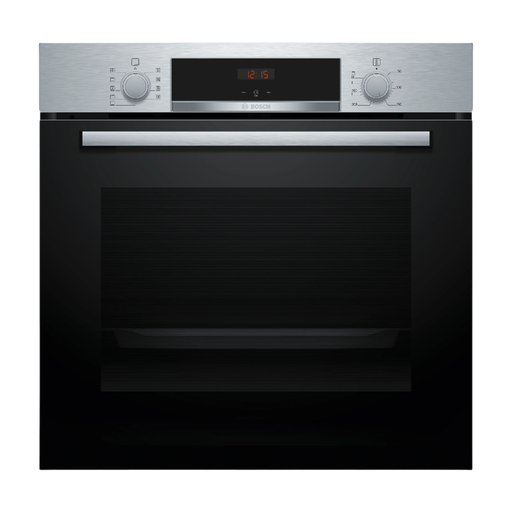
Why it suits this type of user: This electric built-in oven combines a 71-litre capacity with 3D hot air, a rotary control and a cleaning assistant for light soiling.
The product information gives specific cavity dimensions of around 56.8 × 55 cm and a maximum temperature of 275 °C. Be sure to check these measurements against your kitchen.
71 litres, 3D hot air, LED display and a water-based cleaning assistant.
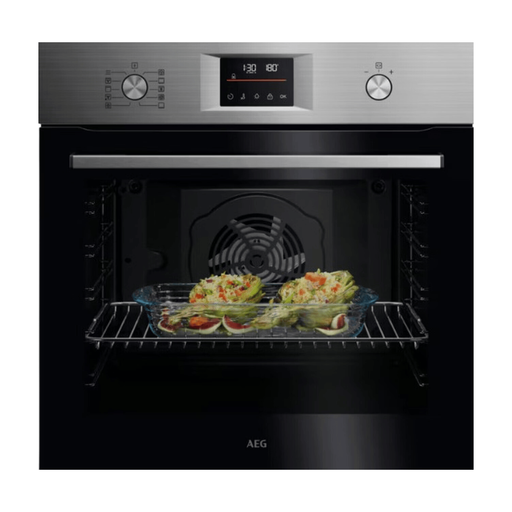
Why it suits this type of user: With a 72-litre capacity, 45 cooking programmes, pyrolytic cleaning and an A++ energy rating, this oven is a good fit for people who cook often and enjoy trying different things.
The cleaning method is clearly specified as pyrolysis. Before buying, check which accessories need to be removed during this programme.
72 litres, a maximum temperature of 300 °C, 45 programmes and an A++ rating according to the product information.
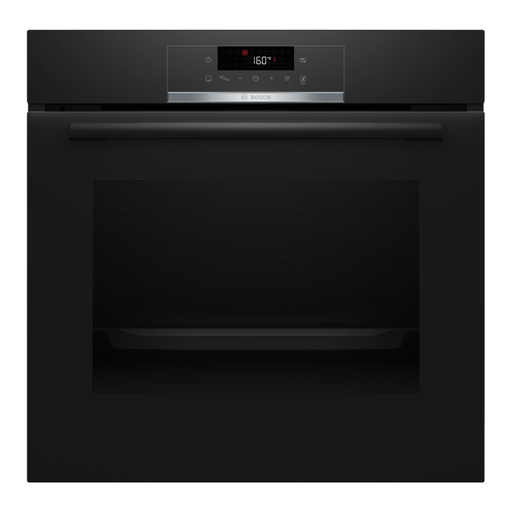
Why it suits this type of user: This model combines Air Fry, partial steam, 3D hot air and pyrolytic cleaning for people who make the most of different cooking methods.
The listed features are backed up by specific details: a 71-litre capacity, a temperature range of 30–275 °C and an Air Fry tray included, according to the product description.
Steam function, Air Fry, pyrolysis, telescopic rails and an A+ energy rating according to the stated product specifications.
Before ordering, check whether the model is suitable for installation in a tall cabinet or under a worktop. Compare the cavity dimensions with the manual and allow for ventilation space. Powerful models may need a fixed connection; have this checked in line with local installation regulations.
When using pyrolysis, only leave in accessories approved by the manufacturer. Clean up spilled sauces and grease by hand between uses. This helps reduce smoke and keeps the oven cavity tidy. A child lock is useful in households with young children, but it’s no substitute for normal supervision.
We’ve put together a complete, up-to-date list of products that meet these strict selection criteria and the applicable European safety requirements.
Many standard models for a 60 cm kitchen have a capacity of around 66 to 76 litres. For families and cooking several oven dishes at once, 71 litres is a practical size. Check the internal dimensions and the number of shelf positions, too.
It depends on the power rating and the existing circuit. Some ovens come with a suitable plug, while more powerful models need a fixed connection. If you’re unsure, ask a qualified installer to check the connection and follow the manual.
Its lifespan depends on how often you use it, how well you maintain it, how it’s installed and whether parts are available. Regular cleaning, keeping the ventilation clear and avoiding using the door for support can all help reduce wear. Keep your proof of purchase and check the statutory warranty and any additional manufacturer’s warranty.
