
Vandaag of morgen in huis

Kwaliteit gegarandeerd

Welkomstaanbiedingen ontgrendelen: GRATIS bezorging | Tot 80% korting | Gratis 30 dagen JoyPlus-proefperiode
Download de app
A built-in induction hob needs to do more than fit neatly into your worktop. The right choice depends on the cut-out, the electrical connection, how many pans you use and which features you need every day. A hob that looks versatile on paper may prove awkward in practice if your connection isn’t suitable or your pans aren’t magnetic.
This guide explains what to look for and which models suit different households and cooking styles.
A 60 cm induction hob isn’t always 60 cm wide on the outside, and it won’t necessarily fit every existing cut-out. Always check:
For example, a model might be about 59 cm wide but need a 56 cm cut-out. Always use the installation manual as your guide, and don’t cut the worktop based on the advertised size alone.
A two-zone induction hob may suit a flat or compact kitchen, while a four-zone induction hob gives you more room to use several pans at once. The trade-off is a higher power requirement.
Models rated at around 3,000 W may sometimes be used with a single-phase connection, depending on the product specifications and your existing circuit. Larger hobs rated at around 7,000 to 7,400 W are often designed for a more powerful connection, such as a two- or three-phase supply. Ask a qualified electrician to check what’s possible in your home. Don’t connect a built-in appliance yourself if the manual specifies a fixed connection.
An induction hob with a flex zone can be useful for a roasting tin or large griddle, but check the actual size of the flexible area. A flex zone doesn’t mean every pan will heat optimally wherever you place it.
A boost function is designed to provide extra power temporarily, for example to bring water to the boil faster. When you use several zones, the total power may be shared between them. So don’t just look at the highest wattage: check how the hob manages its power, too.
With induction, the pan itself is heated. You’ll need pans with a flat, magnetic base, such as cast iron or suitable stainless steel. A simple magnet test can help you check whether your existing cookware will work.
A ceramic hob heats the glass surface, which then heats the pan. It works with a wider range of pans, but the surface stays hot for longer after use. According to the product information, the Ciarra CRGDBCH302T ceramic hob with touch controls has two zones, nine power levels and a timer of up to 99 minutes. Take care when cleaning the ceramic glass, and don’t use it as a work surface.
Choose a two-zone induction hob if you usually use one or two pans, have limited worktop space or are replacing a smaller existing hob. For a family or keen home cook, a 60 cm model with four zones is often more practical. An 80 cm hob gives you more room between large pans, but will usually need a wider cut-out and a more powerful electrical connection.
Check the diameter of the zones, too. A small pan on a large zone may be less efficient, while a roasting pan may need a larger or flexible zone.
A hob with touch controls is easy to clean, but may be less responsive if the control panel is wet or greasy. Useful features include:
Check that these features are listed in the product information. A brand’s claims about ease of use or cooking results can’t guarantee the same experience in every kitchen or cooking situation.
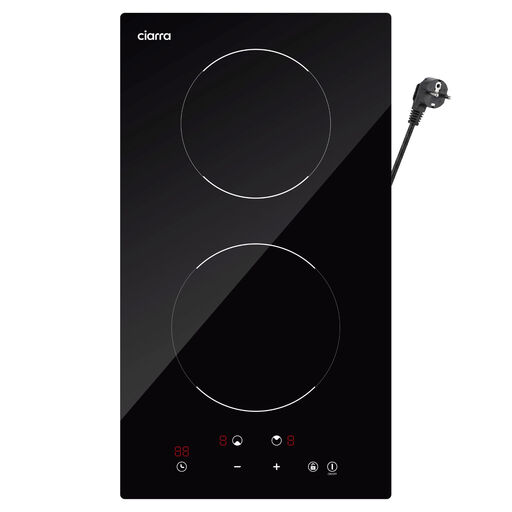
Why it suits this profile: This compact 29 cm-wide hob has two zones, nine power levels and a total rated power of 3,000 W. It’s well suited to smaller kitchens and simple everyday meals.
The product information gives the external dimensions as 290 × 520 × 62 mm, the cut-out dimensions as 270 × 490 mm and the connection as 16A. This lets you check in advance whether your kitchen is suitable.
Timer of up to 99 minutes, child lock, residual heat indicator and automatic pan detection, according to the product description.
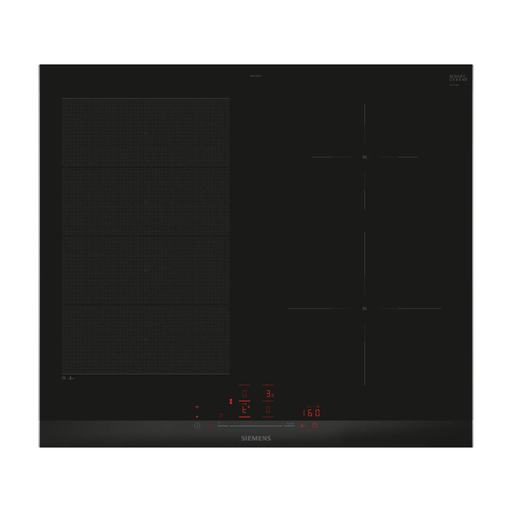
Why it suits this profile: This 60 cm model is designed for anyone who values flexibility and digital controls. According to the product information, it features a flexInduction zone, touchSlider controls and Home Connect support.
The stated flex zone can accommodate pans up to 24 cm and a griddle or roasting tray up to 40 cm. Check that your cookware fits within these dimensions.
Flexible zone, half-step settings up to level 9 and pan detection, according to the product specifications.
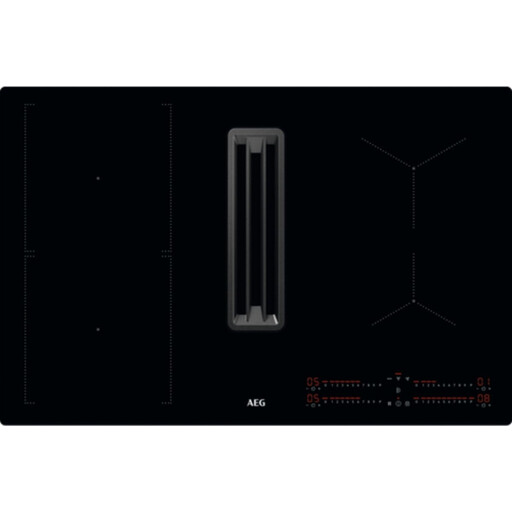
Why it suits this profile: This 80 cm-wide combination has four cooking zones, a bridge function and an integrated extractor. According to the product information, its maximum extraction rate is 630 m³/h.
The specifications list the cut-out width, four zones, timer and child lock. Bear in mind that it requires a three-phase connection, and have a qualified electrician install it.
Four zones, connectable cooking zones, touch controls and an integrated extractor with a stated noise level of 48 dB.
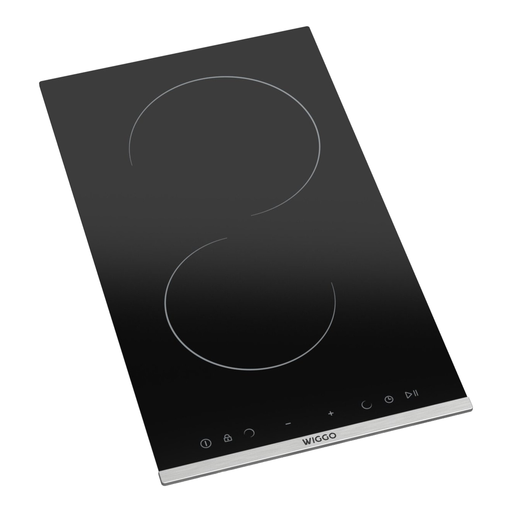
Why it suits this profile: This 30 cm-wide hob has two zones rated at 1,400 and 1,800 W. It’s a good fit for a small kitchen, studio flat or as an extra cooking zone alongside an existing hob.
The external dimensions and two-zone design are clearly specified. Before buying, check the required electrical connection and the exact cut-out dimensions.
Touch controls, a timer for each zone, boost function and child lock, according to the product description.
We’ve put together a complete, up-to-date list of products that meet these strict selection criteria and the applicable European safety requirements.
That depends on the exact cut-out dimensions. Measure the width, depth and height of the opening, then compare them with the technical drawing for the new model. For example, a 60 cm hob may need a 56 cm cut-out. Have the connection and ventilation checked before installation.
Its lifespan depends on how it’s used, installed, ventilated and maintained. Clean the glass surface with a soft cloth and a suitable cleaner, avoid abrasive products and don’t use the hob if the glass is damaged. The statutory guarantee in the EU is at least two years, though any additional guarantee varies by brand and model.
Consumption depends mainly on cooking time, power setting, pan size and the total connection power. A higher wattage doesn’t automatically mean higher day-to-day consumption; how long you use the hob is what matters. Use pans that fit the zones, turn the power down once your food is boiling, and check whether the hob shares power between multiple zones.
