
Vandaag of morgen in huis

Kwaliteit gegarandeerd

Welkomstaanbiedingen ontgrendelen: GRATIS bezorging | Tot 80% korting | Gratis 30 dagen JoyPlus-proefperiode
Download de app
A built-in induction hob is a great fit for a modern kitchen, but the differences between models are not just about appearance. A black glass surface, touch controls and a boost function mean little if the cut-out size is wrong or the electrical connection is inadequate.
For households, home cooks and kitchen renovators, three pitfalls are particularly important:
A 60 cm induction hob is a popular size for standard kitchens. Always check three measurements:
For example, the Ciarra 3000W 2-zone induction hob has product dimensions of 290 × 520 × 62 mm and requires a cut-out of 270 × 490 mm. This is not the same as a 60 cm model. The Bosch PVQ61CHB1E measures approximately 592 × 522 × 51 mm and, according to the product specifications, requires a cut-out of around 560 × 490–500 mm.
Measure the existing opening first. Do not rely solely on the commercial description “30 cm” or “60 cm”.
A 2-zone induction hob is practical for a small kitchen, studio apartment, utility room or household that usually uses one or two pans at a time. The Ciarra CRGDBIH2 has two zones, nine power levels, a timer of up to 99 minutes and a total power output of 3,000 watts.
A 4-zone induction hob provides more room for several pans. It usually comes with a higher connected load. The Samsung NZ64B5046FK/U1 has four zones and a stated total power output of 7,400 watts. The Bosch PVQ61CHB1E also has four zones and a connected load of 7.4 kW.
In the Netherlands, pay attention to your existing consumer unit and electrical connection. A high-powered model may require a suitable cooking circuit or another fixed connection. Have the installation and connection checked by a qualified electrician. Do not use a trailing socket, extension lead or unsuitable adapter for a fixed built-in appliance.
An induction hob with touch controls is easy to keep clean, but the control panel must remain dry and clear of pans or cloths. Consider whether you prefer a central slider, separate buttons or a rotary control.
An induction hob with a timer can switch a zone off after the set time. Check whether the timer operates separately for each zone; this is more useful when preparing different dishes at the same time.
An induction hob with a booster function temporarily increases the power of a zone. According to Siemens’ product description, PowerBoost can increase the power by up to 50% on certain models. This is a brand claim from the product information and does not guarantee the same cooking time in every kitchen. The result also depends on the pan, its contents and the electrical load.
An induction hob with a flexible zone can combine several cooking areas for use with a large pan or roasting tray. According to the product description, the Samsung NZ64B5046FK/U1 offers a Flex Zone and automatic pan detection. However, check the maximum pan size and how the zones work together.
The terms are often used interchangeably. Ceramic usually refers to the material used for the cooking surface, such as glass ceramic. Induction refers to the heating technology. An induction hob therefore often has a glass-ceramic surface.
For induction cooking, you need pans with a magnetic base. Test this with a magnet: if it sticks to the base, the pan is probably suitable. Aluminium, copper and some stainless-steel pans will not work without a magnetic base.
Use a soft cloth and a suitable glass-ceramic cleaner. Only clean the surface once it has cooled sufficiently. Do not use an abrasive sponge, and remove sugar or grease residues promptly. If the glass is cracked, switch off the appliance and do not use it again.
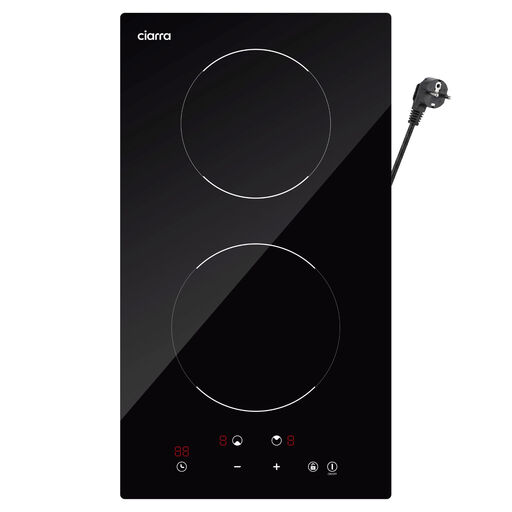
Why it suits this profile: Two cooking zones and a total power output of 3000 W are well suited to a compact kitchen and everyday cooking with one or two pans.
The product information states the exact cut-out size of 270 × 490 mm, allowing you to compare the compact installation dimensions in advance.
9 power levels, touch controls, a timer of up to 99 minutes, child lock and automatic pan detection.
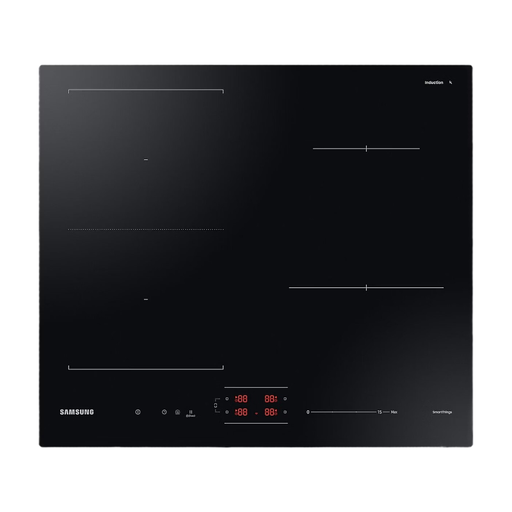
Why it suits this profile: This 59 cm model combines four cooking zones with a flexible zone, timer, touch controls and, according to Samsung, SmartThings connectivity.
The key dimensions, 7400 W power output and required features are listed in the product specifications. Check the connection before buying.
4 zones, automatic pan detection, residual heat indicator, child lock and a flexible zone for different pan sizes.
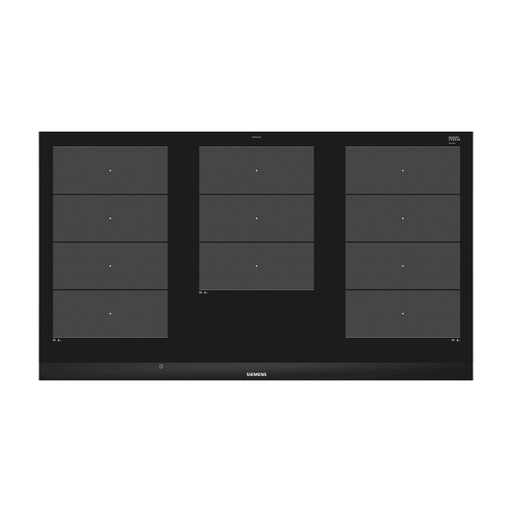
Why it suits this profile: The wide 91.2 cm hob with five zones is designed for large kitchens and cooking with several or larger pans.
The product specifications state a cut-out size of 88 cm and a connected load of 11.1 kW. This makes it clear in advance that it is not a standard 60 cm replacement.
Flex induction, separate timers, PowerBoost, child lock and five cooking zones according to the product information.
We have compiled a complete, up-to-date list of products that fully meet these strict selection criteria and the applicable European safety requirements.
Before ordering, check that the hob is suitable for your electrical connection. Models with a power output of around 3,000 watts may have different requirements from hobs rated at 7,400 watts or more. A built-in model must also be properly ventilated; do not block the ventilation openings and follow the instructions for the minimum distances from an oven or other heat source.
Use flat, magnetic pans with a diameter suited to the zone. Do not place an empty pan on a switched-on zone, and never leave cooking with oil or fat unattended. A child lock, automatic switch-off and residual heat indicator are useful safety features, but they do not replace careful use.
No. The external dimensions may be similar, while the required cut-out size differs. Measure the cut-out in both width and depth and compare it with the model’s official installation dimensions.
Yes, the base of the pan must be magnetic. A magnet test provides a quick indication. Also check that the diameter and flatness of the base match the cooking zones.
This depends on the power output, cooking time, pan size and your electricity tariff. A higher connected load does not mean that the appliance continuously uses its maximum power. Timer functions, suitable pans and cooking at the required setting can help limit unnecessary consumption.
