
Vandaag of morgen in huis

Kwaliteit gegarandeerd

Welkomstaanbiedingen ontgrendelen: GRATIS bezorging | Tot 80% korting | Gratis 30 dagen JoyPlus-proefperiode
Download de app
Choosing a new built-in hob seems simple—until you get tangled in a web of technical jargon, marketing promises, and hidden costs. Many people fall into the same traps: they choose a model that isn't compatible with their home's electrical system or overpay for features that go unused in practice. As a Joybuy Product Recommendation Officer, I'm here to help you avoid these missteps and make a choice that perfectly suits your kitchen, budget, and cooking habits.
Before we look at specific products, let's first dismantle two common pitfalls:
To avoid making the wrong choice, there are three technical aspects you must always check. These determine whether a hob is suitable for your home and your needs at all.
This is the most critical technical point. The connection value, expressed in Watts (W), determines what kind of power connection you need.
The choice between an induction hob and a ceramic hob has a major impact on your cooking experience and safety.
A 60 cm built-in hob is a standard width, but this refers to the dimensions of the hob itself, not the opening in your countertop. The 'cutout dimension' (the size of the recess) is the measurement that truly matters. This is always listed in the product specifications. Measure the cutout in your countertop accurately and compare it with the hob's required dimensions to ensure a perfect fit.
Below is a selection of hobs tailored to different user profiles, keeping the key points mentioned above in mind.

Why This Fits Their Persona: Ideal for smaller kitchens in apartments or studios where space is limited, but cooking performance is key. This compact domino hob offers the speed and efficiency of induction without taking up much room.
With a power rating of 3500W and an included VDE plug, this is a true 1-phase 'plug & play' model. You avoid the "Plug & Play" myth and unexpected electrician costs.
Features a boost function for extra-fast heating and a hob with a timer. All the benefits of a modern induction hob in a compact size.

Why This Fits Their Persona: A family needs capacity and safety. This 4-burner hob provides enough space to prepare a full meal. The induction technology and child lock feature make it a safe choice for a household with children.
The specifications (7200W, no plug included) make it immediately clear that a 2-phase connection is required. This prevents surprises and ensures you are prepared for the correct installation.
Four powerful zones with a boost function for maximum efficiency. The smooth surface is easy to wipe clean, a major plus in a busy family life.
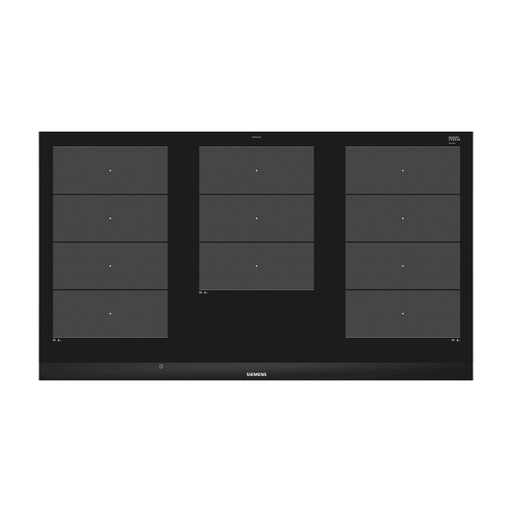
Why This Fits Their Persona: For those who love to experiment with large pans, griddles, or roasting trays. This Siemens hob, with its flexInduction zones, offers the freedom to adapt the cooking surface to the cookware, rather than the other way around.
This isn't a superfluous 'smart' feature. The induction with flex zones is a tangible, practical addition that genuinely simplifies cooking with non-standard pans, and the powerMove Plus function provides intuitive temperature control.
Exceptional flexibility thanks to linkable cooking zones and precise control with the lightSlider. The high power output of 11.1 kW (3-phase) guarantees fast and even heating.
We have compiled a complete, up-to-date list of products that fully meet these strict selection criteria and safety standards.
No, this is a common misconception. Only hobs with a connection value up to 3,700 watts can be plugged into a standard 1-phase outlet. Most 4-burner hobs (both induction and ceramic) have a higher power rating and require a 2- or 3-phase connection, which must be installed by a licensed electrician.
An induction hob is significantly more energy-efficient. According to research from independent consumer organisations, the efficiency of induction can be as high as 90% because energy is transferred directly to the pan. With a ceramic hob, a lot of heat is lost to the surroundings and in heating the glass plate itself, resulting in an efficiency of around 60-70%. You will notice this difference on your energy bill.
The average lifespan of a built-in hob depends on its quality and usage but is typically between 10 and 15 years. Proper maintenance, such as immediately cleaning up spills and avoiding scratches by not sliding pans across the surface, can significantly extend its life.
