
Vandaag of morgen in huis

Kwaliteit gegarandeerd

Welkomstaanbiedingen ontgrendelen: GRATIS bezorging | Tot 80% korting | Gratis 30 dagen JoyPlus-proefperiode
Download de app
Choosing a new built-in fridge-freezer often feels like a major decision, especially when you're planning a fridge for a new kitchen. The appliance must fit seamlessly, operate quietly, and keep your groceries optimally fresh. Unfortunately, a few common pitfalls can lead to you ending up with a model that doesn't quite meet your needs. As a Product Recommendation Officer at Joybuy, I filter the specifications and marketing claims for you, so you can make an informed choice. Let's look at the three most significant missteps.
Before you even look at models, it's crucial to measure the dimensions of your kitchen cabinet (the niche) exactly. You need three measurements: the niche height, width, and depth. A common size is the 178 cm niche height, but always measure this yourself.
Next, you need to determine the mounting system. There are two types:
Check which system your current kitchen has or which system your kitchen planner specifies.
A fridge runs 24/7, so its energy consumption is a key factor. Since 2021, energy labels have run from A (very efficient) to G. An energy-efficient fridge-freezer with a good label can lead to significant savings on your annual energy bill.
The noise level, expressed in decibels (dB), is just as important, especially in an open-plan living space.
Based on objective specifications, we have selected a number of models that suit different needs and successfully avoid the common pitfalls.
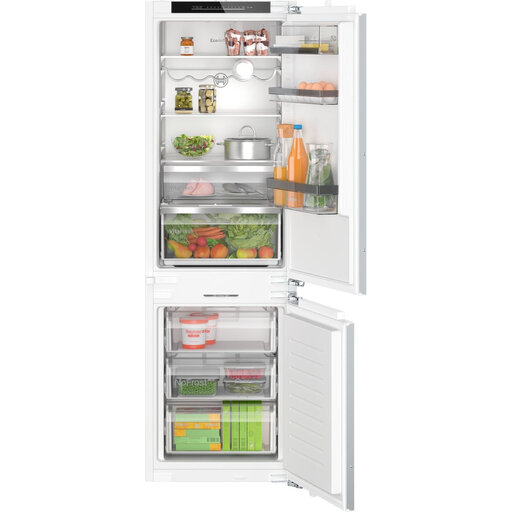
Why This Fits Their Persona: Ideal for those seeking a reliable Bosch fridge-freezer for a new kitchen. This model combines modern features with a standard niche size, which makes installation predictable.
With a 178 cm niche height, it fits into one of the most common niches. The true No Frost technology completely prevents ice build-up, meaning you'll never have to defrost again.
Quiet at 35 dB and equipped with VitaFresh drawers that, according to Bosch, keep fruits and vegetables fresh for longer through optimal humidity.
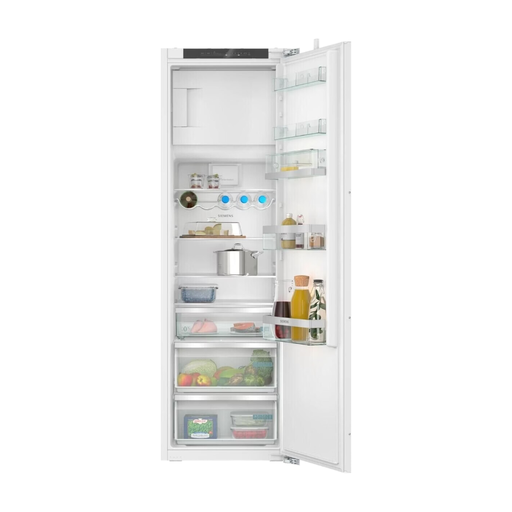
Why This Fits Their Persona: Perfect for those who live in an open-plan kitchen and want to avoid any disruptive noise. This Siemens built-in fridge is designed for maximum silence and efficiency.
Directly tackles the noise pitfall with an extremely low noise level of just 34 dB. This is one of the quietest models you can find, allowing it to blend inaudibly into your living space.
Energy Class D and a hyperFresh drawer that, according to Siemens, extends the freshness of fruits and vegetables. The SuperCooling function cools down new groceries quickly.
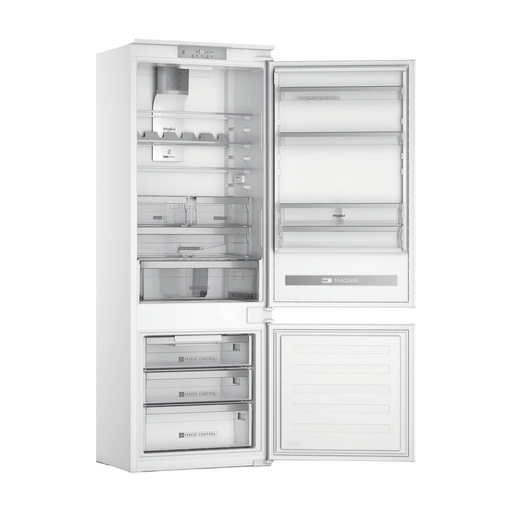
Why This Fits Their Persona: For households that need maximum storage space. With 400 litres of total capacity, there's room for a whole family's weekly groceries without cramming.
This model has a No Frost freezer section, which sidesteps the "No Frost myth." Additionally, at 35 dB, it's remarkably quiet for its size, so you don't sacrifice comfort for capacity.
Massive capacity of 400 litres (299L fridge, 101L freezer). Whirlpool's 6th Sense FreshControl technology automatically adjusts temperature and humidity for longer freshness.
We have compiled a complete, up-to-date list of products that fully meet these strict selection criteria and UK regulations.
With a sliding door system, both the fridge door and the cabinet door have their own hinges. They are connected by a slider. With a door-on-door system, the cabinet door is mounted directly onto the fridge door, and they share the same hinges. The latter system is generally sturdier and provides a cleaner finish.
This depends on the energy label and the specific consumption in kilowatt-hours (kWh) per year. A model with Energy Class D, like the Siemens KI82LADD0 (142 kWh/year), would cost approximately ?48.28 per year at an average electricity price of ?0.34 per kWh. A model with Class E, like the Whirlpool SP40812EU2 (248 kWh/year), would cost around ?84.32 per year. It pays to compare the annual kWh consumption.
The average lifespan of a built-in fridge-freezer is typically between 10 and 15 years. This depends on the brand, the quality of the components (like the compressor), and how well the appliance is maintained. Regular cleaning and ensuring adequate ventilation can help extend its lifespan.
