
Bakers who want to make several tarts at once
You want to serve the tarts at around the same time, so you’re comparing the usable tray space and the multi-level baking options described by Bosch Netherlands or Electrolux Netherlands.


If you bake lots of tomato tarts at once and have a suitable housing unit, a built-in oven with an explicitly stated multi-level baking function is a sensible option. If you don’t have a housing unit, a freestanding oven may suit you, but check the usable baking tray area and allow for extra batches. A manufacturer’s claim about multi-level baking doesn’t guarantee the same results on every tray.
You want to serve the tarts at around the same time, so you’re comparing the usable tray space and the multi-level baking options described by Bosch Netherlands or Electrolux Netherlands.
You’re looking for a freestanding oven and want to check that the baking tray and your tart tins will fit, and that you can position the oven safely in accordance with the manual.
You want to choose the oven setting and preparation to suit your recipe, so you know what the oven itself can do and what steps you need to take beforehand.
Choose this option: if you have a suitable housing unit and want to use several trays at once. Bosch Netherlands describes the HBA534BS3’s 3D Hotair function as suitable for baking on up to three levels; Electrolux Netherlands lists baking on three levels for the EOE6P46Z.
Bear in mind: the housing dimensions and how many trays are included. A multi-level function claim doesn’t prove that every tray will produce the same results.
Choose this option: if you don’t want or can’t use a built-in oven, and the baking tray will fit inside. Inventum and Tomado describe freestanding models with a 45-litre capacity.
Bear in mind: the positioning instructions and the possibility of needing extra batches. Three shelf positions alone don’t mean that three full trays will bake evenly.
| What to consider | What should you check? | Who should pay extra attention? |
|---|---|---|
| Tarts per batch | Measure your tart tins and the usable baking tray area. Check how many trays are included and whether the model is described as suitable for baking on multiple levels. | If I want to serve lots of tarts to the family at once, I focus on the space available on the trays. Around 36% of consumers give capacity per batch their highest priority. |
| Pastry base and oven setting | Check that the oven supports the setting and temperature in your recipe, and that the baking tray is suitable. | If I care most about the base, I want to be able to match the oven setting to my recipe. Around 29% of consumers give the pastry result their highest priority. |
| Positioning in the kitchen | Compare the housing dimensions for the exact built-in model with your kitchen, or consult the positioning and connection instructions for a freestanding oven. | If there’s no suitable housing unit, the space available will determine which oven is practical. Around 21% of consumers give positioning without a housing unit their highest priority. |
| Energy use and cleaning | Compare energy use only on a like-for-like basis, and consider the oven size in relation to how you’ll use it. Check the cleaning function on the exact model. | If I’m also considering running costs and cleaning, I want to know which specifications and features suit the way I’ll use the oven. Around 14% of consumers give these factors their highest priority. |
An oven’s capacity doesn’t tell you how many tart tins will fit on the usable baking tray. Measure your tins and compare them with the tray dimensions and the included accessories.
Limited tray space could mean extra batches; you may also need a suitable additional baking tray.
A manufacturer may list multiple baking levels or shelf positions without including three trays or confirming that this recipe will produce the same results on every tray.
Check the multi-level function, the number of trays included and the instructions for baking several trays at once separately.
The European Commission excludes small and portable ovens from the specific EU energy-labelling rules for household ovens. So, the absence of a label doesn’t by itself tell you how its energy use compares with another model.
Check whether the labelling rules apply to the model, and only compare energy-use figures if they were measured on the same basis.
A built-in option for anyone specifically looking for a multi-level function.
A built-in option with multi-level baking features on the EOE6P46Z model.
A freestanding alternative if you’re not looking for a built-in oven.
A freestanding option with different oven settings for anyone who doesn’t want a built-in oven.
A built-in alternative with a multi-level function described by Siemens for the HB457G0B3F model.
This selection features built-in ovens. Before buying, check the housing dimensions for the exact model and make sure its stated oven functions suit the number of tarts you want to bake.
 No image available
Worth considering if you’re looking for a built-in fan oven for a multi-level baking plan.
71 litres; 3D Hotair.
As a built-in model, this oven requires a suitable housing unit.
 No image available
Worth considering if you’re looking for a built-in fan oven for a multi-level baking plan.
71 litres; 3D Hotair.
As a built-in model, this oven requires a suitable housing unit.
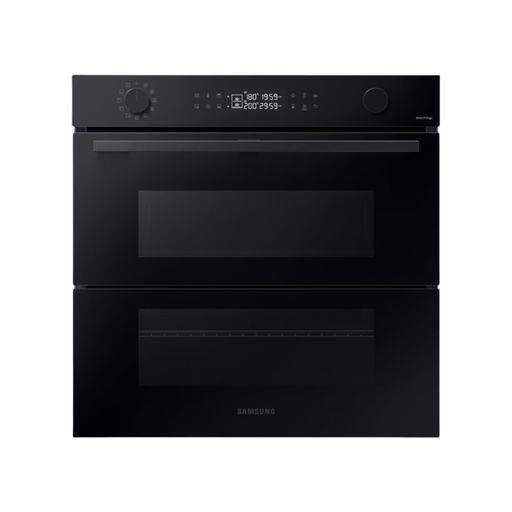 No image available
Worth considering if you’re looking for a larger built-in oven with features for different cooking zones.
76 litres; pyrolytic cleaning; Dual Cook technology.
As a built-in model, this oven requires a suitable housing unit.
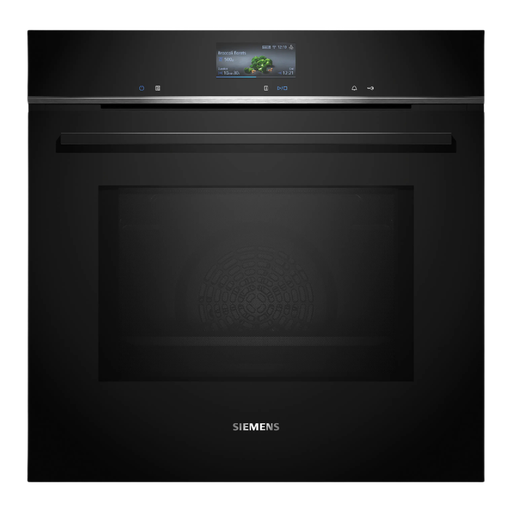 No image available
Worth considering if you’re looking for a built-in oven with 4D HotAir and additional control features.
4D HotAir; pyrolytic cleaning; Home Connect.
As a built-in model, this oven requires a suitable housing unit.
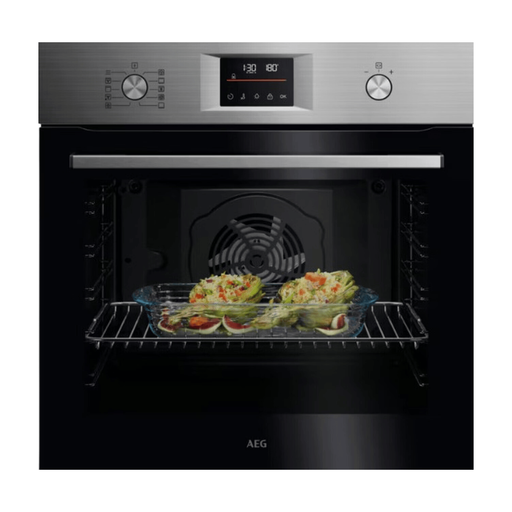 No image available
Worth considering if you’re looking for a built-in oven with a fan function and pyrolytic cleaning.
72 litres; 45 cooking programmes; pyrolytic cleaning; A++ energy rating.
As a built-in model, this oven requires a suitable housing unit.
No. Follow the setting and temperature in your recipe. Diana’s Beautiful Vegetable Garden recommends preheating the oven to 200 °C for small tomato tarts and baking the puff pastry rounds separately first. These steps are specific to that recipe and aren’t automatically needed for every tomato tart.
For a built-in oven, compare the housing dimensions with the installation dimensions for the exact model. For a freestanding oven, read its own manual before positioning it, and follow the safety and usage instructions. Don’t use dimensions or instructions from another model.
Only compare energy use when the figures have been established on the same basis. The European Commission excludes small and portable ovens from the specific energy-labelling rules for household ovens; the absence of a label doesn’t in itself prove that a model uses more or less energy.
No. According to ACM ConsuWijzer, you have a statutory guarantee in addition to any retailer’s or manufacturer’s guarantee. If a product breaks sooner than you could reasonably expect under normal use, the seller must offer an appropriate solution. There isn’t one fixed statutory guarantee period for every oven.
The Dutch government states that electronic devices in the EU must carry a CE marking. Check the product information and marking on the specific appliance you’re considering; a model name in a product listing doesn’t confirm that it has this marking.