
Vandaag of morgen in huis

Kwaliteit gegarandeerd

Welkomstaanbiedingen ontgrendelen: GRATIS bezorging | Tot 80% korting | Gratis 30 dagen JoyPlus-proefperiode
Download de app
Building toys for children can often seem straightforward to compare: more pieces, stronger magnets or higher speed all sound appealing. Yet the packaging doesn’t always tell you enough about the play experience. A set can be too complicated, contain small parts, or end up unused in the cupboard after a short time.
For parents and gift buyers, these three pitfalls are particularly important:
Treating age as just a guideline
A product labelled from 3 years isn’t automatically suitable for every child of that age. Also pay attention to small parts, magnets, motor skills and the need for supervision.
Confusing the number of pieces with play value
A big box with lots of bricks isn’t always more engaging. For younger children, a smaller set with clear examples can actually be more accessible. For older hobby builders, material quality, fit and building instructions are often more important than the piece count.
Judging technical claims without context
Terms like “strong magnets”, “off-road” and “educational” sound convincing, but check what’s actually included. Think about battery type, charging cable, dimensions, compatibility and warnings.
Always check the stated age range and the safety warnings. Even with toys from 3 years, small parts can still pose a choking hazard. Magnetic building blocks require extra care: loose or swallowed magnets can cause serious harm. Stop using the product immediately if a magnet becomes loose or the casing is damaged.
For sets with small building bricks, such as some LEGO building sets and construction toys, a minimum age of 6 or 7 is common. This isn’t just about safety, but also about the number of steps and the fine motor skills required.
ABS plastic is widely used in building toys. Don’t just look at the material name, but also at practical details:
With magnetic building tiles and magnetic building blocks, the dimensions matter. A set of 2.5 cm won’t necessarily combine with a 3.75 cm system. So check the size before buying any expansion packs.
An RC car for children can be a lovely gift, but watch out for running costs. Check whether the battery is included, how the remote control is powered, and whether a USB cable is supplied. With some models, AA batteries for the transmitter are not included.
What’s more, a higher speed isn’t always practical for young children. For indoor use, manoeuvrability, size and surface type are often more important than top speed. For outdoor use, grip, suspension, splash protection and spare parts all come into play.
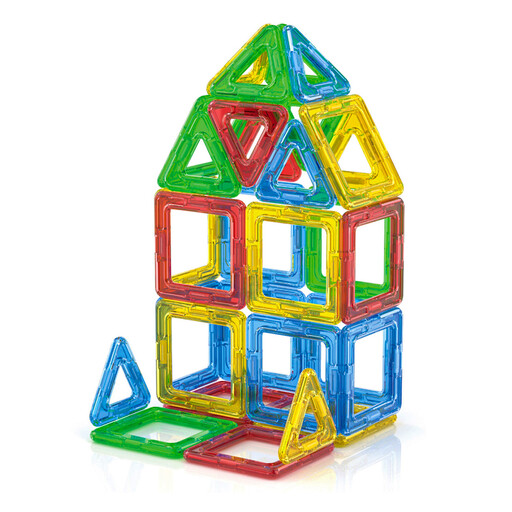
Why this fits the profile: A compact starter set for children from 3 years who are building with magnetic shapes for the first time.
The set states 36 pieces, a minimum age of 3 years and warnings for small parts and magnets. This means the key points to watch are visible upfront.
36 ABS pieces, no assembly required and a gift box. The manufacturer mentions rounded edges and enclosed magnets.
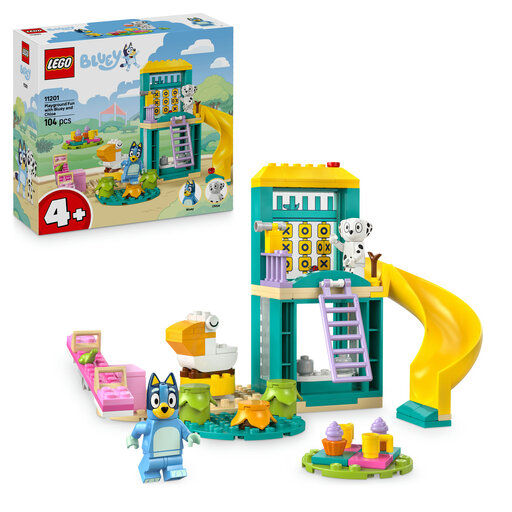
Why this fits the profile: Ideal for Bluey fans from 4 years who want to combine building with recognisable imaginative play.
The box contains 104 pieces, a large baseplate and simple, illustrated instructions. This makes the building steps clearer than with an unstructured mix of parts.
Includes Bluey and Chloe figures, a playground with swing and slide, and a model measuring approximately 14 × 23 × 17 cm.

Why this fits the profile: An option for builders from 6 years who prefer to make a specific vehicle model rather than free-build.
The product information clearly states 511 pieces, ABS material and a recommended age from 6 years. This makes the difficulty level easier to judge.
511 ABS pieces, rounded edges according to the product description, and a build model for parent-child activities.
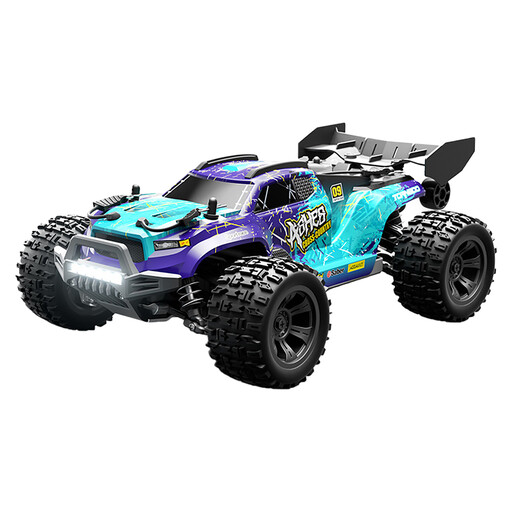
Why this fits the profile: Aimed at teenagers and adults from 14 years who want to drive outdoors and are looking for more settings than simple toys offer.
The product information lists a 7.4V battery, USB cable, 2.4GHz transmitter and a minimum age of 14 years. So the higher complexity isn’t presented as a toy for young children.
Four-wheel drive according to the product description, an aluminium chassis, adjustable steering and a supplied lithium-ion battery. The claim about speeds of up to 40 km/h comes from the product listing; check the current specifications before purchase.
We’ve put together a full, up-to-date list of products that fully meet these strict selection criteria and comply with current European safety regulations.
Choose a set with a clear age label, limited complexity and sturdy, well-sealed parts. Magnetic tiles can be suitable from 3 years according to the product listing, but supervision is still wise because of small parts and magnets. Always check the warnings on the product page.
The lifespan depends on the material, connections, storage and intensity of play. ABS parts can last a long time when stored dry and clean. With magnetic building blocks, it’s especially important that the magnets don’t come loose. Keep sets complete in a box or storage bag and avoid using harsh cleaning products.
Besides the purchase price, you need to factor in AA batteries for the remote control, charging time and possible battery replacement. A model with a supplied rechargeable battery can be more practical for regular use. Also check whether spare parts and a suitable USB charger are available.
