
Vandaag of morgen in huis

Kwaliteit gegarandeerd

Welkomstaanbiedingen ontgrendelen: GRATIS bezorging | Tot 80% korting | Gratis 30 dagen JoyPlus-proefperiode
Download de app
At first glance, building sets seem easy to compare: check the number of pieces, choose an appealing theme and place your order. But this is where most disappointing purchases happen. A box with lots of bricks isn’t automatically suitable for a young child, and a low price tells you little about how long it will keep them entertained or whether you can expand the set.
Look out for these three common pitfalls:
For children aged 3 and over, magnetic building blocks and simple constructions are often easier to manage than complex models with small bricks. With magnetic sets, it’s important to take warnings about loose or swallowed magnets seriously. After play, check that the tiles and magnets are intact, and store the set out of reach of younger children.
Traditional building bricks often carry an age recommendation of 4 or 6 and over. A model designed for hobby builders may require more patience and dexterity. So don’t just look at the age label; consider the type of activity too: free building, following an example or assembling a detailed display model.
The number of pieces is a verifiable specification, but it doesn’t tell you everything. A LEGO Classic set with 484 pieces in different colours is mainly designed for free building. An architecture set such as LEGO Architecture 21063 Neuschwanstein Castle, on the other hand, contains 3,455 pieces and is designed for a long, detailed project.
Ask yourself what happens after the build is complete:
A sturdy storage box is handy for children. For adults, a large model can be a relaxing project and a decorative feature.
Many building bricks are made from ABS plastic. This tells you something about the basic material, but check the product information, rounded edges and any safety standards too. The product description for the Qiyuan magnetic set mentions ABS plastic, sealed magnets and references to EN71, ASTM F963 and CPC. These are product claims, so check the latest information on the product page before you buy.
Also check compatibility. According to the product information, LEGO Classic bricks can be combined with other LEGO creative play sets. Magnetic tiles measuring 2.5 cm won’t automatically fit with magnetic tiles of a different size or with a different magnet layout.
From magnetic building blocks and STEM toys to LEGO Botanicals and adult models, the right choice depends mainly on age, available time and the result you’re looking for.
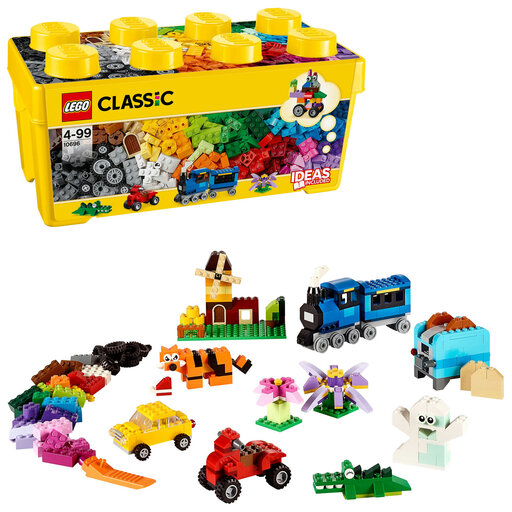
Why it suits this profile: The set includes 484 pieces in 35 colours, plus wheels, windows, eyes and a green baseplate. It’s a good choice for children aged 4 and over who want to try out different ideas.
You’re not buying a complicated display model with little room for play. The box is designed for free building and includes a storage box, helping to keep pieces from getting scattered around the room.
484 pieces; 35 colours; storage box; compatible with LEGO creative play sets, according to the product information.
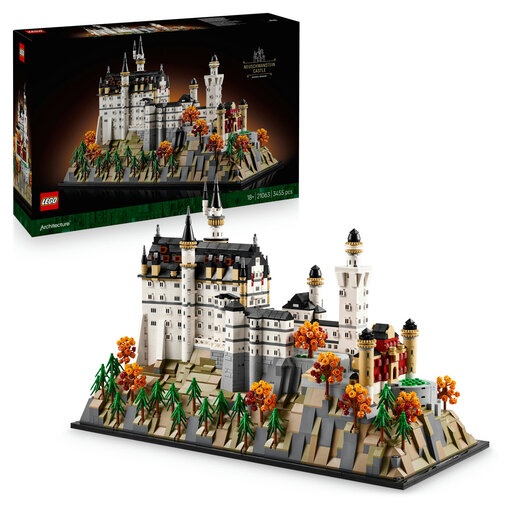
Why it suits this profile: This model for adults combines a recognisable European landmark with an ambitious building project. Once complete, it can be displayed at home or in the office.
The number of pieces and the dimensions make it clear from the start that this isn’t a quick children’s play project. That makes it easier to plan your time, workspace and display space.
3,455 pieces; dimensions of approximately 37.8 × 55.5 × 13.2 cm; LEGO Builder app with 3D views and progress tracking.
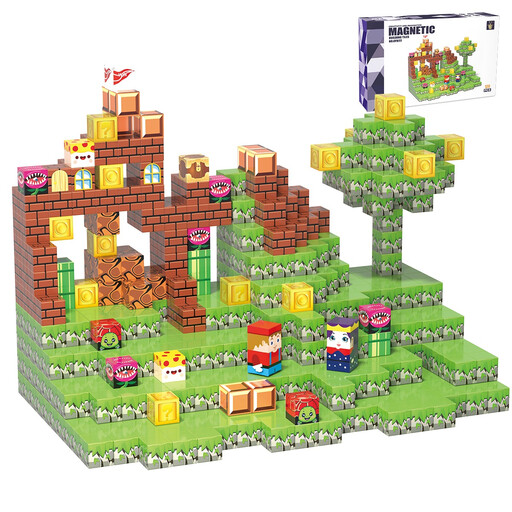
Why it suits this profile: The set contains 120 magnetic tiles measuring 2.5 cm, with a forest and nature theme. The compact storage container also makes it handy for travelling or quiet, supervised play.
The size, age recommendation of 3 and over, and warning about small magnets are clearly stated. Still, check before each use that no magnets have come loose.
120 tiles; sealed magnets, according to the product description; storage container; project booklet; no batteries required.
We’ve put together a complete, up-to-date list of products that meet these strict selection criteria and the applicable European safety requirements.
For children, sets with a clear age recommendation and an easy-to-follow building task make practical gifts. Magnetic sets with 150 pieces, a nature-inspired design or an expansion set with spiral pieces may be worth considering if free building is the main attraction. Always check the current product page, as specifications can vary between versions.
For hobby builders or architecture fans, the WANGE Saint Michael's Mount with 1,392 pieces and the CAYI P47 Fighter Jet with 511 pieces are two options to consider. Both product descriptions recommend use from age 6 and warn about small parts. They’re therefore better suited to older children, teenagers or adults than to toddlers.
If you’d prefer to build something decorative, take a look at LEGO Botanicals. The Water Lilies set contains 259 pieces and two water lilies with transparent vases. The Cosmos Flowers set has 171 pieces and can be arranged as a bouquet. The Rocking Plants set contains 253 pieces and two plant pots with rounded, movable bases. According to the product information, these sets are suitable for ages 9 and over and can be displayed on a desk or shelf.
That depends on the type of set. Only choose a product with a stated minimum age of 3. Magnetic building blocks and small parts need supervision. Keep parts away from children under 3 and stop using the set if a magnet or piece comes loose.
How long a set lasts depends on the materials, connections, storage and how often it’s taken apart. A free-building set can stay interesting for longer because children can keep creating new models. An architecture model is mainly valuable as a long-term building project and a display piece. Keep all the pieces dry and sorted to reduce the risk of losing them.
Not by default. Magnetic tiles use their own size and magnet layout, while LEGO bricks connect using studs. So always check the stated compatibility. Tiles measuring 2.5 cm will only fit if the manufacturer confirms they’re compatible.
