
Vandaag of morgen in huis

Kwaliteit gegarandeerd

Welkomstaanbiedingen ontgrendelen: GRATIS bezorging | Tot 80% korting | Gratis 30 dagen JoyPlus-proefperiode
Download de app
Building sets for children often seem straightforward to compare: look at the number of pieces, pick a fun theme, and place your order. In reality, it’s the age rating, material choice, and type of play that determine whether a set still holds interest after one afternoon. A big box doesn’t automatically mean more play value.
For parents and carers, there are also a few common pitfalls to watch out for:
First, check the recommended age and safety warnings. Building toys for ages 3+ are not the same as a model-building set for teenagers. Magnetic building blocks with rounded edges can be suitable for young children, whereas a mechanical wooden puzzle with gears and metal pins requires more supervision.
Extra care is needed with sets containing small parts. The Robotime ROKR models, for example, are intended for ages 14 and up. The Romantic Carousel contains 336 pieces and features moving gears. The Siege Heavy Ballista consists of 142 wooden pieces and, according to the product information, has an estimated build time of around two hours. These are projects for older children, teenagers, or adults, not for independent use by preschoolers.
Look beyond terms like “sturdy” or “child-safe”. Pay attention to the specific material:
A product description that says “non-toxic” or “BPA-free” is information from the manufacturer. Do not treat it as a universal guarantee for every aspect of use. Check the safety information, manufacturer, and responsible person for the EU on the product page.
A set with lots of pieces can offer a longer building activity, but only when the instructions are clear and the child finds the theme interesting. A LEGO building set with multiple build ideas, for example, provides variety. The LEGO Creator 31167 Haunted Mansion contains 736 pieces and can be rebuilt into a haunted house, ghost train, or ghost ship. According to the product information, the models cannot be built at the same time.
A 3D puzzle is usually more focused on creating a single model. The CUBIC FUN 3D Puzzle Stegosaurus consists of 62 pre-cut pieces and becomes a display model once assembled. The product information lists different age recommendations, so check the current age rating on the product page before purchasing.
There is no one-size-fits-all choice. A child who loves making up stories has different needs from someone who mainly wants to put a model on a shelf. Below are some practical profiles.
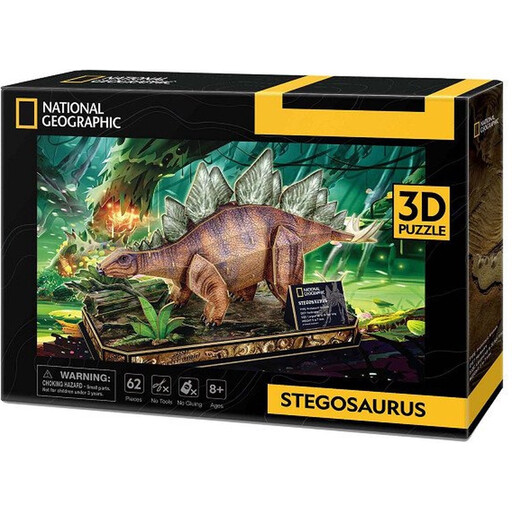
Why this fits the profile: A straightforward 3D puzzle with one clear final model, ideal for children who love dinosaurs and for gift buyers looking for a compact activity.
The number of pieces, the final size, and the fact that no glue or tools are needed are all clearly stated. This makes the activity easier to assess.
62 pieces, pre-cut panels, and a stand with a nameplate for display.
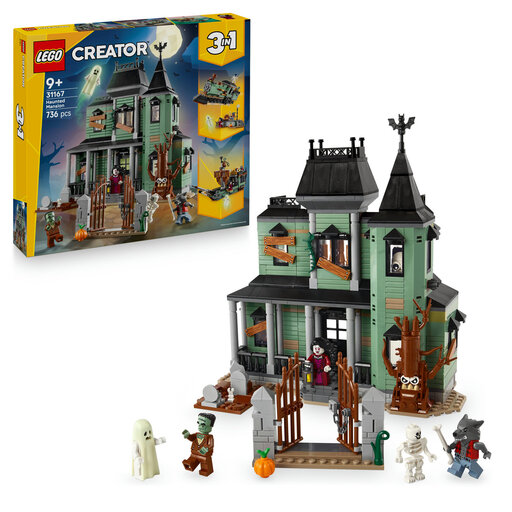
Why this fits the profile: Suitable for children aged 9 and over who want to combine building with role play and rebuilding.
The three build ideas are clearly described. You also know that the models cannot be built at the same time.
736 pieces, three models, and five minifigures; the house stands approximately 25 cm tall when assembled.
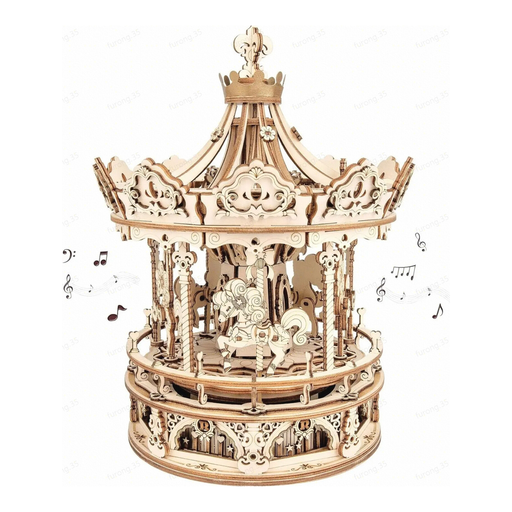
Why this fits the profile: A building project for teenagers and adults who want a decorative model with hand-powered movement.
The set states 336 pieces, dimensions of 17 × 17 × 23.5 cm, and a clear age rating of 14 years and over.
Wooden model with hand crank and rotating mechanism; no batteries required.
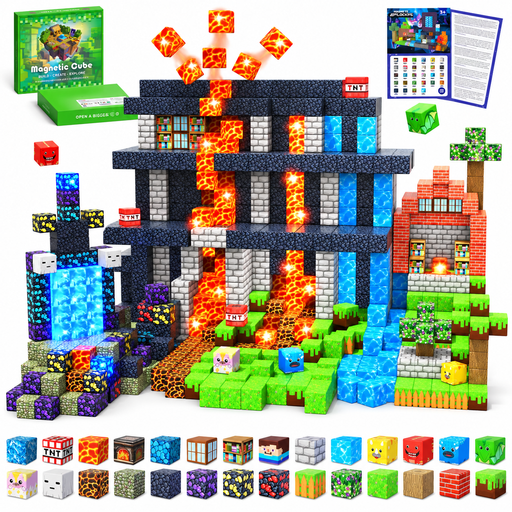
Why this fits the profile: Magnetic building blocks offer an open-ended building style for children who prefer to invent their own shapes and structures rather than follow a single instruction manual.
The product states 150 pieces, rounded edges, and a recommended age of 3 years and over. Always check the current safety information before use.
150 ABS pieces and a construction style suitable for repeated building and adapting.
We have put together a full, up-to-date list of products that fully meet these strict selection criteria and comply with current European safety regulations.
Choose a set with a clear age recommendation from 3 years, large pieces, and rounded edges. Magnetic building blocks or a simple snap-together dinosaur toy can be appropriate, provided the magnets are securely enclosed and the child plays under supervision. Avoid models with small gears, metal pins, or loose mini parts.
Building sets can engage spatial awareness, hand-eye coordination, and problem-solving skills. That does not mean every product is automatically educational. Look at the specific play action: does the child need to combine, balance, understand a mechanism, or design multiple models? That information is more useful than just the label educational building toy.
The lifespan depends on the material, connections, and use. LEGO bricks and magnetic building blocks can often be rebuilt. A wooden 3D model is more intended as a permanent decoration and requires careful handling. Store pieces in a closed box, keep wooden models dry, and regularly check magnetic toys to ensure the casings are intact.
