
Making rolls for a large buffet
You’ll want to know how much dough can be processed in each batch and whether you’ll need to run more than one batch. The stated loaf weight won’t give you a definitive answer.


A bread maker with a suitable yeast dough, kneading or proving setting can prepare the dough. You can then shape the rolls yourself and bake them in the oven. If you’re making rolls for a buffet, compare the maximum dough quantity per recipe batch rather than just the stated loaf weight. For larger quantities, a stand mixer with a dough hook may be more practical. Also check the relevant safety and food-contact information for the appliance you choose.
You’ll want to know how much dough can be processed in each batch and whether you’ll need to run more than one batch. The stated loaf weight won’t give you a definitive answer.
You want the machine to knead the dough and perhaps prove it, then shape the rolls yourself and bake them in the oven. Tefal, Panasonic and Princess describe functions that suit this approach.
You want to decide whether a separate bread maker is worthwhile for how often you’ll use it, or whether a stand mixer with a dough hook or kneading by hand will do the job.
A good choice if: you want a programme to do most of the kneading or proving, then shape the rolls yourself.
Keep in mind: you’ll need to shape and bake the rolls yourself. Loaf weight and dough capacity aren’t the same thing.
A good choice if: kneading is your main requirement and you can organise the proving yourself.
Keep in mind: check the permitted dough weight for the specific model. A dough hook won’t automatically prove the dough.
A good choice if: you only make a small quantity now and then and would rather not buy another appliance.
Keep in mind: you’ll need to do the mixing and kneading yourself and keep an eye on the dough.
| What to consider | What should you check? | Who is this most important for? |
|---|---|---|
| Dough quantity per batch | Check the manual for the exact model to find the maximum quantity of flour or dough for the programme you want to use. Use this to work out how many recipe batches you’ll need. | If you’re baking for a large group, you’ll want to know whether one batch will be enough or whether you’ll need to repeat the preparation. Around 36% of consumers prioritise batch size. |
| Dough setting and shaping flexibility | Check whether the model has a yeast dough programme or suitable kneading and proving settings, and find out what the programme does before it finishes. | If you want to serve individual rolls, you’ll want the machine to prepare the dough so you can shape it yourself afterwards. Around 29% of consumers prioritise dough preparation with this kind of flexibility. |
| How often you’ll use it versus the cost | Think about how often you make dough for rolls, which appliances you already own and whether the permitted dough weight suits your recipe. | If you only bake occasionally, you can weigh up buying a separate machine against using a stand mixer you already own or kneading by hand. Around 21% of consumers prioritise frequency of use and alternatives. |
| Cleaning and parts | Read the cleaning instructions for the specific model and search for parts using the full model number. | If you use the appliance regularly, you’ll want to know how to care for the bread pan and kneading blade, and which parts fit your model. Around 14% of consumers say maintenance and parts are their main consideration. |
For a specific appliance, also check the CE marking. The Dutch government says it is required for electrical appliances placed on the market in the EU. Parts that come into contact with food are also subject to food-contact material requirements. The Netherlands Food and Consumer Product Safety Authority explains that these materials must not release harmful amounts of chemical substances.
A stated loaf size doesn’t tell you how much dough a specific programme can handle for rolls. If you misjudge it, you may need to plan for more batches.
Before working out how many batches you’ll need, check the recipe and programme limits in the manual for the exact model.
Extra batches can mean more preparation time.
A programme that bakes a whole loaf won’t shape and bake individual buffet rolls for you.
Check whether the machine stops after kneading or proving, then plan to shape and bake the rolls separately.
A Joybuy listing for the Tefal PF240E mentions features including a dishwasher-safe bread pan and a removable bread roll tray. These details matter for care and ease of use.
Check these features with the manufacturer and confirm the full model number before factoring them into your choice.
For the Pain & Délice PF240E, Tefal lists a yeast dough programme, which suits dough you plan to shape yourself later.
Panasonic describes the SD-YR2550 as an option for anyone who wants to adjust the kneading and proving settings themselves.
Inventum lists loaf sizes of 650 and 800 g for the BM55, and also lists the BM125 with loaf sizes of 900 and 1200 g.
For the 152006, Princess lists settings for proving or kneading on their own, alongside bread programmes.
These Joybuy products are bread makers you can compare by their stated loaf sizes and dough preparation features. Check that the dough setting and batch limit for each model suit your recipe.
 No image available
For dough for rolls, check that the dough setting and batch size you need are suitable for this model.
12 programmes; loaf sizes of 500, 750 and 1000 g.
 No image available
The product description mentions dough preparation. Check the recipe limit against the amount of dough for rolls you need.
16 automatic programmes; loaf weights from 750 g to 1.5 kg.
 No image available
The product description mentions dough preparation. Check that the programme stage and permitted recipe weight suit the way you plan to use it.
20 automatic programmes; automatic dispenser; removable baking pan.
 No image available
The product description mentions dough preparation. For buffet rolls, check the maximum recipe weight for the correct setting.
12 programmes; maximum loaf weight 1 kg; compact size according to the product title.
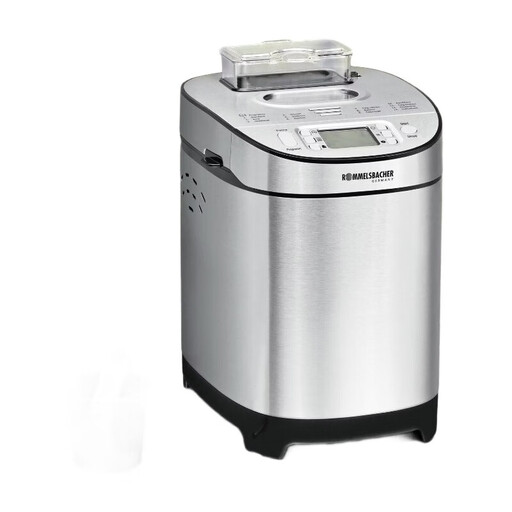 No image available
Compare the programmes and check the model-specific information to see whether its dough preparation features suit your buffet roll recipe.
13 programmes; loaf sizes of 700 or 900 g.
A dough or kneading programme prepares the dough, but for individual rolls you’ll need to take it out of the machine and then follow your recipe’s instructions for shaping, proving and baking. Make sure you don’t select a programme that bakes a whole loaf.
Inventum recommends hand-washing the BM55 bread pan with a little washing-up liquid to care for the non-stick coating. Don’t assume the same instructions apply to other models.
Look for a replacement part using the full model number. For example, Princess lists a separate kneading blade that fits the 152006. If a product is faulty, the seller in the Netherlands must provide a solution. There is no fixed statutory two-year guarantee: what you can expect depends, among other things, on the product and how it is used.
Check the CE marking on the specific appliance and the information about parts that come into contact with food. The Dutch government says CE marking is required for electrical appliances placed on the market in the EU. Food-contact materials are also subject to requirements explained by the Netherlands Food and Consumer Product Safety Authority.