What should you look for in rusks?
First, work out how many rusks you’ll use over the holidays. Then compare the nutrition information and ingredients of the varieties that suit your needs.
| What to consider |
What to check |
Who it matters to |
| Pack size for several lunches |
Check the net weight and number of rusks per pack. |
If I’m planning several lunches, I want to know how many packs we’ll actually finish. Having enough in the pack is the top priority for around 50% of consumers. |
| Wholemeal and fibre |
Compare the fibre and salt content per 100 g for the exact variety. |
I’d rather choose a wholemeal variety if the nutrition information matters more to us than simply the number of rusks. Wholemeal and fibre are the main considerations for around 30% of consumers. |
| Ingredients and allergens |
Read the ingredients list and allergen information on the pack you’ve chosen. |
If family members need to avoid certain ingredients, I want to know what’s in the pack before I buy it. Checking the label is the main concern for around 20% of consumers. |
Bolletje rusks for different preferences
These Bolletje varieties let you choose between rusks with seeds, dark wholemeal, wholemeal and Original Rusks. As well as the type, check the number of rusks and the details on the exact pack.
 Image unavailable
Bolletje Multiseed Rusks, 10 pieces
An option if you’re looking for rusks with seeds for lunch. Check the ingredients and allergens for this variety if they’re important to your family.
View on Joybuy
 Image unavailable
Bolletje Dark Wholemeal Rusks, 10 pieces
A choice for anyone specifically looking for dark wholemeal rusks. If you have ingredient preferences or allergies, read the label for this variety.
View on Joybuy
 Image unavailable
Bolletje Wholemeal Rusks, 13 pieces
A variety for anyone looking for wholemeal rusks and wanting to compare fibre per 100 g. Joybuy product information lists 11 g of fibre per 100 g for this variety; if you have allergies, check the packaging too.
View on Joybuy
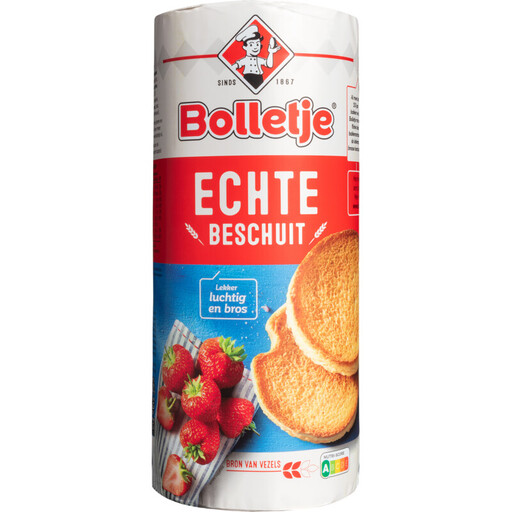 Image unavailable
Bolletje Original Rusks, 13 pieces
A choice for anyone looking for the standard Original Rusks variety. Bolletje says this variety contains wheat, rye and egg; read the label if allergens are important for your lunch plans.
View on Joybuy
Frequently asked questions
How many rusks do I need for school holiday lunches?
Think about how many lunches you’ll need to cover, then compare the pack size and number of rusks per pack. For example, Albert Heijn lists different weights for its plain and wholemeal rusks. Only buy extra packs if you can store them somewhere dry and expect to use them.
Can I expect all wholemeal rusks to have the same nutritional value?
No, compare the figures for each product. PLUS lists 7.7 g of fibre and 0.72 g of salt per 100 g for its wholemeal rusks. Voedingscentrum gives 0.8 g of fibre per 10 g piece as a general figure for wholemeal rusks, not as the value for every pack.
Which allergens should I check in rusks?
Always read the allergen information for the variety you choose. The PLUS plain and wholemeal packs reviewed contain wheat and egg; Bolletje lists wheat, rye and egg for its Original Rusks and also notes possible traces of ingredients including sesame.
Can I assume my rusks contain iodine-fortified baker’s salt?
No, don’t assume which type of salt has been used based on the product category. Check the ingredients information for the specific rusks, or ask the manufacturer if iodine is important to your choice.
How can I keep an opened pack of rusks crunchy?
Store rusks in a cool, dry place and seal the pack securely after opening. This follows the storage advice PLUS and Joybuy give for the products reviewed; above all, keep your stock away from moisture.


