
Breakfast cooks keeping an eye on their shopping bill
If you make pancakes regularly and usually have milk, eggs and cooking fat at home, a plain mix could be a good choice. You won’t need to buy extra ingredients first.


Choose a plain mix if you already have milk and eggs at home and want to avoid extra shopping. A complete mix needs fewer separate ingredients; a shaker bottle saves you the effort of mixing, but you’ll still need to cook the pancakes. For every option, check what you need to add and what the label says.
If you make pancakes regularly and usually have milk, eggs and cooking fat at home, a plain mix could be a good choice. You won’t need to buy extra ingredients first.
With a complete mix, you only need to add water to make the batter. A shaker bottle can also save you using a bowl and whisk, but you’ll still need to cook the pancakes in a pan.
If particular ingredients or allergens matter to you, check the packaging of the option you’ve chosen. The preparation instructions matter too: they may call for milk or eggs.
Start with what you already have at home, then decide how much mixing you want to do and check the label of the option you’re considering. None of these mixes is ready to eat: you’ll still need time to cook the pancakes for a quick breakfast.
| What to consider | What to check before buying | Who is this important to? |
|---|---|---|
| Extra shopping | Check whether the recipe calls for milk, eggs and cooking fat, or just water and cooking fat. | If I make pancakes often, I mainly want a mix that works with ingredients I already have at home. For around 42% of consumers, avoiding extra shopping is the top priority. |
| Preparation | Check whether you make the batter in a bowl or mix it in a shaker bottle; you’ll still need to cook it in a pan. | On a busy morning, I want to measure out as few ingredients as possible and keep the washing-up to a minimum. For around 33% of consumers, less preparation is the priority. |
| Ingredients and allergens | Read the ingredients, allergen information and any ‘may contain’ statement on the packaging of the option you’ve chosen. | If certain ingredients aren’t suitable for me, I want to be able to check the exact option before using it. For around 25% of consumers, checking the label comes first. |
A plain mix may need milk, eggs and cooking fat. That matters if you don’t already have those ingredients at home.
Before you choose, read the preparation instructions and check what you’ll need to add to make the full batter.
The bottle makes mixing the batter easier, but you’ll still need to cook the pancakes in a pan.
Choose this format if doing less mixing would make your morning easier, not if you’re looking for something you can eat straight away.
Ingredients and allergens can vary between pancake mixes. A different preparation method doesn’t automatically change the properties of the dry mix either.
Check the ingredients and allergen information on the packaging of the exact option you’re buying.
Koopmans offers a range that includes original, complete and shaker-bottle options. The right one for you will mainly depend on which ingredients you want to add and how you’d like to mix the batter.
Albert Heijn’s own brand offers several pancake mixes, including plain and complete options.
Jumbo’s own-brand range includes plain, complete and wholemeal pancake mixes to compare.
PLUS offers a plain mix and a 400 g complete mix, each requiring different ingredients for the batter.
Albona is an option for anyone looking for a plain mix at ALDI.
Belbake Original Pancake Mix is available from Lidl Netherlands.
These mixes are designed for making pancakes at home. Shaker-bottle options mean less mixing; for the other options, the main thing to check is which ingredients you’ll need for the batter. None of these products is a ready-to-eat breakfast.
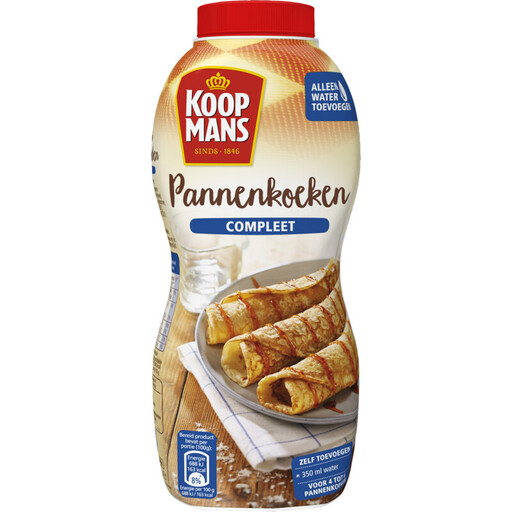 Image unavailable
For anyone who wants to mix the batter in a bottle and add only water. According to the product information, add 350 ml of water; one bottle makes 4 to 6 pancakes. You’ll still need to cook them in a pan.
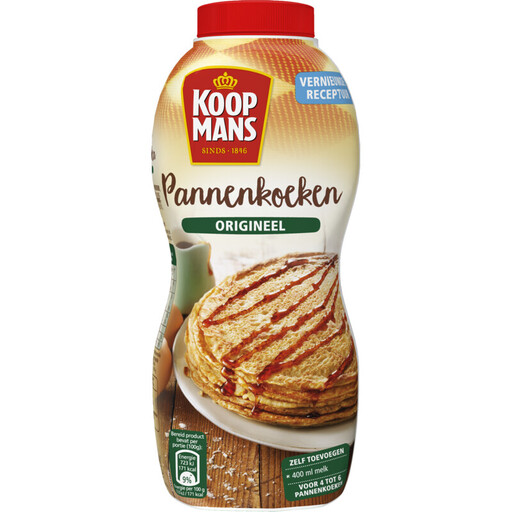 Image unavailable
A shaker bottle for anyone who wants to make batter without a separate mixing bowl. This option needs milk and the pancakes still need to be cooked; check the packaging for the preparation steps and allergen information.
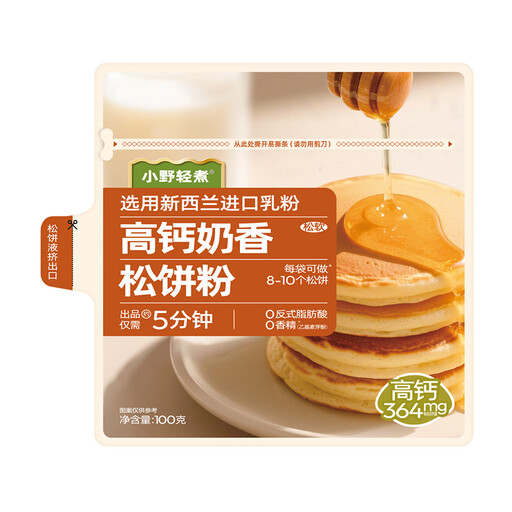 Image unavailable
For anyone looking for a 100 g pack to prepare with water and egg. Check the preparation instructions and yield on the packaging; these pancakes also need to be cooked in a pan.
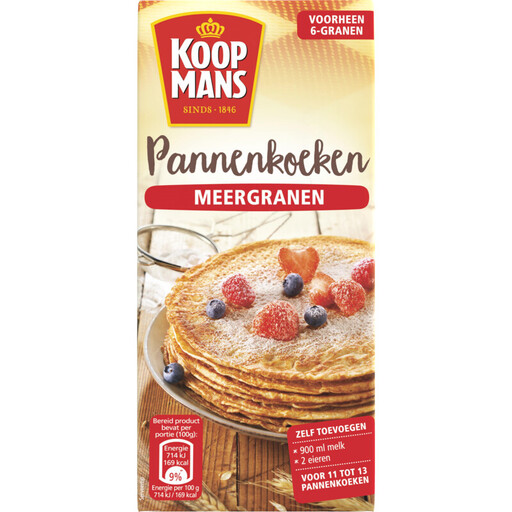 Image unavailable
For anyone who wants to make a larger batch of pancakes at home and has milk and eggs to hand. Check the preparation instructions and ingredients for this multigrain option before you start.
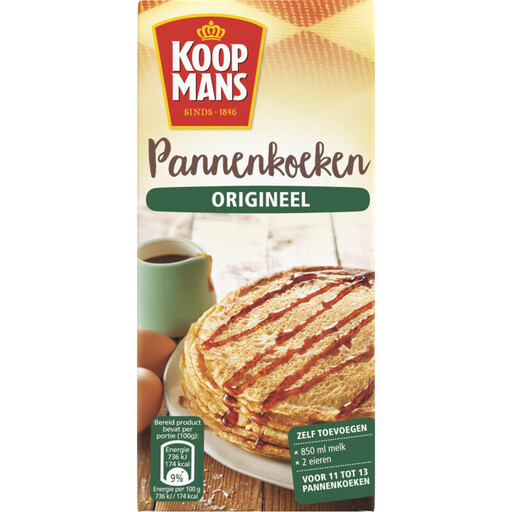 Image unavailable
For anyone who wants to use a standard mix and has milk, eggs and cooking fat available. According to the product information, add 850 ml of milk and two eggs; then cook the pancakes in a pan.
No, pancake mix needs to be made into batter and cooked in a pan first. A complete mix or shaker bottle can cut down on preparation, but you’ll still need to cook the pancakes.
A complete mix is handy if you’d prefer to add only water to make the batter. If you already have milk and eggs at home, a plain mix could also work for you; check what you’ll need to cook the pancakes for either option.
For AH Plain Pancake Mix, Albert Heijn lists a plant-based preparation method. This doesn’t automatically apply to other plain mixes or mean that the mix is suitable for people with allergies: check the label on the packaging you’ve chosen.
Check the ingredients list and allergen information on the packaging of the exact option you’ve chosen. Look out for any ‘may contain’ information too, as well as the ingredients you need to add yourself according to the recipe.