
Budget-conscious buyer of toast for nibbles
Looking for neutral-tasting toast to pair with different toppings, while keeping an eye on pack size and where the product is available.


Choose plain melba toast if a neutral flavour and pack size are your priorities; compare wholemeal options if fibre matters more. Multigrain could be an option to try with a fussy eater, but the name doesn’t tell you how much of the flour is wholemeal. So check the ingredients, fibre, salt and allergens on each pack.
Looking for neutral-tasting toast to pair with different toppings, while keeping an eye on pack size and where the product is available.
Wanting to choose a wholemeal option more often, but looking for a flavour and texture the eater is willing to try. Multigrain may be a stepping stone, but only if the ingredients fit the goal.
Checking ingredients, allergens and salt separately. If you’re specifically looking for iodised baker’s salt, you can’t tell whether it’s used from the word ‘salt’ alone.
Start with how you’ll use it: do you want neutral-tasting toast for toppings, or is fibre the main reason for choosing a different option? For the Van der Meulen Melba Toast products reviewed, Jumbo lists 9.7 g of fibre per 100 g for the wholemeal variety and 3.9 g per 100 g for the plain variety. Always compare figures for the exact product.
| What to consider | What to check | Who it matters most to |
|---|---|---|
| Pack size | Check the net weight and think about how much toast you’ll need for toppings or guests. Albert Heijn and ALDI Netherlands each list a 240 g plain variety. | If I’m buying for several occasions, I want the pack size to suit my plans; an estimated 40% of consumers with this buying question prioritise pack size. |
| Wholemeal and fibre | Compare fibre per 100 g and check the ingredients list to see which flour is wholemeal. | With a fussy eater, I’m looking for a possible step away from white toast without losing sight of my fibre goal; around 30% of these consumers prioritise making that change. |
| Salt and allergens | Check the salt per 100 g and the current ingredients and allergen information. Check separately for baker’s salt if that’s relevant to your choice. | If I need to avoid certain ingredients, I want to know exactly what’s in the variety I choose; for an estimated 30% of these consumers, checking the label is the main priority. |
The term multigrain tells you which types of grain are used, not whether all the flour is wholemeal. So you can’t compare fibre based on the front of the pack alone.
Read the ingredients list and compare fibre per 100 g. If wholemeal is your main priority, choose a variety that’s clearly labelled as wholemeal.
For the Van der Meulen varieties reviewed, Jumbo lists 1.9 g of salt per 100 g for the wholemeal option and 1.3 g for the plain one. So the difference in fibre doesn’t tell you how their salt levels compare.
Compare fibre and salt as separate figures in the nutrition information, and check the allergens for your chosen variety too.
According to the Netherlands Nutrition Centre, using baker’s salt in baking isn’t compulsory. The word ‘salt’ on an ingredients list alone doesn’t confirm which type has been used.
If this distinction matters to you, check whether the pack explicitly says baker’s salt or iodised salt.
The Melba range reviewed includes plain, wholemeal and multigrain options, so you can compare varieties within the same range.
AH Plain Melba Toast is a plain variety sold in a 240 g pack.
ALDI Netherlands lists Sun Snacks Plain Melba Toast as a 240 g plain variety.
Lidl Netherlands lists a 240 g melba toast that’s only available in store.
These products offer two different starting points: a cracotte if you want to compare grain varieties, and melba toast if that’s the type of toast you’re looking for. Check the information on each product’s own packaging; cracotte and melba toast are not the same product.
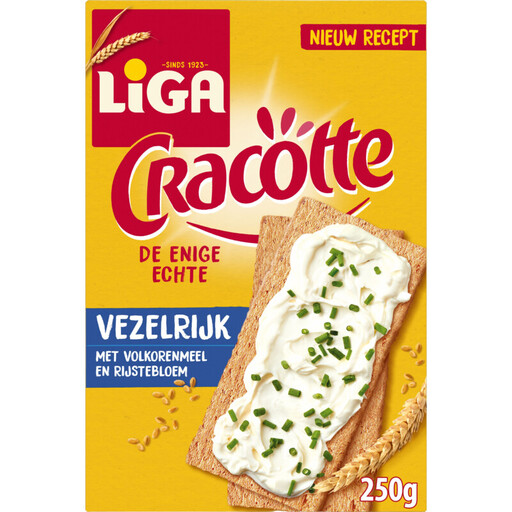 No image available
For anyone considering cracotte as well as toast. The pack contains 250 g; cracotte isn’t melba toast. Compare the ingredients and fibre per 100 g on the current label.
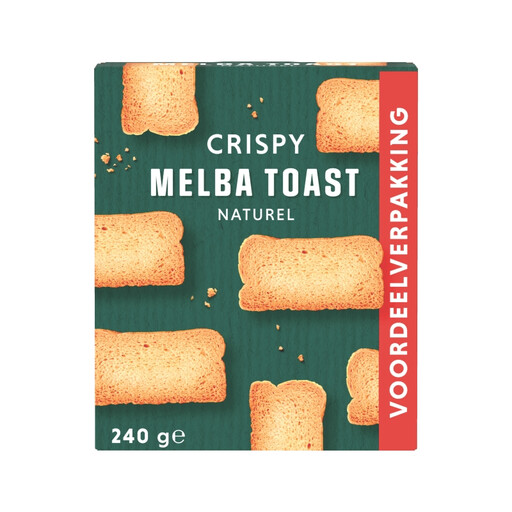 No image available
For anyone looking for melba toast to serve with toppings or as a nibble. The pack contains 240 g. Check the current pack for allergens and the unit used for the nutrition figures before comparing fibre or salt.
Not necessarily: the higher fibre content of one wholemeal variety reviewed doesn’t tell you whether someone will like its flavour and texture. Jumbo lists 9.7 g of fibre per 100 g for Van der Meulen Melba Wholemeal Toast, compared with 3.9 g for the plain variety. You could also try a multigrain option, but check how much of the flour used is wholemeal.
Not necessarily. Check which grains and types of flour are listed in the ingredients and compare fibre per 100 g; the name ‘multigrain’ on its own doesn’t mean the product is made entirely with wholemeal flour.
No, you can’t assume that. The Netherlands Nutrition Centre says that using baker’s salt in baking isn’t compulsory. Check the label to see whether baker’s salt or iodised salt is specifically mentioned; the word ‘salt’ alone doesn’t tell you.
Check the ingredients and allergen information for the exact variety you’re buying. The Netherlands Food and Consumer Product Safety Authority points out that allergens are listed in the ingredients; the varieties reviewed include wheat and, depending on the product, sesame. Always read the current pack rather than assuming it has the same ingredients as another variety.