
Anyone who wants to share bread around the table
You’re looking for a ciabatta or similar bread to serve with antipasti, pasta or bruschetta, and don’t want to buy more than your group needs.


First, choose bread for an Italian dinner based on how many people you’re serving and how much bread you’d like to offer. A ciabatta to tear and share works well for a group; smaller rolls are handy when you want individual portions. If you’re buying part-baked bread, check the cooking instructions. If you have dietary requirements, read the ingredients and allergen information on the packaging.
You’re looking for a ciabatta or similar bread to serve with antipasti, pasta or bruschetta, and don’t want to buy more than your group needs.
You want to know how many rolls to serve, whether you can finish baking them at home and what to do with any leftovers.
You’re mindful of ingredients or allergens, or want to compare different types of bread by their nutritional information, such as fibre and the type of salt listed.
First, decide how much bread you want to serve. Then choose between one loaf to share and individual portions, and check the packaging for cooking instructions and ingredients.
| What to consider | What should you check? | Who is this important for? |
|---|---|---|
| How much to serve | Compare the pack weight of the same type of bread with the amount you want to serve. | If I’m sharing bread with everyone at the table, I want to have enough without ending up with too much left over. Around 50% of consumers prioritise the total amount of bread. |
| Portions and preparation | Check how many rolls are in the pack, along with the cooking and storage instructions. | When serving individual portions, I want to know in advance how many rolls I can serve and when they need to go in the oven. For around 30% of consumers, portions and preparation are the main priority. |
| Ingredients and nutritional information | Read the current label for relevant allergens, fibre, ingredients and the type of salt listed. | If I need to consider a dietary requirement or allergy, I can’t rely on the bread’s name alone. Around 20% of consumers put this product information first. |
The standard ciabattas reviewed weigh 250 g or 300 g. So the number of packs alone won’t tell you how much bread you’ll have on the table.
Check the weight and consider how much you want to serve each guest.
PLUS and Jumbo list iodised salt in the ciabattas reviewed. That doesn’t tell you what type of salt is used in a different loaf.
Read the ingredients list for the bread you’re actually buying, especially if the type of salt matters to you.
According to the product information, the Schär gluten-free ciabatta reviewed contains soya and may contain traces of other allergens.
If you have a relevant allergy, check the full, up-to-date allergen information on the packaging.
If you buy more part-baked bread than you serve, the storage instructions will tell you what to do with the rest.
Plan your portions in advance and follow the packaging instructions for storage or freezing.
These examples show the types of bread you can compare; ranges may vary from shop to shop.
Albert Heijn offers a 300 g part-baked ciabatta for anyone who wants one loaf to share.
Jumbo offers both a 250 g ciabatta and a pack of four ciabattinas weighing 240 g in total.
The 300 g Tastino Ciabatta is designed to be finished baking at home.
The 300 g Afbakker Ciabatta is a loaf to finish baking at home.
As well as a standard 250 g ciabatta, PLUS lists smaller ciabatta options and a gluten-free Schär alternative.
The 250 g 1 de Beste Ciabatta is a part-baked loaf for sharing around the table.
These options include ciabatta to share, ciabattinas for smaller portions and multigrain baguettes as an alternative type of bread. Choose an amount to suit your group and check the cooking instructions for each product.
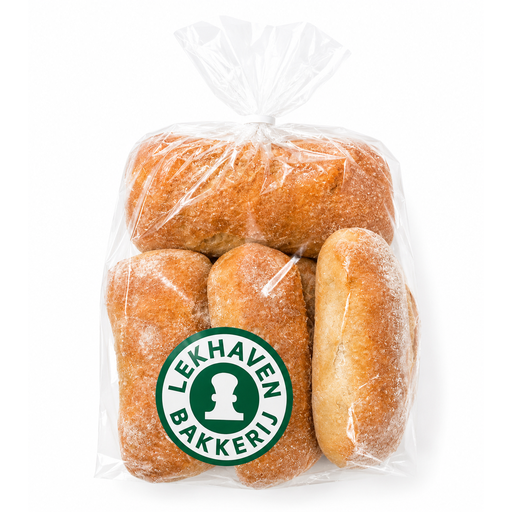 Image unavailable
A ciabatta option if you want to serve four individual loaves. The pack states 4 × 135 g; follow the packaging instructions to finish baking them.
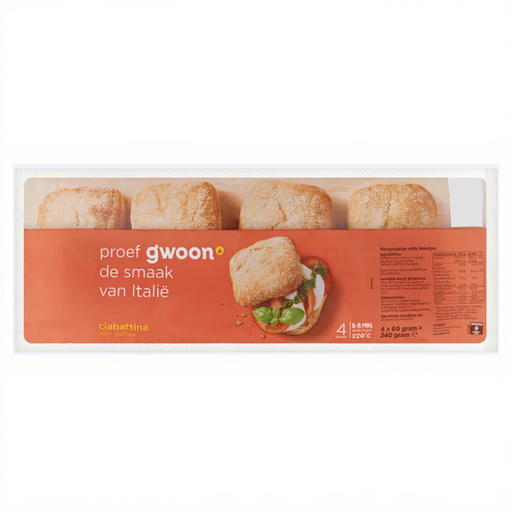 Image unavailable
A ciabattina option if you want to serve smaller rolls. The product name mentions olive oil and a pack weight of 240 g; check the number of rolls and the allergen information on the packaging.
 Image unavailable
A multigrain baguette if you’d rather serve baguettes than ciabatta with your Italian meal. The pack states 4 × 135 g; check the ingredients, allergens and cooking instructions on the packaging.
Think about how many people you’re serving and the role bread will play alongside the other dishes. Then check the pack weight or number of rolls so you know how much you’ll have on the table.
You can if the instructions for that particular ciabatta include air-fryer cooking. Follow the packaging instructions rather than using the cooking time for a different type of bread.
Store it according to the packaging instructions and freeze it if this is recommended for the product. The Netherlands Nutrition Centre lists storing part-baked bread in the fridge or freezer as options; check the instructions on each pack.
Don’t assume so: check the ingredients list for the bread you choose. The PLUS and Jumbo ciabattas reviewed list iodised salt, but that doesn’t tell you what’s in other products.
No. Gluten-free doesn’t mean a bread is free from all allergens. According to the product information, the Schär ciabatta reviewed contains soya and may contain traces of other allergens, so check the current label.