If you need a snack ready that afternoon without having to bake anything, individually sold rolls are a practical choice. Bake-at-home rolls are better for several snack times if you have time to prepare them. When planning what to buy, consider how many rolls you’ll use. If wholemeal matters to you, check the label for that wording. Before packing anything for school, always check the latest allergen information and local requirements.
Who are these options for?
Families who need rolls the same day
If your snack needs to be ready straight away, you’ll want to choose individually sold rolls without an extra baking step. Albert Heijn, ALDI and Dirk list white rolls in their ranges; check what’s available in your local shop.
Families who plan snacks ahead
A pack of bake-at-home rolls or a frozen option works well for several snack times, provided you can allow for preparation and follow the storage instructions. Jumbo lists both types of packaging, while PLUS lists white bake-at-home rolls.
Families who check labels and school requirements
If ingredients or the type of bread determine your choice, check the current packaging before packing the rolls. Albert Heijn and PLUS list wheat and gluten-containing cereals in their standard white rolls. PLUS also lists a separate gluten-free product.
What should you look for when choosing?
First, work out how many rolls you’ll need for your snack times and whether you have time to bake them. Then check the type of bread, the ingredients and any requirements set by the school or childcare provider.
| What to consider | What to check when buying | Who is this important for? |
|---|
| Number needed |
Compare individually sold rolls with the number of rolls and the weight in a pack. Think about how many you’ll actually use. |
If I only need a few rolls for one afternoon, I don’t want to be left with a large pack; around 36% of consumers put the quantity they need first. |
| Type of bread and fibre |
If you prefer wholemeal, look for the word ‘wholemeal’ and compare the fibre per 100 g. ‘Multigrain’ doesn’t automatically mean wholemeal. |
If I pack rolls more often, I want to choose between white, multigrain and wholemeal with care. For around 29% of consumers, the type of bread is the most important factor. |
| Storage and preparation |
Check the baking instructions, the space available in your freezer and the storage time after defrosting before choosing a bake-at-home or frozen pack. |
I want to plan rolls for several afternoons, but I also need to be able to prepare them in time. For around 21% of consumers, planning is the top priority. |
| Allergens and school requirements |
Read the latest ingredients and allergen information, and ask what requirements the school or childcare provider has for food brought in from home. |
If gluten-free food is needed or the school has rules about what can be brought in, I want to check the packaging and requirements in advance; around 14% of consumers prioritise this check. |
Common mistakes
-
Assuming all rolls have the same gluten status
Albert Heijn and PLUS list wheat and gluten-containing cereals in their standard white rolls, while PLUS also lists a separate gluten-free product. So the type of product alone isn’t enough to make an allergen-related choice.
Read the latest allergen information on the packaging and check the requirements set by the school or childcare provider. If you need a gluten-free option, choose a product that is clearly labelled as such.
-
Assuming ‘multigrain’ means ‘wholemeal’
The word ‘multigrain’ doesn’t tell you on its own whether a roll is wholemeal. According to the Voedingscentrum, these are different terms.
Look for ‘wholemeal’ on the label and compare the fibre per 100 g if that matters when choosing your bread.
-
Looking only at the packaging
An individually sold roll and a bag containing several rolls won’t suit the same number of snack times. Pack weights can also vary.
Compare the number of rolls and the pack weight with how many you expect to use, and take the storage instructions into account when making your choice.
-
Using frozen rolls without a defrosting plan
According to the product information, Jumbo frozen rolls must not be refrozen after defrosting and should be prepared and eaten within 24 hours.
So only defrost as many as you can use within that time. For another product, follow the instructions on its packaging.
Brands compared
These brands offer different types of crusty rolls. The packaging and label of the option you choose will help you decide what suits your snack time.
Albert Heijn
Lists individually sold white and wholemeal rolls; the white roll shown is available in store only.
- Buying them individually lets you choose the number you need.
- The white option lists wheat and gluten-containing cereals. Check the latest label and in-store availability.
Jumbo
Lists both packs of white bake-at-home rolls and white frozen rolls.
- Both packs shown contain four rolls, making them a handy option if you’re planning several snack times.
- The frozen option needs to be stored at -18 °C. Once defrosted, it must not be refrozen and should be prepared and eaten within 24 hours.
Lidl
Lists an individually sold white wheat roll, available in store only.
- An option to look for in store if you’re after individually sold rolls.
- Check the packaging in store if ingredients or allergens affect your choice.
ALDI
Lists an individually sold white roll for a snack the same day.
- Buying them individually lets you choose the right number of rolls for your snack time.
- Check the ingredients and allergen information on the packaging if they matter to your choice.
PLUS
Lists white bake-at-home rolls and a separate gluten-free white option.
- The standard white bake-at-home rolls come with oven and air fryer instructions.
- The standard white option lists wheat and gluten-containing cereals. Check the latest label for each option you choose.
Dirk
Lists individually sold white wheat rolls and packs of white or multigrain bake-at-home rolls.
- The different pack types let you choose according to how many rolls you need and how you can prepare them.
- The name ‘multigrain’ doesn’t confirm that the rolls are wholemeal; check the label to be sure.
Crusty rolls at Joybuy
This pack of four rolls could suit several planned snack times. Check the packaging to see whether they need to be prepared and whether the ingredients are right for what you want to pack.
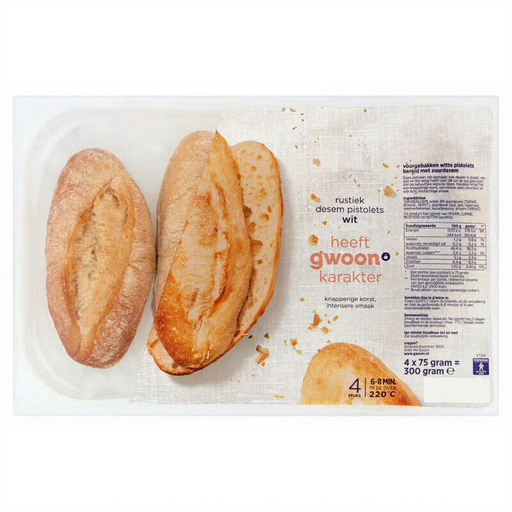 Image unavailable
g'woon white rustic rolls, 4 pieces
A pack of four rolls for anyone planning several snacks.
Before packing them, check the latest ingredients and allergen information, the requirements set by the school or childcare provider, and whether the rolls still need to be prepared.
View at Joybuy
Frequently asked questions
Can a standard white roll be packed if someone needs to eat gluten-free?
Don’t choose a standard white roll without checking the label first: Albert Heijn and PLUS list wheat and gluten-containing cereals in their standard white options. Check the latest packaging of any product explicitly labelled gluten-free, and bear in mind the requirements set by the school or childcare provider.
Is a multigrain roll the same as a wholemeal roll?
No, ‘multigrain’ doesn’t automatically mean ‘wholemeal’. The Voedingscentrum distinguishes between these terms. Look for ‘wholemeal’ on the label and, if you like, compare the fibre per 100 g.
What should I do with defrosted frozen rolls?
According to the product information, prepare and eat Jumbo white frozen rolls within 24 hours of defrosting, and don’t refreeze them. Check the storage instructions on other products’ packaging.
Does every roll contain iodised baker’s salt?
No. According to the Voedingscentrum, bakers aren’t required to use baker’s salt. Check the ingredients list or ask the baker if you want to know which salt was used in a particular roll.


