
The everyday lunch planner
You eat crispbread regularly and want to know roughly how many lunches one pack will provide. The pack size is a more useful starting point than the dimensions of the pack alone.


Wholegrain crispbread can be a good base for everyday lunches. Check that it is labelled wholegrain, compare the nutritional information per 100 g and see how much is in the pack. The Netherlands Nutrition Centre suggests wholegrain crispbread as an alternative for lunch; toppings and vegetables or fruit also count towards a balanced meal.
You eat crispbread regularly and want to know roughly how many lunches one pack will provide. The pack size is a more useful starting point than the dimensions of the pack alone.
You’re looking for a wholegrain base and comparing fibre, ingredients and salt per 100 g, rather than judging by the front of the pack. The Netherlands Nutrition Centre recommends checking for the wholegrain label.
You want to alternate crispbread with bread and find toppings and vegetables or fruit that go well with lunch. The Netherlands Nutrition Centre lists wholegrain crispbread as one possible alternative.
Start with the grain base and pack size. Then compare the nutritional information and ingredients of the exact variety you want to buy.
| What to consider | What to check when buying | Who it matters to |
|---|---|---|
| Pack size | Check the weight and, where stated, the number of pieces or servings. | If I often take crispbread with me for lunch, I want to be able to plan how long a pack will last. For around 36% of consumers, this daily quantity is the main consideration. |
| Wholegrain and fibre | Look for the wholegrain label and compare the fibre per 100 g across varieties. | I want a clearly labelled wholegrain base, so I also check the nutritional information. Around 29% of consumers say this choice of grain is their main consideration. |
| Ingredients and allergens | Check the ingredients, allergen information and salt per 100 g on the current pack. | If certain ingredients aren’t suitable for me, I need to be able to assess the exact variety. For around 21% of consumers, checking the label is the most important factor. |
| The whole lunch | Think about which toppings and vegetables or fruit you’d like to have with it. | Crispbread on its own isn’t the lunch I want to put together; I also consider what goes on top and alongside it. This is the main concern for around 14% of consumers. |
These words don’t mean the same thing as the wholegrain label. According to the Netherlands Nutrition Centre, wholegrain refers to cereal products made from 100% wholegrain flour.
Look for the wholegrain label on the exact pack, then check the ingredients and nutritional information.
The Netherlands Nutrition Centre suggests wholegrain crispbread as an alternative for lunch, alongside suitable toppings and vegetables or fruit.
Before you buy, think about what you’d like to put on it and what you’ll eat with it.
According to the Netherlands Nutrition Centre, using iodised baker’s salt is not compulsory. So you can’t assume, based on the product category, that crispbread provides the same amount of iodine as the bread it replaces.
If you often replace bread with crispbread, check the product information. If you have questions about your personal diet, speak to a qualified professional if needed.
The AH Knäckebröd volkoren described by Albert Heijn comes in a 375 g pack.
Jumbo describes its Knäckebröd Volkoren as a 375 g pack containing 25 pieces.
ALDI describes Goud Gebakken Knäckebröd Volkoren as a 375 g pack containing 25 pieces.
Albert Heijn lists a 260 g pack for the Wasa Volkoren variety described on its website.
These crispbread varieties are worth considering as a base for a lunch with toppings. When choosing, compare the pack size and the current ingredients and nutritional information for each variety separately.
 Image unavailable
For a lunch with toppings, you can assess this variety by its grain base and nutritional information. If allergens are important to your choice, check the current pack.
 Image unavailable
If you’re looking for crispbread as a base for toppings, check the ingredients and nutritional information per 100 g for this variety. If you have allergies, also check the pack for any warnings about possible traces.
 Image unavailable
Pack size may matter if you eat crispbread for lunch regularly. To choose based on wholegrain content and allergens, check the labels and ingredients for this exact variety.
 Image unavailable
For a lunch with toppings, this is a different Wasa variety from Wholegrain. Compare their individual labels; don’t assume the nutritional values or ingredients of one variety apply to the other.
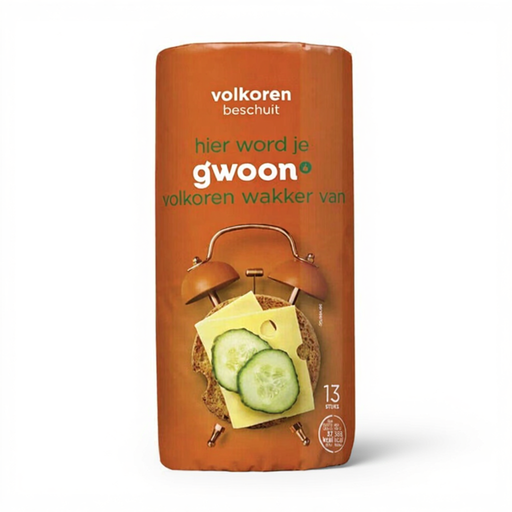 Image unavailable
If you’d like to consider a smaller pack of crispbread for adding toppings, check the weight on the current pack. Also read the ingredients and nutritional information for this Wholegrain variety separately.
No, think of it as a possible base. The Netherlands Nutrition Centre suggests wholegrain crispbread as an alternative for lunch and recommends adding suitable toppings and vegetables or fruit.
Look for the wholegrain label on the exact pack. According to the Netherlands Nutrition Centre, for cereal products this refers to products made from 100% wholegrain flour. Then compare the nutritional information per 100 g.
No, don’t assume that it does. According to the Netherlands Nutrition Centre, the use of baker’s salt is not compulsory. If crispbread often replaces bread in your diet, check the product information and speak to a qualified professional about any questions relating to your personal diet.
Seal the pack tightly after opening and store it somewhere cool, dark and dry. Albert Heijn and Jumbo recommend this storage method for the crispbread varieties they describe; also follow the instructions on the pack of your product.