
Canteens with steady lunch demand
If you need roughly the same number of sandwiches each day, a sliced wholemeal loaf can make preparation straightforward. Match the number of loaves you open to what you actually use.


For a workplace canteen with predictable daily demand, a sliced wholemeal loaf is a practical staple: it’s ready to fill and easy to plan quantities for. If visitor numbers vary, a half loaf or freezing bread in portions may be a better match for what you use. Bake-off rolls let you serve individual portions, but require oven space and preparation time.
If you need roughly the same number of sandwiches each day, a sliced wholemeal loaf can make preparation straightforward. Match the number of loaves you open to what you actually use.
On days when more people are working from home, or visitor numbers are uncertain, it helps to open less bread at a time. Half loaves or a supply frozen in portions give you the flexibility to adjust how much you serve.
Individual rolls are ideal when you serve them one at a time. For bake-off options, check that you have enough oven space and time to prepare them, and keep the ingredient and allergen information for each product to hand.
First choose a type of bread that suits daily demand. Then check the nutritional information, storage instructions and serving requirements for each specific product.
Suitable for: predictable demand and serving lots of sandwiches without baking.
Consider: you’ll need a plan for using or freezing a whole loaf if you won’t need it all on the same day.
Suitable for: varying lunch numbers or offering several types of bread.
Consider: less bread is open at any one time, but you may need more packs for a busy lunch.
Suitable for: canteens that want to serve individual rolls and have access to an oven.
Consider: baking takes up oven space and staff time; check the preparation instructions for each product.
| What to consider | What to check before buying | Who is this most important for? |
|---|---|---|
| Quantity per lunch | Compare the pack weight and number of loaves or rolls with the amount you expect to serve. | If I prepare a set number of lunches each day, I don’t want to open more packs than necessary. Around 31% of consumers prioritise matching quantities to daily demand. |
| Wholemeal and nutritional information | Check the product description, ingredients and fibre per 100 g; colour alone doesn’t tell you whether bread is wholemeal. | For my regular lunch menu, I want to be able to confirm which bread is actually sold as wholemeal. Verifiable product and nutritional information is a priority for around 25% of consumers. |
| Storage and usage | Choose a whole or half loaf to suit your numbers, and follow the storage instructions for opened and frozen bread. | On quieter days, I want to avoid leaving an opened pack unused. Limiting bread that goes to waste is most important to around 19% of consumers. |
| Serving and allergens | Keep up-to-date ingredient information for bread and fillings separately, and check how allergen information is made available when serving unpackaged food. | If I fill rolls or serve bread without its packaging, I need to be able to give guests accurate information about the ingredients used. Around 25% of consumers prioritise these checks when serving food. |
A whole loaf, half loaf and bag of rolls don’t contain the same amount of bread or require the same amount of preparation.
Compare the weight, the number of portions to be served and, for bake-off products, the preparation involved with your usual lunch demand.
Bread that isn’t used within a suitable storage period may go to waste. A smaller pack makes it easier to limit how much you open.
If numbers vary, consider half loaves or freeze suitable bread in portions, following the pack instructions.
The colour of bread, or the presence of different grains, is no substitute for checking the product description and ingredients list.
If you offer wholemeal bread, check that it is actually labelled as wholemeal and review the nutritional information for the product you’ve chosen.
When serving unpackaged bread or filled rolls, you need to know which ingredients have been used so you can give guests the right information. The Netherlands Food and Consumer Product Safety Authority states that allergen information for unpackaged products must be provided in a way other than on a packaging label.
Keep up-to-date product information for bread and fillings, and update it whenever an ingredient or product changes.
These supermarkets offer different types of bread. Always check the individual product and packaging for the canteen where it will be used.
Albert Heijn provides online ingredient and nutritional information for AH Volkoren heel, a sliced wholemeal loaf.
Jumbo lists a range of wholemeal products online, including fine wholemeal bread, half loaves and rolls.
Lidl lists, among other products, an 800 g sliced wholemeal loaf.
Aldi lists both a fine wholemeal loaf and a separate extra-fibre option.
PLUS provides information about wholemeal loaves and wholemeal bake-off rolls.
Dirk lists Bakker van der Akker wholemeal bread in several formats, including whole and half loaves.
These products come in different pack formats for canteen lunches, from individual portions to whole loaves. Before buying, check which format, quantity and preparation requirements suit your daily service.
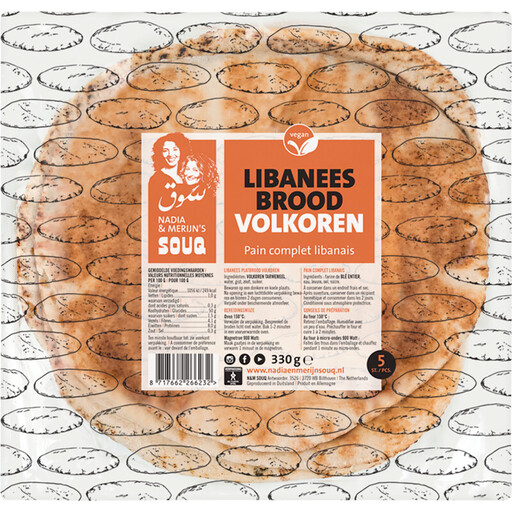 Image unavailable
The pack of six flatbreads may suit a service where you hand them out individually. Check how long the bread can be kept after opening, and review the current ingredient and allergen information before serving.
 Image unavailable
The pack of nine provides a set quantity for serving at lunch. Before planning, check whether preparation is needed, and make sure to review the allergen information on the packaging.
 Image unavailable
The 500 g pack gives you a quantity to compare with expected lunch demand. Check the serving format on the packaging before planning: the product title refers to a bun, while the description also mentions sliced rye bread.
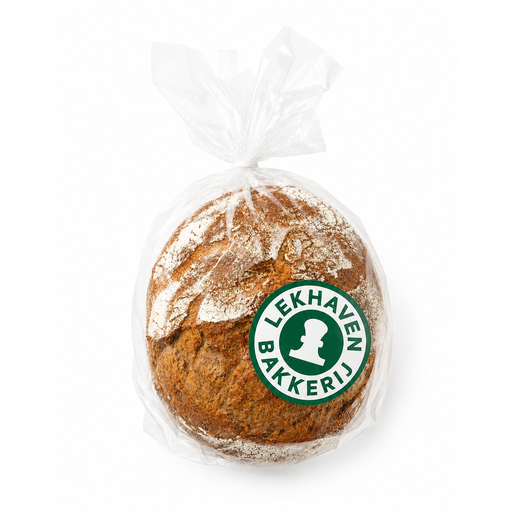 Image unavailable
This 550 g loaf is suitable for a quick lunch service only if you can prepare it in advance. Allow time for defrosting, baking and cooling, and check whether the loaf is supplied sliced.
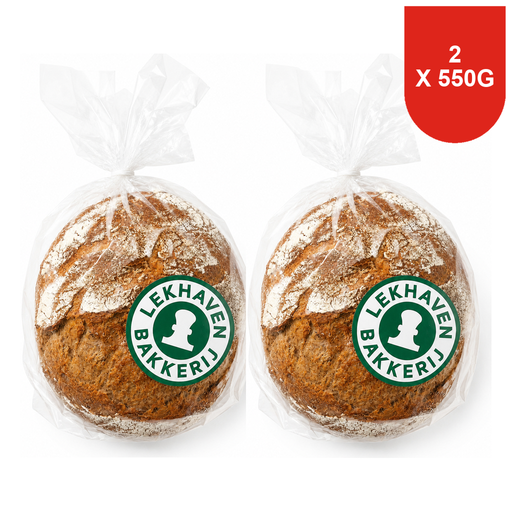 Image unavailable
The pack contains two 550 g loaves, making it a better fit for higher or predictable demand. Allow time for defrosting, baking and cooling; if numbers vary, check how much bread you’ll need at any one time.
A half loaf is practical when the number of lunch guests varies or you offer several types of bread. Less of one type is open at a time; for steady, higher demand, a whole loaf may be more straightforward.
No, don’t assume that every loaf contains iodised salt. Check the ingredients list for each product to see whether baker’s salt or iodised salt is listed.
The Netherlands Nutrition Centre recommends keeping wholemeal bread for 2–4 days in a kitchen cupboard and 1–3 months in the freezer. Also follow the pack instructions and plan when to open or freeze bread according to expected lunch demand.
Consumers must be given information about allergens present in unpackaged bread. The Netherlands Food and Consumer Product Safety Authority states that, for unpackaged products, this information must be provided in a way other than on a packaging label. So make sure up-to-date ingredient information for both the bread and any fillings is available when serving.