
Vandaag of morgen in huis

Kwaliteit gegarandeerd

Welkomstaanbiedingen ontgrendelen: GRATIS bezorging | Tot 80% korting | Gratis 30 dagen JoyPlus-proefperiode
Download de app
Buckwheat noodles are handy for a quick bowl of soup, a stir-fry or a cold noodle salad. However, the name alone doesn’t tell you how much buckwheat they actually contain. Some varieties contain just 5%, while others use at least 50% buckwheat flour. Terms like “zero fat”, “authentic” and “high in fibre” can also give an incomplete picture without the nutrition table.
If you’re looking to buy buckwheat noodles, it’s worth checking three things: the buckwheat percentage, the presence of gluten and the intended use. That way, you won’t end up with a large pack that doesn’t suit your dishes, or a product that doesn’t meet your dietary needs.
Many dried noodles have “buckwheat” prominently displayed on the packaging. However, the actual amount can vary widely. For example, Liu Yu Da Dong Hang contains 5% buckwheat flour, Baixiang Dried Noodles 10%, and BaiXiang Buckwheat Noodles 300g 15%. Chen Keming uses at least 50% buckwheat flour, while YunShanBan 0 Fat states 40%.
A higher percentage generally gives a more distinct, earthy buckwheat flavour and a darker colour. Always check the ingredients list and the quantitative ingredient declaration.
Buckwheat itself is not wheat, but most products in this range also contain wheat flour. As a result, they contain gluten. The packaging may say “buckwheat” without the product being gluten-free.
For people with coeliac disease or a gluten allergy, these varieties are therefore unsuitable. In that case, look exclusively for a product with a clear gluten-free label and check the allergen information and possible cross-contamination. Don’t be guided by the product name alone.
Some buckwheat noodles contain 0 grams of fat per 100 grams, such as YunShanBan 0 Fat and RISHIJI Zero-Fat. Other varieties are around 1 to 2 grams of fat per 100 grams. That can be relevant if you’re looking for low-fat noodles, but also check the energy, carbohydrates, protein and salt.
Also pay attention to the unit. Nutritional values are usually given per 100 grams of dry noodles. A meal with sauce, oil, stock or toppings will naturally have a different nutritional profile.
For a pronounced buckwheat flavour, it’s better to look at varieties from around 30% buckwheat flour. Japanese soba noodles and Korean buckwheat noodles are often associated with buckwheat, but the composition varies by brand. Ottogi Buckwheat Noodles, for example, contains 30% buckwheat flour, alongside 56% wheat flour, tapioca starch, gluten, salt and oat fibre.
With Chinese buckwheat noodles, the composition also varies widely. Chen Keming states at least 50% buckwheat flour and 3% yam flour. Jin Sha He states at least 30%. A higher percentage isn’t automatically better: the texture can become firmer and the flavour more pronounced.
Most of the products mentioned contain wheat and gluten. Some labels also mention soya, egg, sesame or mustard. Check the allergen information if you’re cooking for several people.
Also compare:
“High-fibre noodles” is therefore not a fixed product category. Use the table on the packaging as your starting point.
Dried noodles have a long shelf life and are easy to keep in stock. Most varieties need to be boiled for 3 to 7 minutes. RISHIJI is sold in 60 g portions and, according to the product information, is ready in about 5 minutes. JINBAIWEI is another option: according to the instructions, these noodles only need to be heated in the microwave.
For soup, you can choose a slightly thicker, firmer noodle. For stir-fries, you need a noodle that won’t break easily after cooking. For a cold noodle salad, a quick rinse with cold water helps stop the cooking process.
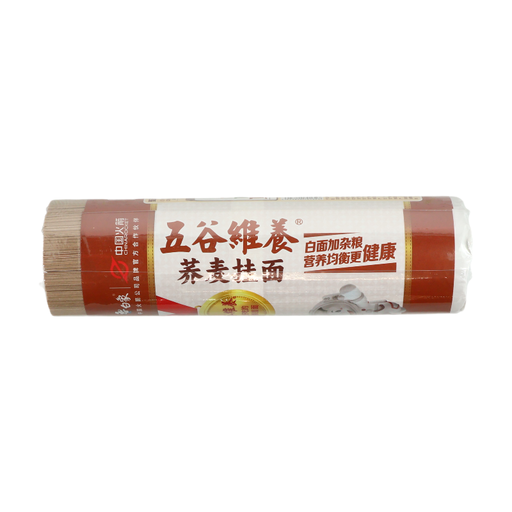
Why this fits the profile: The 1 kg pack is practical for households that eat noodles regularly. The mild blend of wheat and buckwheat flour works well in soup, stir-fries and cold noodle salad.
The product information lists four main ingredients and states 2.0 g fat per 100 g. The presence of wheat and gluten is clearly indicated.
1 kg content, 12.0 g protein per 100 g and a cooking time of around 4 to 6 minutes.
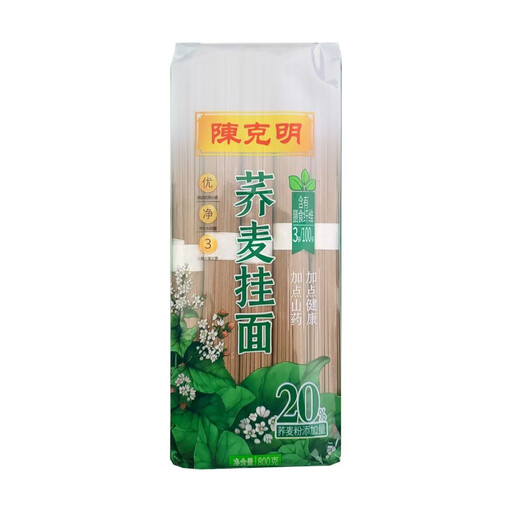
Why this fits the profile: This variety is interesting for those who pay particular attention to the buckwheat percentage and want a firm noodle for soup or cold preparations.
The buckwheat percentage is stated as at least 50%. The addition of 3% yam flour and the presence of wheat gluten are also listed in the ingredients information.
At least 50% buckwheat flour, 1.7 g fat per 100 g and an 800 g pack.
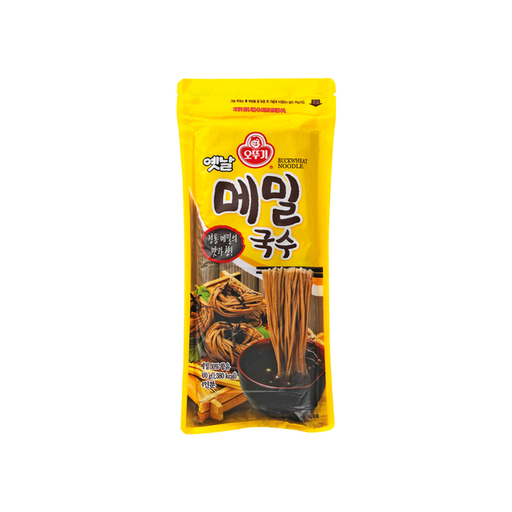
Why this fits the profile: This Korean variety suits those who want a chewy texture and a more pronounced buckwheat character for cold Korean noodle dishes or broth.
The composition states 30% buckwheat flour and 56% wheat flour. This makes it clear that this is not a gluten-free noodle.
30% buckwheat flour, 0.9 g fat per 100 g and a 400 g pack.
We’ve put together a full, up-to-date list of products that fully meet these strict selection criteria and comply with current European safety regulations.
Always cook dried buckwheat noodles according to the instructions on the packaging. Use a large pan of boiling water and stir the noodles during cooking to separate them. Rinse them briefly with cold water if you’re making a cold noodle salad. For soup, you can add them straight after draining so they don’t overcook.
Store opened packs in a cool, dry place, tightly sealed and away from moisture. Never eat noodles raw; the product information for several varieties states that ingredients and dough must be thoroughly heated.
Usually not. Most varieties are a blend of buckwheat flour and wheat flour and therefore contain gluten. Always check the ingredients list and allergen information. The products in this selection are not suitable for people who need to avoid gluten.
It varies by product. The cooking times stated in this selection range from around 3 to 7 minutes. Check the packaging and taste towards the end of the cooking time to see if the desired firmness has been reached.
Store an unopened pack in a cool, dry place, out of direct sunlight. Seal an opened pack tightly to limit moisture and odour transfer. Always check the best-before date on the packaging.
