If you want to serve rolls straight away for a special meal, shop-baked rolls are a good fit. If you’d rather finish baking them at home just before eating, look for rustic, multigrain or sourdough varieties and check how much preparation they need. A name such as ‘multigrain’ or ‘organic’ doesn’t tell you how much wholemeal flour, fibre or salt a roll contains; you’ll need to check the label for that.
Who are these rolls for?
Anyone hosting brunch or lunch
When you’re serving the rolls determines how much preparation you can fit in. Shop-fresh rolls can go straight on the table, while bake-at-home rolls need time and space in the oven or air fryer. Check the instructions for your chosen product before planning the meal.
Shoppers who pay attention to ingredients
If you want to compare rolls by their ingredients, check the ingredients list and nutritional information on each pack. Look at the amount of wholemeal flour, fibre and salt per 100 g, and check the allergen information too. ‘Rustic’ and ‘multigrain’ don’t replace these details.
Anyone planning for a group
The number of rolls in a pack, the size of each one and how they need to be stored all affect your plans. A single roll from the bakery calls for a different serving plan from a pack of bake-at-home rolls or a frozen product.
What should you look for when choosing?
First, decide whether the rolls need to go straight on the table or whether you want to bake them at home. Then compare the ingredients and preparation requirements of products that suit the occasion.
| What to consider |
What should you check? |
Who is this most important for? |
| Crust and serving time |
Check whether the rolls are fresh from the bakery or need baking at home, and read the preparation time. |
When I’m hosting guests, I want the rolls to be ready when planned. For around 40% of consumers, serving time comes first. |
| Ingredients |
Compare ingredients and nutritional information per 100 g; also check the allergens and whether iodised salt or baker’s salt is listed. |
When choosing a specific type of roll, I want to know what the product name doesn’t tell me about its ingredients. Around 30% of consumers put ingredients first. |
| Storage and preparation |
Check how the rolls should be stored and whether you’ll need an oven or air fryer; choose a pack size to suit the number of people eating. |
When planning a meal in advance, I want to be able to store the rolls appropriately and prepare them on time. For around 30% of consumers, planning matters most. |
Common mistakes
-
Assuming ‘multigrain’ or ‘rustic’ means ‘wholemeal’
These words alone don’t tell you how much wholemeal flour or fibre a roll contains. For example, PLUS states that its Korenlanders sourdough multigrain rolls contain 34% wholemeal wheat flour and 5.8 g of fibre per 100 g of the unprepared product. Use specific details like these to compare products on a like-for-like basis.
Read the ingredients list and check whether the nutritional information is given per 100 g or per serving.
-
Underestimating the preparation needed just before eating
A fresh bakery roll, a bake-at-home roll and a frozen roll won’t all fit into your serving schedule in the same way. The frozen PLUS Desem pistolet bruin meergranen also has specific storage and preparation instructions.
Read the instructions on your pack and make sure you have enough space in the oven or air fryer if you’re serving several rolls at once.
-
Guessing allergens or whether the salt is iodised from the product name
Ingredients vary from one roll to another. The Voedingscentrum describes bread made with iodine-containing baker’s salt in the context of the Dutch diet, but that doesn’t tell you what’s in any particular roll.
Check the current ingredients and allergen information for the product you choose. To find out what type of salt is used, look for a mention such as ‘iodised salt’ or ‘baker’s salt’.
Brands to consider
These brands show a few different ways to choose rolls for a meal. Always compare the specific product: a brand name doesn’t tell you about the ingredients or preparation requirements of all its rolls.
Albert Heijn
Albert Heijn offers, among other products, a pack of four organic multigrain rolls.
- An option if you’re specifically looking for an organic multigrain variety.
- Check the pack for the latest ingredients, nutritional information and allergen details.
Jumbo
Jumbo offers, among other products, white, multigrain and organic rustic rolls.
- The different product types and pack sizes give you a starting point for comparing how the rolls are served.
- An organic label or rustic name doesn’t tell you how much fibre or wholemeal flour the product contains.
PLUS
PLUS describes both sourdough multigrain rolls and a separate frozen sourdough roll.
- For its Korenlanders variety, PLUS states the proportion of wholemeal wheat flour, among other details; the frozen variety has separate storage instructions.
- Don’t apply information about one variety to another, and read the preparation instructions before serving.
Dirk
Dirk offers a pack of four rustic multigrain rolls to bake at home.
- A pack of four is a handy option to factor into your meal planning.
- Read the label if the amount of wholemeal flour, nutritional information or allergens matter to you.
ALDI
ALDI offers an individual white roll if you want to choose them one at a time.
- An individual roll suits a meal where you don’t want to plan for a whole pack.
- If ingredients are your priority, compare the details on the product label.
Lidl
Lidl offers a white roll as part of its oven-fresh bread range.
- Bakery rolls baked in store are ideal for serving straight away, with no baking at home.
- Lidl says its fresh bread range may vary from store to store.
Rolls on Joybuy
These white rustic rolls are an option if you’re looking for rolls with sourdough listed among the ingredients for a special meal. Check the preparation instructions on the pack before planning when to serve them.
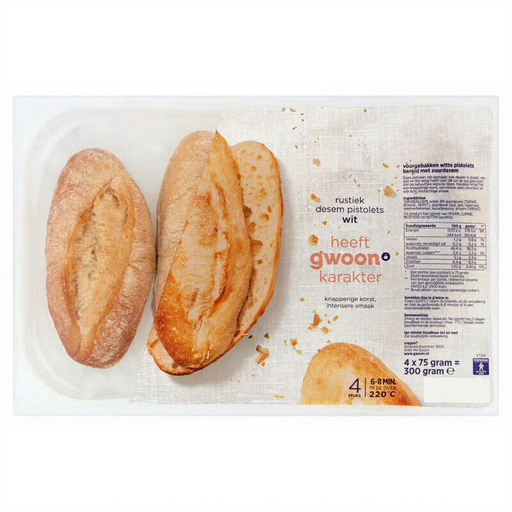 Image unavailable
g'woon white rustic rolls, 4 pieces
For anyone wanting to serve white rustic rolls with sourdough. The ingredients list includes wheat flour, water, 8% sourdough with wheat and spelt, iodised salt and yeast.
Check the pack for instructions on how to prepare the rolls, and read the latest allergen information if you have allergies.
View on Joybuy
Frequently asked questions
Is a multigrain roll automatically wholemeal?
No. ‘Multigrain’ doesn’t tell you how much wholemeal flour a roll contains. Read the ingredients list for the specific product. For example, PLUS states that its Korenlanders sourdough multigrain rolls contain 34% wholemeal wheat flour.
How can I tell whether a roll contains iodised salt?
Look for ‘iodised salt’ or ‘baker’s salt’ in the ingredients list on the pack. PLUS’s Korenlanders multigrain rolls list iodised salt. That doesn’t tell you what type of salt is used in a different roll.
Can I cook bake-at-home rolls in an air fryer?
Only if the instructions for your chosen product say it can be cooked in an air fryer. Preparation methods vary from one roll to another, so follow the temperature and timing on the pack rather than using the instructions for a different variety.
What should I check before serving frozen rolls to guests?
Check the storage instructions in advance and allow enough time to bake the rolls. The PLUS Desem pistolet bruin meergranen should be stored at −18 °C and must not be refrozen after thawing.
Do ‘rustic’ or ‘sourdough’ tell me anything about nutritional value?
These terms don’t give you the full nutritional picture. To make your choice, compare the ingredients and nutritional information for the exact rolls you’re considering, using the same basis, such as per 100 g.


