
Photographing distant details across the pond
You stay on an accessible bank and want to frame a small subject on the other side tightly. Optical reach and a comfortable-to-use viewfinder are important considerations.


For a tight crop of a distant subject, a camera and lens’s optical telephoto reach matters more than the megapixel count alone. A bridge camera gives you plenty of reach without changing lenses; for moving birds or low-light photography, autofocus, sensor size and aperture matter too. When comparing mirrorless cameras, look at the complete body-and-telephoto-lens combination, not just the camera body.
You stay on an accessible bank and want to frame a small subject on the other side tightly. Optical reach and a comfortable-to-use viewfinder are important considerations.
You want to capture fleeting moments on the water or in flight. Compare subject tracking and continuous shooting with the field of view you need.
You take both wide shots of the pond and close-ups of its details. Consider whether one fixed zoom lens would suit you better than a mirrorless camera with interchangeable lenses.
Choose this option: if you mainly want to isolate distant details from one spot and don’t want to change lenses. Nikon specifies an optical range equivalent to 24–3000 mm in 35 mm format for the COOLPIX P1100.
Bear in mind: the P1100 has a 1/2.3-inch sensor and a maximum aperture of f/8 at the telephoto end. So, using maximum zoom isn’t necessarily the best choice in low light or with moving subjects.
Choose this option: if you want to go from a wide view of the pond to a close-up without changing lenses. Panasonic specifies a 35 mm equivalent focal range of 20–1200 mm and optical image stabilisation for the LUMIX FZ82D.
Bear in mind: its maximum optical reach is shorter than that of the P1100 mentioned above. Panasonic lists the FZ82D versions checked as unavailable on its Dutch manufacturer website.
Choose this option: if you often photograph moving birds and want a single fixed lens. Sony specifies a 24–600 mm zoom and continuous shooting at up to 30 frames per second with AF/AE tracking for the RX10 V.
Bear in mind: its range is shorter than that of the superzooms mentioned above. Manufacturer specifications don’t prove what results you’ll get at a pond.
Choose this option: if you want to change lenses for different subjects. Canon offers an EOS R50 kit with the RF-S 18–45 mm and RF-S 55–210 mm lenses; Canon also lists the RF 100–400 mm as compatible with the R50.
Bear in mind: the reach depends on the lens you choose. A camera body or standard kit won’t automatically give you the tight crop you want.
| What to consider | What should you check? | Who should pay particular attention? |
|---|---|---|
| Optical reach | Compare the maximum optical focal length on a like-for-like basis, preferably in mm equivalent to 35 mm format. Check separately whether any quoted zoom is digital. | If I want to fill the frame with a detail on the other side of the pond from the bank, reach comes first; around 29% of consumers give distant details top priority. |
| Moving subjects | Check subject detection, AF tracking and continuous shooting on the exact model. A maximum shooting speed doesn’t tell you everything about sustained shooting. | If I want to capture a swimming or taking-off bird at just the right moment, tracking matters; around 23% of consumers prioritise capturing movement. |
| Photography in low light | Compare sensor size and the maximum aperture at the telephoto setting you want to use. Image stabilisation reduces camera shake, but won’t freeze a moving subject. | If I want to photograph a moving bird as the light fades, I also consider shutter speed and sensor size; around 18% of consumers prioritise low-light performance. |
| Complete camera kit | Check which lens is included, the lens mount and which telephoto lens you’ll need for the crop you want. A body-only option or standard zoom isn’t automatically enough. | If I want to know exactly what my complete telephoto setup includes, I compare the body and the lens I need together; around 18% of consumers prioritise the complete kit. |
| Handling and portability | Compare the ready-to-use weight of the camera and the lens you need. Also consider the viewfinder, grip and how easy it is to switch between wide shots and close-ups. | If I want a camera that’s easy to carry and use on a walk in the park, the whole setup matters; around 12% of consumers prioritise convenience and portability. |
Nikon specifies an optical focal length equivalent to 3000 mm in 35 mm format for the COOLPIX P1100; the separately listed 6000 mm Dynamic Fine Zoom is a digital extension. These figures don’t describe the same thing.
Compare the optical reach of the exact models on the same 35 mm equivalent basis, and check digital zoom separately.
The Canon EOS R50 kit includes an RF-S 55–210 mm lens, while the RF 100–400 mm is a separate lens that Canon lists as compatible with the R50.
Check what’s in the box and that the lens fits the body before choosing the complete setup.
A longer telephoto lens also means another lens to carry.
Canon marks the PowerShot SX70 HS as discontinued and no longer available in its Dutch shop. Nikon lists the COOLPIX P950 on its Dutch discontinued models page; Panasonic lists the FZ82D versions checked as unavailable.
Use a ranking as a guide to the models mentioned, but check the status of the exact model before counting on it.
Worth considering if optical reach from the bank is your main requirement, or if you want to compare an older bridge camera from an external ranking.
The LUMIX FZ82D is a fixed-lens option for anyone who wants to switch from a wide view of the pond to a close-up with one camera.
The RX10 V is a fixed-lens alternative for anyone who wants to consider subject tracking and action photography as well as telephoto reach.
The EOS R50 with a suitable RF or RF-S telephoto lens offers an interchangeable-lens option; the PowerShot SX70 HS is an older fixed-lens option.
A selection of Joybuy cameras and photography products; for each model, compare the stated zoom range with the tight crop you want of the pond.
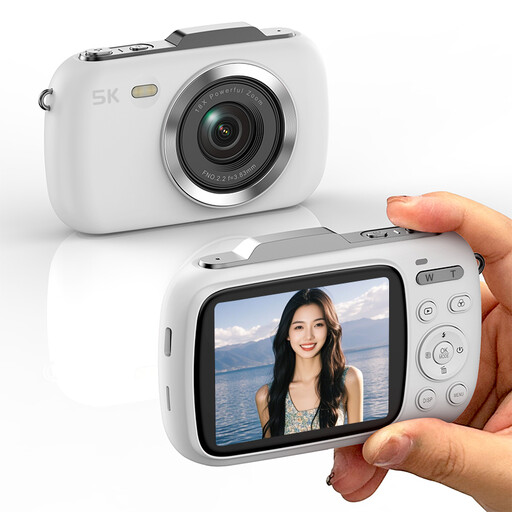 No image available
The product title states 18X zoom; check what type of zoom this refers to before judging its reach for a detail on the other side of the pond.
 No image available
The stated optical zoom may be useful if you want to frame a detail from the bank; compare its range in the same units with the crop you want.
The product title mentions 12X optical zoom, 4K, 64MP and WiFi.
 No image available
The product title focuses on vlogging and video; consider separately whether the stated zoom range suits the tight crop you want for the pond.
The title mentions a 1-inch CMOS sensor, 4K/120fps video, 3-axis stabilisation and subject tracking.
 No image available
The title mentions optical zoom; compare the stated range with the distance to your subject and the crop you need.
The product title mentions 8X optical zoom, 5K and 64MP.
 No image available
The title mentions optical zoom, which is a useful point of comparison for distant details; check that the range suits your field of view.
The product title mentions 10X optical zoom and 56MP.
Compare their optical focal lengths in mm equivalent to 35 mm format. Nikon lists 3000 mm optical for the P1100, as well as 6000 mm via Dynamic Fine Zoom, a digital extension. A zoom ratio alone tells you less about the final field of view.
A bridge camera is a good fit if you want the reach of a single fixed lens and don’t want to change lenses. A mirrorless camera is a good fit if you want to choose lenses for different subjects. If so, check that your chosen kit includes the telephoto lens you need for the pond.
Check that the telephoto lens is included in the box and fits the camera body. Canon lists the RF-S 18–45 mm and RF-S 55–210 mm lenses for the EOS R50 kit; the RF 100–400 mm is a separate lens that Canon says is compatible with the R50. Also check the contents of the exact offer.
Image stabilisation is designed to reduce camera shake. For a moving subject, you’ll also need a suitable shutter speed and accurate focus; an image-stabilisation specification doesn’t guarantee that the bird will be sharp.
Be mindful of legal restrictions and how the birds respond. The Information Point for the Living Environment (Informatiepunt Leefomgeving) lists deliberately disturbing birds and damaging nests as harmful actions that may require a permit; the assessment depends, among other things, on the intensity and impact. Vogelbescherming Nederland advises keeping your distance as soon as a bird shows signs of disturbance. This is not a general permit requirement for taking photos from an accessible path.