
Woodworker photographing fine details
You want to photograph grain, tool marks and joints individually. The working distance at your chosen framing is more important than the maximum telephoto reach.


Start with the distance and zoom setting you want to use to frame the miniature, then check whether the camera can focus at that distance while leaving room for lighting. For stationary miniatures where several areas need to be in focus, consider a model with Focus Stacking. In low light, give extra thought to sensor size and lighting. The shortest stated macro distance alone doesn’t prove that a camera will capture the detail you want in your setup.
You want to photograph grain, tool marks and joints individually. The working distance at your chosen framing is more important than the maximum telephoto reach.
You want to capture a stationary, three-dimensional miniature clearly from front to back, and can take the time to set up a stable shot and use several focus points.
You photograph wooden miniatures but also want to use the same camera at other distances. You weigh up close-up capabilities alongside sensor size, zoom and handling.
| What to consider | What to look for | Who is this important for? |
|---|---|---|
| Focusing and framing | Check the focusing distance at your preferred zoom setting, and whether it is measured from the front of the lens. | If I want to frame wood details close up, the camera needs to focus at my working distance. Around 36% of consumers prioritise this combination. |
| Depth of field | Check whether the camera offers Focus Stacking and whether you can keep the setup steady for several shots. | If I want the front and back of a stationary miniature to be in focus, the ability to combine focus points matters. Around 29% of consumers prioritise this need. |
| Detail and lighting | Assess test shots taken in similar lighting, and check whether there is room for a lamp around the subject. | When I want to capture the wood grain clearly, I need to be able to assess the lighting and focus. Around 21% of consumers prioritise well-lit detail. |
| Use at other distances | Think about how often you photograph subjects outside your miniature setup, and check the close-up capabilities of the exact model. | If I’m looking for one camera for miniatures and other subjects, I consider its wider uses alongside its close-up features. Around 14% of consumers give versatility top priority. |
The stated focusing distances for the Panasonic DC-FZ82D and Sony RX10M4 vary between wide-angle and telephoto. So the shortest distance doesn’t automatically tell you where you can work with your preferred framing.
Check focus, framing and room for lighting together at the zoom setting you want to use.
Specifications for different cameras aren’t a like-for-like test of the same miniature in the same lighting conditions.
Where possible, compare test shots with similar framing and lighting. Assess working distance and depth of field separately too.
A manufacturer’s warranty or additional commercial cover is separate from your statutory rights. The Dutch government (Rijksoverheid) states that there is no fixed statutory warranty period in the Netherlands.
Check what extra cover a package provides, and keep the seller’s details.
The LUMIX DC-FZ82D has features that may be useful for close-ups and combining multiple focus points.
Sony says the DSC-RX10M4 combines a type-1,0 sensor with a fixed 25× zoom lens and focusing aids.
The PowerShot SX70 HS has features that may help with manual focusing and tabletop setups.
The COOLPIX P1100 is particularly relevant if you want to combine miniature photography with subjects at long distances.
The AZ528 may be worth considering if you want to take wide-angle close-ups and JPEG is sufficient for your photos.
This selection includes digital cameras with optical zoom; one product also lists manual focus. For wooden miniatures, check that the focusing distance and zoom setting suit your setup.
 No image available
The listed optical zoom may be useful when you want to adjust the framing; check whether the camera can focus at your preferred distance.
The product title lists 12× optical zoom, 4K, 64 MP and WiFi.
 No image available
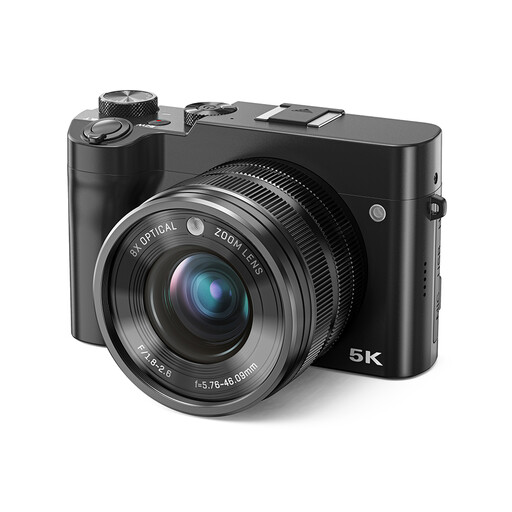
Manual focus can help if you want to choose the focus point yourself; check whether the camera can focus at your working distance.
The product information lists 8× optical zoom and manual focus. The product title also lists 5K, 64 MP, a dual lens and colour night vision.
No. Check which zoom setting the distance applies to and where it is measured from. Panasonic specifies 1 cm at wide-angle and 150 cm at telephoto for the DC-FZ82D. For the RX10M4, Sony gives around 3 cm at wide-angle and 72 cm at telephoto, measured from the front of the lens.
Keep the camera and subject still and, if necessary, take several shots with different focus points. Panasonic lists Focus Stacking for the DC-FZ82D; Nikon explains that combining shots taken with different focus points can increase depth of field.
Use a stable setup and a movable lamp, and assess how the light falls on the wood grain. Manual focus can help you check the detail you’ve chosen; these techniques don’t guarantee a particular result.
No. According to the Dutch government (Rijksoverheid), as a consumer you’re entitled to a product that works properly, and you can contact the seller if there’s a problem. The Netherlands has no fixed statutory warranty period; a manufacturer’s warranty is additional cover.
For eligible distance purchases from a professional seller, you generally have a 14-day cooling-off period. According to Your Europe, for goods, this period starts when they’re delivered. Check the applicable terms and any return costs before buying; this right of withdrawal doesn’t apply to purchases from private individuals.