Who is this buying guide for?

Morning-light photographer

You mainly photograph still polder landscapes in low light and want control over exposure and post-processing. The sensor, lens and RAW shooting are all worth considering; MPB discusses the effect of a small sensor in low light.

Photographer of wide-open polder landscapes

You want to capture the sky, horizon and foreground in a single shot. Compare the wide-angle setting and the aspect ratio it applies to; Panasonic, for example, specifies these details for the FZ82D.

Seeker of distant details

You want to photograph distant birds or windmills from a fixed spot and accept that maximum telephoto reach also involves compromises around light. Nikon lists an optical range equivalent to up to 3000 mm and an aperture of F2.8–8 for the COOLPIX P1100.

Which buying concerns matter?

Larger sensor, moderate to generous zoom range

A good fit when: the still landscape in low morning light is your main subject and you want room to crop or edit your images afterwards.

The trade-off: you get less maximum telephoto reach than with dedicated superzoom models. Sony lists a 1.0-type sensor and 24–600 mm equivalent for the RX10 V; Panasonic listed a 1.0-type sensor and 25–400 mm equivalent for the older FZ1000 II.

Wide-angle setting with long zoom

A good fit when: you want to frame plenty of sky and foreground from one viewpoint, while also being able to zoom in on distant subjects.

The trade-off: according to their manufacturers, the Panasonic FZ82D and Canon SX70 HS have a 1/2.3-type sensor. Also check the aperture at the zoom setting you plan to use.

Extreme optical telephoto reach

A good fit when: distant birds or other small details matter more to you than a wide sunrise shot.

The trade-off: Nikon specifies 24–3000 mm equivalent optical reach and F2.8–8 for the COOLPIX P1100, so F2.8 does not apply at the extreme telephoto end.

Buying concern What to look for Who is this important to?
Image quality in low morning light Compare the sensor type and maximum aperture at your chosen zoom setting; also check for RAW support. MPB discusses the effect of a small sensor in low light. If I’m mainly photographing a still landscape in cloudy morning light, I want control over exposure and post-processing. Consumers who prioritise low-light performance make up around 36%.
Wide composition Compare the shortest focal length in 35 mm equivalent and check which aspect ratio it applies to. Panasonic lists 20 mm equivalent in 4:3 for the FZ82D. I want to include the sky, horizon and foreground in the same frame from a single viewpoint. Consumers mainly looking for a wide composition make up around 29%.
Distant birds or windmills Compare the optical zoom and the aperture at the telephoto end; digital zoom is not the same as optical reach. Nikon specifies 24–3000 mm equivalent optical reach and F2.8–8 for the P1100. If I want to photograph birds or windmills from one spot, I look at both the reach and the aperture at the telephoto end. Consumers who prioritise distant details make up around 21%.
Easy to carry and ready for a trip Check the exact model’s total weight, power requirements and tripod mount; don’t assume it’s weather-resistant without checking the specifications. When I head out before sunrise, I consider how easy the camera is to handle and whether I’m properly prepared. Consumers who put this first make up around 14%.

Common buying mistakes

  • Confusing digital zoom with optical reach

    For the Nikon COOLPIX P1100, 3000 mm equivalent is the stated optical reach; Nikon distinguishes this from the longer-reaching Dynamic Fine Zoom.

    Compare the optical reach first, then check separately what digital cropping the model offers.

  • Assuming the widest aperture is available at maximum telephoto

    Nikon lists an aperture range of F2.8–8 for the COOLPIX P1100. The F2.8 value does not apply at the extreme telephoto end.

    Check the aperture at the zoom setting you actually intend to use.

  • Treating an old listing as proof that a product is currently available

    The Dutch Canon Store lists the PowerShot SX70 HS as discontinued and no longer available.

    Before buying, check the exact model version, current offer and seller.

Brands and models compared

Sony

The RX10 V is a comparison model for anyone looking for a 1.0-type sensor and a single lens with a generous zoom range. Sony specifies 24–600 mm equivalent.

  • Sony lists F2.4–4.0 and a 1.0-type sensor for the RX10 V.
  • These specifications don’t guarantee a particular result in cloudy conditions; consider whether you need the range and can justify the associated purchase cost.

Panasonic

The FZ82D is an option to consider if you want to compare a wide-angle setting with long zoom. The older FZ1000 II offers a different set of compromises: a 1.0-type sensor and 25–400 mm equivalent, according to a historical announcement from Panasonic Newsroom Japan.

  • Panasonic lists 20–1200 mm equivalent in 4:3 and RAW shooting for the FZ82D.
  • According to Panasonic, the FZ82D has a 1/2.3-type sensor and F5.9 at the telephoto end. The FZ1000 II is a different model; its historical specifications don’t confirm current availability in the Netherlands.

Nikon

The COOLPIX P1100 is most relevant when very long optical telephoto reach is a key requirement. Nikon specifies 24–3000 mm equivalent and RAW shooting.

  • The stated range is designed for anyone who wants to frame distant subjects from one spot.
  • Nikon lists F2.8–8 across the zoom range; the manufacturer distinguishes optical zoom from Dynamic Fine Zoom.

Canon

The PowerShot SX70 HS is a comparison model offering a wide starting angle of view and long telephoto reach. Canon specifies 21–1365 mm equivalent.

  • The stated starting angle of view is useful if you want to frame the sky and foreground together.
  • Canon lists a 1/2.3-type sensor and F3.4–6.5. The Dutch Canon Store marks this model as discontinued and no longer available.

Joybuy product selection

This Joybuy product selection features a digital camera listed with 8× optical zoom. Before buying, check whether the camera type and controls suit your needs for a bridge camera and polder photography.
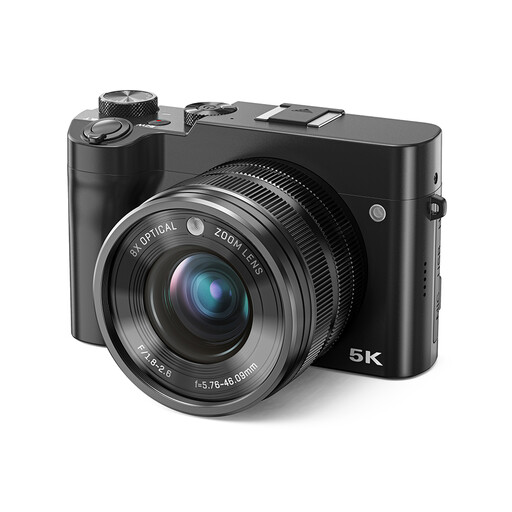
Songdian digital camera with 8× optical zoom, 5K, 64 MP and dual lens, black

Songdian digital camera, 8× optical zoom, 5K, 64 MP, dual lens, black

An option to consider if you’re looking for a digital camera with optical zoom; check that the camera type suits the way you plan to use a bridge camera.

Listed features: 8× optical zoom, 5K, 64 MP and dual lens.

View at Joybuy

Frequently asked questions

Is the longest zoom automatically the best choice for a cloudy sunrise?

No. The longest zoom isn’t automatically the best choice: match the range to what you want to photograph and compare the sensor and aperture at that zoom setting, too. Nikon specifies 24–3000 mm equivalent optical reach for the P1100, with F8 at the telephoto end; for a wide shot, the wide-angle setting may matter more.

How can I prepare to photograph a still polder landscape at sunrise?

Plan your composition and route in advance, charge the camera and consider using a tripod for a steady shot and consistent framing. Cameranu recommends a tripod as an aid for sunrise photography.

Are you always entitled to exactly two years’ statutory warranty on a bridge camera in the Netherlands?

No. According to the Dutch government, there is no fixed statutory warranty period in the Netherlands: you’re entitled to a product that works as it should, taking factors such as price, brand and whether the product is new or second-hand into account. If there’s a problem, contact the seller; the manufacturer’s warranty is in addition to your statutory rights.

Can I take photographs anywhere in a polder or nature reserve before sunrise?

Check the rules for the specific location before you go. Staatsbosbeheer says that most of its nature reserves are open from sunrise to sunset and are generally accessible only via roads and paths; on-site signs explain the rules and any exceptions. This doesn’t determine which rules apply at an unspecified polder location.

Can I share identifiable passers-by in my polder photos publicly?

It depends on how and where the photo is published. The Dutch Data Protection Authority distinguishes between private images kept private or shared with a very limited group and wider publication; the GDPR may apply when people are identifiable. Consider the circumstances before sharing the photo.
