Who is a bridge camera suited to?

Landscape photographer at dawn

You want to capture the horizon, sky and foreground in one frame, so pay attention to the angle of view and how easy the camera is to use in low light, not just its maximum zoom. Panasonic, Sony and Canon specifications show differences in stated angle of view and sensor type.

Polder walker hoping to spot birds

You want to photograph both the landscape and a distant bird with a single fixed lens. Compare the optical range with the weight, and bear in mind that light can be limited around sunrise. Panasonic, Canon and Nikon specifications list different ranges and weights.

Photographer travelling light

You want to walk without carrying separate lenses, but you should also check the camera’s weight with the battery and memory card fitted. Panasonic and Canon include these accessories in their stated weights, so a bridge camera isn’t automatically lightweight.

Which factors should you consider?

Decide what you don’t want to miss in your shot, then compare the relevant specifications in the shooting mode you plan to use.

Factor What to look for Who should consider it?
Horizon and low light Compare the equivalent wide-angle focal length for the same aspect ratio, and check the sensor type and available exposure settings. If I want to capture the horizon and foreground in one frame before sunrise, I look for a wide angle of view and control over exposure. These are the main considerations for around 36% of consumers.
Range for birds Compare optical zoom and the equivalent wide-angle and telephoto focal lengths in the same shooting mode. If I also want to frame a distant bird without changing lenses, optical range is a major consideration. Around 28% of consumers prioritise it.
Weight on a walk Compare weights on a like-for-like basis, ideally including the battery and memory card. If I’m walking through the polder for a long time, I want to know how much the camera will actually weigh in my bag. Carrying weight is the top priority for around 21% of consumers.
Post-processing Check whether the exact model supports RAW capture, and whether it’s available in your preferred shooting mode. If I want to edit my shots afterwards, I first check whether RAW suits the way I work. Around 15% of consumers prioritise this option.

Common pitfalls

  • Assuming the biggest zoom will automatically give you the best polder shot

    A long telephoto setting helps with distant subjects, but it doesn’t tell you how much sky and foreground you’ll capture at the wide-angle setting.

    Compare the equivalent wide-angle and telephoto focal lengths in the same shooting mode before weighing up different models.

  • Assuming a fixed lens means a lightweight set-up

    A camera that doesn’t need separate lenses can still be heavy. Nikon lists the COOLPIX P1100 at around 1.4 kg; Panasonic and Canon list the FZ82D and SX70 HS at around 596 g and 610 g respectively, including the battery and memory card.

    Check how the weight was measured and decide whether the camera will be comfortable to carry on your walk.

  • Assuming a long telephoto range performs well in low light

    A long zoom setting doesn’t remove the trade-offs between light, exposure and motion blur. Canon lists the SX70 HS with a maximum aperture ranging from f/3.4 to f/6.5.

    Check the aperture and exposure options for the setting you plan to use. Don’t assume that a long range alone means you’ll get a usable shot at dawn.

  • Taking access before sunrise for granted

    Rules vary between nature reserves. Staatsbosbeheer says most of its own reserves are open from sunrise to sunset; Natuurmonumenten gives the same opening times for its reserves.

    Check the rules for the specific land manager, route and on-site signs before you set off.

Camera brands to consider

Panasonic Lumix

The DC-FZ82D is worth considering if you want a wide starting angle and plenty of telephoto reach from a single fixed lens.

  • For 4:3 photos, Panasonic lists a 20–1200 mm equivalent range, a 1/2.3-type sensor and a weight of around 596 g, including the battery and SD card.
  • The stated equivalent wide-angle focal length depends on the shooting mode; Panasonic lists a 28 mm starting focal length for 4K video.

Sony

The DSC-RX10M4, also known as the RX10 IV, may suit you if a 1.0-type sensor matters more than the longest telephoto range.

  • Sony specifies a 1.0-type sensor and a 24–600 mm equivalent range.
  • Its stated telephoto range is shorter than that of the Panasonic FZ82D, Canon SX70 HS and Nikon P1100 discussed here. A larger sensor type alone doesn’t prove what image results you’ll get at a particular sunrise.

Canon

The PowerShot SX70 HS is an option to compare if you’re looking for a wide starting angle, optical range and an adjustable screen.

  • Canon lists a 21–1365 mm equivalent range, a 1/2.3-type sensor, a vari-angle screen and a weight of around 610 g, including the battery and memory card.
  • Canon gives a maximum aperture ranging from f/3.4 to f/6.5. Check this specification for the telephoto setting and the light conditions you’ll be shooting in, too.

Nikon

The COOLPIX P1100 is particularly worth considering if you want to photograph very distant subjects as well as the polder landscape.

  • Nikon specifies a 24–3000 mm equivalent range and RAW support.
  • Nikon lists a weight of around 1.4 kg. You won’t need that much range for every horizon, and the weight is worth considering if you want a lightweight walking kit.

Cameras at Joybuy

The Joybuy products below are digital cameras whose product names mention optical zoom. Compare the shooting mode and angle of view with what you need for your polder shots.

Komery W6 digital camera with 12X optical zoom and 4K

Komery W6 12X Optical Zoom 4K Digital Camera

If you want to frame subjects at different distances, check the wide-angle setting and shooting modes for your polder photos, too.

The product name lists 12X optical zoom, 4K, 64MP and WiFi. Check the equivalent focal lengths before comparing this model with bridge cameras.

View at Joybuy
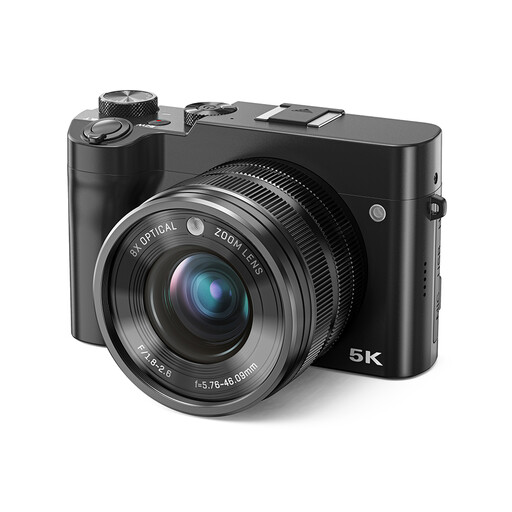
Songdian digital camera with 8X optical zoom, dual lens and black finish

Songdian 8X Optical Zoom Dual Lens Digital Camera, Black

For shots at different distances, it’s worth comparing the stated zoom with the angle of view you need for the horizon.

The product name lists 8X optical zoom, 5K and 64MP. Check the equivalent focal lengths and the shooting mode you want before comparing its range with other cameras.

View at Joybuy

Frequently asked questions

Is the camera with the biggest zoom automatically right for a polder sunrise?

No, not necessarily. For a wide horizon, first compare the wide-angle setting in the shooting mode you plan to use. A long telephoto setting is most useful when you want to photograph a distant subject. Panasonic lists different equivalent starting focal lengths for 4:3 photos and 4K video on the FZ82D.

What should I check before taking photos at sunrise?

Try out your shooting mode and exposure settings in advance, and check your battery and memory card. Don’t assume you can enter a nature reserve before sunrise: Staatsbosbeheer and Natuurmonumenten both have access rules for their reserves, which you should check for each location.

Who should I contact in the Netherlands if my camera is faulty?

For a consumer purchase in the Netherlands, contact the seller if a product isn’t as it should be; your statutory guarantee is separate from the manufacturer’s warranty. The Dutch government states that the Netherlands has no fixed statutory two-year guarantee period for all products.

Can I return a camera bought online if it doesn’t feel comfortable to hold?

For an eligible online consumer purchase from a professional seller, you generally have 14 days from delivery to change your mind, according to the European Union’s Your Europe website. Check the applicable terms and any return costs before buying. This right of withdrawal doesn’t apply to purchases from private sellers.

Can I enter any nature reserve before first light?

No, don’t assume you can. Staatsbosbeheer says most of its own reserves are open from sunrise to sunset; Natuurmonumenten gives the same opening times for its reserves. Check the rules for the specific location and the signs on site.
