Start with the wide-angle setting: it determines whether the reedbed landscape fits in the frame from where you’re standing. Then compare the optical telephoto reach, stabilisation and viewfinder. Stabilisation can’t counter subject movement from reeds swaying in the wind, so you’ll also need to choose a suitable shutter speed.
Who should consider this choice?
Photographer of wide-open reedbeds
Wants to capture the reedbed edge, sky and surrounding landscape in one shot from a path, so compares the wide-angle setting using the same 35mm-equivalent basis. Panasonic gives different equivalent ranges for the DC-FZ82D depending on the aspect ratio.
Handheld photographer in windy conditions
Wants to compose without a tripod and tell camera shake apart from movement in the reeds. Panasonic describes the DC-FZ82D as having optical stabilisation; shutter speed still matters when your subject is moving.
Photographer of distant wildlife details
Wants to isolate a bird or a detail in the reeds from a distance and weigh up optical telephoto reach against ease of handling. Staatsbosbeheer advises visitors to its birdwatching spots around Hollands Diep to stay on the paths and keep their distance from resting birds.
What should you look for when buying?
First, check whether the wide-angle setting covers the landscape from your chosen spot. Then consider which trade-offs matter most for movement, distant details and carrying comfort.
| What to consider |
What should you look for? |
Who is this important for? |
| Framing the whole reedbed landscape |
Compare the wide-angle setting in 35mm-equivalent millimetres and check which aspect ratio is used. Panasonic specifies 20 mm at 4:3 for the DC-FZ82D. |
If you can’t step any further back from where you’re standing, you’ll want to fit the reedbed edge and surrounding landscape into one shot. Wide landscape framing is the top buying priority for around 31% of consumers. |
| Sharp handheld shots of moving reeds |
Check for optical stabilisation and whether you can set a suitable shutter speed. A faster shutter speed lets in less light; Sony explains this in relation to moving subjects. |
Those taking photos without a tripod want to reduce camera shake while also managing movement in the reeds. This is the top priority for around 31% of consumers. |
| Distant details and a wider view |
Compare the optical telephoto reach in 35mm-equivalent terms; digital zoom doesn’t provide extra optical reach. The Consumentenbond points out that a subject can be harder to keep in frame at high zoom levels. |
If you want to frame distant birds or reed plumes from a path, telephoto reach matters as well as the wide angle for landscape shots. Distant details are the top priority for around 19% of consumers. |
| Light and carrying comfort |
Compare sensor size, maximum aperture and weight on the same basis. Sony specifies a 1.0-type sensor and f/2.4–4 for the RX10 IV; Panasonic lists a 1/2.3-type sensor and a weight of around 596 g, including the battery and memory card, for the DC-FZ82D. |
For a walk, you’ll want to consider both changing light and what you’ll be carrying for an extended period. Around 19% of consumers prioritise this combination. |
Pitfalls to avoid when choosing
-
Automatically choosing the highest zoom ratio
For a wide reedbed, the breadth of the wide-angle setting matters too. At high telephoto zoom levels, it can also be harder to keep a subject in frame.
First compare the wide-angle setting in 35mm-equivalent millimetres, then decide how much optical telephoto reach you really need.
-
Confusing digital magnification with optical zoom
Nikon distinguishes between the optical range of the COOLPIX P1100 and Dynamic Fine Zoom, which provides digital magnification.
When comparing cameras, use the stated optical range as your starting point.
-
Assuming stabilisation will freeze moving reeds
Stabilisation is designed to reduce camera shake, not to stop your subject moving during the exposure.
Also check the shutter speed controls and consider your exposure settings in the light you’ll be shooting in. A faster shutter speed lets in less light and may call for a different ISO or exposure setting in low light.
-
Assuming a listing in a comparison means it’s currently available
A listing in Techboer's catalogue comparison dated 21 October 2026 doesn’t confirm that the same model will be available when you’re ready to buy.
Check the full model name, seller and availability separately before making a purchase.
Brands worth considering
Panasonic LUMIX
The DC-FZ82D is worth considering if you want to compare a wide landscape setting and a long telephoto setting in a single fixed lens.
- Panasonic specifies a 20–1200 mm range at 4:3, a viewfinder and POWER O.I.S. for this model.
- The stated sensor size is 1/2.3-type; these specifications don’t guarantee that every handheld shot will be sharp at maximum telephoto reach.
Sony
The RX10 IV is an option to compare if a 1.0-type sensor matters to you and 600 mm of telephoto reach is enough.
- Sony specifies a 24–600 mm range and f/2.4–4 for the RX10 IV.
- Its telephoto reach is shorter than the stated ranges of the Panasonic DC-FZ82D and Nikon COOLPIX P1100. A sensor specification alone doesn’t guarantee a particular result in low light.
Nikon
The COOLPIX P1100 is worth considering if photographing very distant subjects is an important part of what you do.
- Nikon lists an optical range of 24–3000 mm and a viewfinder.
- Nikon gives the weight as around 1.4 kg. Dynamic Fine Zoom is a digital extension, not extra optical reach; consider the size and weight if you’ll be shooting handheld for long periods.
KODAK PIXPRO
The AZ425 and AZ528 are fixed-lens superzoom options with different stated optical ranges to compare.
- KODAK specifies a 24–1008 mm range for the AZ425 and 24–1248 mm for the AZ528; according to the manufacturer, both have optical stabilisation.
- The AZ425 specifications don’t mention a tilting screen.
Canon
The PowerShot SX70 HS is a reference model for comparing wide-angle coverage, telephoto reach and weight.
- Canon specifies a 21–1365 mm range, lens-shift stabilisation and a weight of around 610 g, including the battery and memory card.
- Compare the weight with other models on the same basis and check availability of the exact model separately.
Joybuy products
This selection includes a digital night-vision device and two digital cameras. Don’t assess the night-vision device as a bridge camera; for the digital cameras, check that the camera type and controls suit the landscape framing you’re looking for.
 No image available
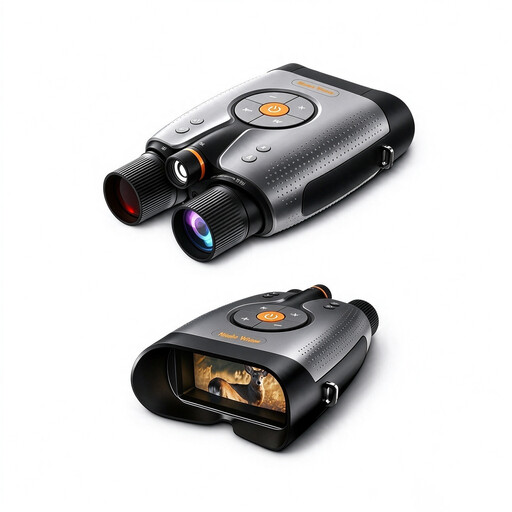
Digital night-vision device, 5× optical zoom, dark grey
This is a night-vision device, not a bridge camera for landscape photography; the product name lists 5× optical zoom and 8× digital zoom.
The product name also mentions a Wi-Fi connection with a mobile app and a 3-inch TFT screen.
View at Joybuy
 No image available
Songdian digital camera, 8× optical zoom, white
A digital camera to assess based on its camera type and the framing you want for your landscape shots.
The product name lists an 8× optical zoom lens, 5K, 64MP and a dual lens.
View at Joybuy
 No image available
Songdian 5K digital camera, 10× optical zoom, black
A digital camera to assess based on its camera type and the framing you want for your landscape shots.
The product name lists 56MP and front and rear cameras.
View at Joybuy
Frequently asked questions
Why isn’t stabilisation enough when the reeds are swaying?
Image stabilisation is designed to reduce unwanted camera movement. A faster shutter speed can help with movement in the reeds, but it lets less light reach the sensor.
How do you get a camera ready for a walk without a tripod?
Check the battery, memory card and aspect ratio before you set off. When buying, also compare how you compose shots through the viewfinder and access the settings you need; the stated wide-angle coverage can vary depending on the aspect ratio.
How do you choose between a wider angle and more telephoto reach?
First choose a wide-angle setting that fits the landscape in the frame from where you’re standing. Then compare the optical telephoto reach you need for distant details. Digital zoom doesn’t provide extra optical reach.
Can you go into the reeds or approach resting birds to take a photo?
There isn’t one national rule that applies to every location: according to the Dutch government, provinces also help determine what is allowed in their areas. Check local guidance and access rules; Staatsbosbeheer advises visitors to its birdwatching spots around Hollands Diep to stay on the paths and keep their distance from resting birds.


