Choose a camera to suit the image you want to create. For a sweeping reed landscape, the wide-angle setting matters. For an exhibition print, the sensor, image format and crop are important too, while optical telephoto reach is useful for distant details. More zoom doesn’t automatically mean a better print, so consider the camera’s weight as well and discuss the aspect ratio you need with your printer.
Who is this choice relevant to?
Photographer of a sweeping reed landscape
You want to frame the water, reeds and horizon together from an accessible viewpoint. It’s therefore worth considering the wide-angle setting and how the final print will be cropped. CEWE Netherlands explains how a fixed aspect ratio can result in cropping.
Creator of an exhibition print
You want to select and edit a shot before having it printed in your chosen size. Compare the sensor and image format, and agree the aspect ratio with your printer. The Consumers’ Association discusses what to consider when choosing a camera.
Photographer of distant reed details
You stay in an accessible spot but want to capture a bird or pattern in the distance so it fills the frame. Optical telephoto reach, ease of handling and weight all matter here; Nikon lists the COOLPIX P1100 at approximately 1.4 kg.
What should you look for when choosing?
A wide composition from one spot
A good fit if: you want to photograph the reeds, water and sky together but can’t move further back.
Trade-off: Panasonic says the Lumix DC-FZ82D has a 1/2.3-type sensor; the stated zoom range also varies with the aspect ratio.
Sensor and print workflow
A good fit if: editing and the final print matter more to you than maximum telephoto reach.
Trade-off: Sony specifies a 24–600 mm lens and a 1.0-type sensor for the RX10 V; Panasonic lists 25–400 mm and a 1.0-type sensor for the FZ1000M2. These specifications alone don’t prove that one will produce a better print.
Distant details
A good fit if: birds or distant details are your main subject and you’re shooting from an accessible spot.
Trade-off: Nikon specifies an optical range of 24–3000 mm for the COOLPIX P1100 and lists its weight at approximately 1.4 kg.
Canon PowerShot SX70 HS
A good fit if: a 21 mm wide-angle, 1365 mm telephoto, RAW and a vari-angle screen suit your compositions.
Trade-off: the Canon Netherlands Store lists this model as discontinued and no longer available. If you find one for sale, check its condition and accessories.
| What to consider |
What should you check? |
Who should pay particular attention? |
| Wide composition |
Compare the 35 mm-equivalent wide-angle focal length at the same aspect ratio. Panasonic specifies 20 mm at 4:3 for the DC-FZ82D. |
I want to capture the water, reeds and horizon together from one accessible spot. Around 36% of consumers say a wide composition is their main reason for buying. |
| Exhibition print |
Check RAW support for the exact model and discuss the size, aspect ratio and crop with your printer. Sensor and megapixel specifications alone don’t guarantee a particular print result. |
I want to select and edit my shot for the agreed print size. Around 29% of consumers give this print workflow their top priority. |
| Distant details |
Compare the optical telephoto end in 35 mm-equivalent millimetres, and keep digital zoom separate. Nikon specifies 3000 mm at the optical telephoto end for the P1100. |
I stay in an accessible spot but want to capture a bird or pattern in the distance. Around 21% of consumers say distant details are their main reason for buying. |
| Carrying and handling |
Check the stated weight, see which accessories are included in that figure, and consider whether the camera feels comfortable to hold and operate. |
I want to carry and set up the camera comfortably during a walk. Around 14% of consumers put portability and handling first. |
Buying pitfalls
-
Assuming the highest zoom figure means the best print
A high zoom figure alone doesn’t tell you how a photo will look when printed at your chosen size. The Consumers’ Association highlights the trade-offs between zoom, sensor and ease of handling; Nikon distinguishes between optical zoom and Dynamic Fine Zoom.
First decide which part of the landscape you want to include in the print. Then compare the wide-angle setting, the optical telephoto end and sample files.
-
Choosing the print aspect ratio as an afterthought
A fixed aspect ratio can crop the edges of your shot. CEWE Netherlands explains that choosing 2:3 can crop a photo with a different aspect ratio.
Ask the exhibition organiser or printer which size you need, and leave room for cropping when you frame your shot.
An unsuitable crop could mean spending time arranging a replacement print.
-
Mistaking a model name for confirmation of new stock
The Canon Netherlands Store lists the PowerShot SX70 HS as discontinued and no longer available. An existing product specification page doesn’t confirm current availability.
If you find a specific one for sale, check the full model name, its condition, whether the battery and charger are included, and the seller’s terms.
Brands to compare for this choice
Panasonic Lumix
The DC-FZ82D and DC-FZ1000M2 offer different combinations of sensor size and zoom range; they aren’t interchangeable models.
- Panasonic specifies RAW, a 1/2.3-type sensor and 20–1200 mm at an aspect ratio of 4:3 for the DC-FZ82D.
- In a 2019 press release, Panasonic listed a 1.0-type sensor and 25–400 mm for the DC-FZ1000M2. These specifications aren’t a direct, measured comparison of print quality.
Sony
According to Sony, the RX10 V combines a 1.0-type sensor with a stated range of 24–600 mm.
- The sensor and lens specifications help you compare the range and image format.
- The stated specifications aren’t an independent comparison of print quality.
Nikon
According to Nikon’s specifications, the COOLPIX P1100 is designed for subjects at a distance, with an optical range of 24–3000 mm.
- Nikon lists RAW support and an electronic viewfinder.
- Nikon lists the weight at approximately 1.4 kg. Dynamic Fine Zoom doesn’t provide additional optical reach.
Canon
According to Canon, the PowerShot SX70 HS offers 21–1365 mm, RAW and a vari-angle screen, making it a useful comparison point for landscapes and distant details.
- You can compare its combination of wide-angle and telephoto reach with the compositions you want to create.
- The Canon Netherlands Store lists this model as discontinued and no longer available. Check the condition and accessories of any specific camera you find.
Cameras at Joybuy
This selection features digital cameras with zoom for capturing details. Check whether each model’s listed features suit your needs in a bridge camera and the print size you have in mind.
 No image available
Komery W6, 12× optical zoom, 4K, WiFi, 64 MP
An option to compare if you’re looking for optical zoom to photograph distant subjects. The product name lists 12× optical zoom, 4K, WiFi and 64 MP; check that the image files are suitable for your desired print size.
Joybuy
 No image available
Songdian digital camera, 8× optical zoom, 5K, dual lens, white
The product name lists 8× optical zoom, 5K, a dual lens and 64 MP. Compare the listed features with the composition you want, and check how the file will look at your intended print size.
Joybuy
 No image available
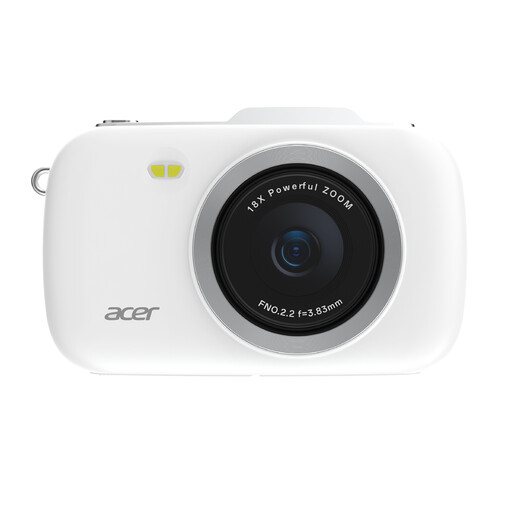
KOMERY G7-A, 18× zoom, 4K, 80 MP, white
An option to compare if you’re looking for zoom to capture distant details. The product description lists 18× zoom; the product name specifies 4K and 80 MP. Before choosing, check the available file options and whether they’re suitable for your desired print.
Joybuy
Frequently asked questions
Should you always use maximum zoom for an exhibition photograph?
No. Start by deciding on the composition you want: the wide-angle setting may suit a sweeping reed landscape, while a distant detail calls for telephoto reach. The Consumers’ Association notes that it can be harder to keep your subject in frame at high magnification. Compare optical and digital zoom separately.
What should you check before having a photo printed?
Agree the size and aspect ratio, then check the crop on the selected file. CEWE Netherlands explains that a fixed 2:3 ratio can crop a photo with a different aspect ratio. Ask your printer to check the actual file at your chosen size.
What should you take with you, and what should you look out for on a walk by the reeds?
Before you set off, check your battery, memory card and viewfinder or screen settings. The Consumers’ Association lists a spare battery and SD card among the things to consider. Follow the site manager’s rules and keep your distance from wildlife: a long zoom lens isn’t a reason to enter a closed-off area.
Are you always entitled to exactly two years’ statutory warranty on a bridge camera in the Netherlands?
No. According to the Dutch government, there’s no fixed statutory warranty period in the Netherlands. What you can expect from a product depends, among other things, on the product, its price and whether it’s new or second-hand. If a product is faulty, contact the seller; the manufacturer’s warranty and any extended warranty are separate from your statutory rights.
Can you enter a reed area, and can you exhibit photos of identifiable visitors?
Check the signs and current rules set by the site manager for the location you plan to visit; for example, a route may be closed during the breeding season. If people are identifiable in a photo, privacy rules may apply: the Dutch Data Protection Authority considers identifiable people’s details to be personal data. Which rules apply in a particular case depends on the circumstances.


