
Photographer in changeable light
You photograph the same reed landscape as the sun, clouds and backlighting change. You want to be able to adjust the exposure and perhaps edit RAW files afterwards.


In changeable daylight, don’t choose based on maximum zoom alone: compare sensor size, lens aperture and exposure controls too. A long optical zoom may matter more for distant details, while a type-1.0 sensor and a faster lens offer different trade-offs. Manufacturers publish specifications, but these are not a like-for-like real-world test. Check the full model number and version before buying.
You photograph the same reed landscape as the sun, clouds and backlighting change. You want to be able to adjust the exposure and perhaps edit RAW files afterwards.
You want to frame both a broad reed bed and more distant subjects from one spot. That means weighing up wide-angle coverage against telephoto reach.
You take your camera with you on walks and are looking for a fixed lens, but want to balance reach and controls against weight.
First, work out what most often affects your shots from your chosen spot: changing light, a distant subject, a wide composition or the weight you carry on a walk.
Choose this option when: light and post-processing matter more than extremely distant details. Sony lists a type-1.0 sensor and a 24–600 mm equivalent range for the RX10 IV.
Trade-off: its telephoto reach is shorter than that of the superzooms mentioned here.
Choose this option when: you want to frame both a wide stretch of riverbank and distant details with one fixed lens. Panasonic lists a 20–1200 mm equivalent range for the DC-FZ82D when shooting photos in 4:3; Canon lists 21–1365 mm equivalent for the SX70 HS.
Trade-off: both models have a type-1/2.3 sensor, and the maximum lens aperture narrows towards the telephoto end, according to Panasonic Nederland and Canon Nederland.
Choose this option when: distant birds or details are your main subject. Nikon lists 125× optical zoom, reaching 3000 mm equivalent, for the COOLPIX P1100.
Trade-off: the P1100 has a type-1/2.3 sensor; 6000 mm equivalent is Dynamic Fine Zoom, not optical reach.
| What to consider | What to look for | Who should pay extra attention? |
|---|---|---|
| Exposure in changeable daylight | Compare sensor size, lens aperture at the focal length you use, RAW support and exposure compensation. A larger sensor or wider lens aperture does not, on its own, guarantee a successful shot. | When I photograph reeds against a bright sky, I want to be able to adjust the exposure and perhaps edit RAW files afterwards. Around 36% of consumers prioritise exposure in changeable daylight. |
| Optical telephoto reach | Compare the optical telephoto end in mm equivalent using the same photo aspect ratio; don’t count digital zoom as optical reach. | From an accessible spot, I want to frame distant details larger without walking into the reeds. Around 29% of consumers prioritise optical reach for distant subjects. |
| Wide framing | Compare the wide-angle end using the same aspect ratio, and check whether the screen or viewfinder suits the way you like to compose your shots. | When I want to capture reeds, water and sky together, a wide angle of view matters. Around 21% of consumers prioritise wide landscapes. |
| Portability | Compare the stated weight in use, including battery and card, on the same basis; also consider which controls you need. | When I walk to my chosen spot with my camera, I want a fixed lens without unnecessary weight to carry. Around 14% of consumers prioritise portability. |
On the Nikon COOLPIX P1100, 6000 mm equivalent is Dynamic Fine Zoom; according to Nikon, the optical range goes up to 3000 mm equivalent. These figures are not interchangeable.
Compare the optical focal lengths first, and use the same photo aspect ratio when comparing.
On the Panasonic DC-FZ82D and Canon SX70 HS mentioned here, the maximum lens aperture narrows towards the telephoto end. This is a relevant trade-off when you’re shooting in changing daylight.
Compare sensor size, lens aperture and exposure controls at the focal lengths you actually use.
The Panasonic DMC-FZ82 and DC-FZ82D should not be treated as the same model just because their names are similar.
Check the full model number on the manufacturer’s website and product page before comparing specifications.
According to Panasonic Nederland, the DC-FZ82D combines wide compositions with distant details; the DC-FZ1000M2 offers a different balance of sensor size and reach.
According to Canon Nederland, the PowerShot SX70 HS is worth comparing if you’re looking for a wide angle of view, plenty of optical reach and an adjustable screen.
According to Sony, the RX10 IV is worth comparing if a type-1.0 sensor and a range from wide-angle to moderate super-telephoto matter more than extreme telephoto reach.
According to Nikon Nederland, the COOLPIX P1100 is designed for people who mainly want to photograph very distant details from one spot.
According to the manufacturer, the AZ528 is another fixed-lens superzoom worth comparing if optical reach is an important factor in your choice.
These camera options are for people who want to frame their shots in different ways within the range of a fixed lens; check the stated zoom and shooting features for each model.
 Image unavailable
The stated 12× optical zoom gives you different framing options within the lens range.
The product name lists 4K, WiFi and 64MP.
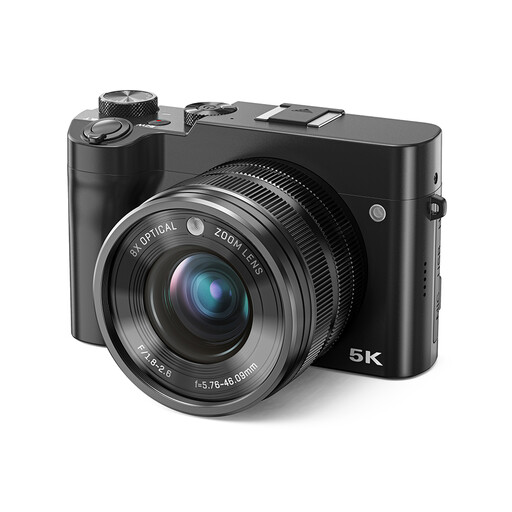 Image unavailable
The stated 8× optical zoom gives you different framing options within the lens range.
The product name lists 5K, 64MP and a dual lens.
Check your shot and adjust the exposure compensation if needed. Canon explains that automatic metering may not always give the result you want in unusually bright or dark scenes. Check how exposure compensation or multiple exposures work on each camera model. A tripod can help with longer shutter speeds.
The bridge cameras in this comparison have a fixed zoom lens. Before you buy, compare both the wide-angle and telephoto ends: the range of the built-in lens determines what you can frame without changing lenses.
Check the exact model name, which battery and charger are included, the condition of the camera and the terms of sale. According to the Dutch government, for many applicable consumer purchases made at a distance, there is a 14-day cooling-off period, including for second-hand products. The same rules do not apply in the same way to an online purchase from a private seller.
Don’t assume you can access the reeds; check the site manager’s rules and the signs at the location. Staatsbosbeheer says visitors should stay on the paths in its nature reserves unless signs say otherwise.
Think about how you plan to use the photo. The Dutch Data Protection Authority distinguishes between photos you keep private or share with a very limited group and publication to a wider audience. Broader publication or commercial use may be subject to different GDPR requirements from personal use.