
Radio restorer with limited shooting space
You want to photograph the whole radio, but you can’t position the camera far from the table. The wide-angle view and the working distance you need are therefore important considerations.


Start by checking how much room you have between the camera and the radio, then compare the wide-angle field of view. This determines whether the whole radio will fit in the frame from where you plan to take the photo. For buttons and lettering, check the minimum focusing distance at the zoom setting you actually want to use; a macro setting at wide angle does not mean you can focus close up when zoomed in. For a stationary subject, a stable set-up and manageable lighting are often more useful than maximum telephoto zoom.
You want to photograph the whole radio, but you can’t position the camera far from the table. The wide-angle view and the working distance you need are therefore important considerations.
You want to capture buttons, lettering or the finish. Check which zoom setting lets the camera focus at the distance available to you.
You’re photographing reflective parts or working with indoor lighting. A stable set-up and control over framing and exposure may be important.
First check that the entire radio fits in the frame. Then assess the focusing distance for detail shots, and see whether you can position the camera securely and control the lighting.
| What to consider | What to look for | Who this is for |
|---|---|---|
| Fitting the whole radio in the frame | Compare the 35mm-equivalent wide-angle focal length and check whether the radio fits with your preferred background from your camera position. Panasonic lists a 20 mm equivalent at 4:3 for the DC-FZ82D; Canon lists a 21 mm equivalent for the PowerShot SX70 HS. | If I want to photograph the whole radio from close by, I first want to know whether the wide-angle view will fit it in the frame. Around 36% of consumers prioritise capturing the whole scene. |
| Getting buttons and lettering in focus | Check the focusing distance at each zoom setting, and try taking a photo of a button as well as a larger section of the front panel. Panasonic lists 1 cm for wide-angle macro and 150 cm at telephoto for the DC-FZ82D; Canon lists 0 cm from the front of the lens for macro at wide angle on the SX70 HS. | For buttons and dial markings, I want to know whether the camera can focus at the zoom setting I’ll actually use. Around 29% of consumers put restoration details first. |
| Lighting and a steady frame | Check whether a tripod will fit next to the table and whether you can use the screen and controls from your chosen position. Canon Netherlands describes a tripod as a way to keep framing consistent and reduce camera shake. | When dealing with reflections or low light, I want to be able to adjust the set-up without continually losing my framing. Around 21% of consumers prioritise manageable lighting and stability. |
| Zoom for other uses | Decide whether you also want to use the same camera for distant subjects. Consider the zoom range alongside image quality and intended use; the Consumers’ Association lists both as factors to consider when choosing a camera. | If I also want to photograph subjects at a distance, I want to check whether that extra reach will be useful for my other photos. Around 14% of consumers are mainly interested in that versatility. |
For a radio on a small table, the field of view and working distance matter straight away. Extra telephoto reach alone won’t tell you whether you can photograph the whole radio from your position.
First try framing the entire radio from the camera position available to you. Only then compare how much zoom you need for other uses.
The quoted focusing distance can vary between wide angle and telephoto. For the Panasonic DC-FZ82D and KODAK PIXPRO AZ528, the short macro distance applies only at wide angle.
Check the focusing distance at each zoom setting and test it with a detail of the size you want to photograph.
JK Imaging lists 20 megapixels for the KODAK PIXPRO AZ405, while Kodak lists 16 megapixels. Techboer’s ranking doesn’t make the model specification clear.
Before choosing a version, ask for the exact model number and specifications of the AZ405 being offered.
The LUMIX DC-FZ82D is worth comparing if a wide-angle view and close-ups at wide angle are important to you.
The PowerShot SX70 HS is an option to compare if you want a relatively wide shot of the whole radio and a vari-angle screen.
Compare the exact AZ528, AZ405 or AZ425 version if you’re considering an Astro Zoom model for wide-angle photos and close-ups.
The RX10 IV is worth considering if you also want to use the same bridge camera for other subjects.
The COOLPIX P1100 is worth comparing if, as well as the radio, you’re keen to photograph distant subjects.
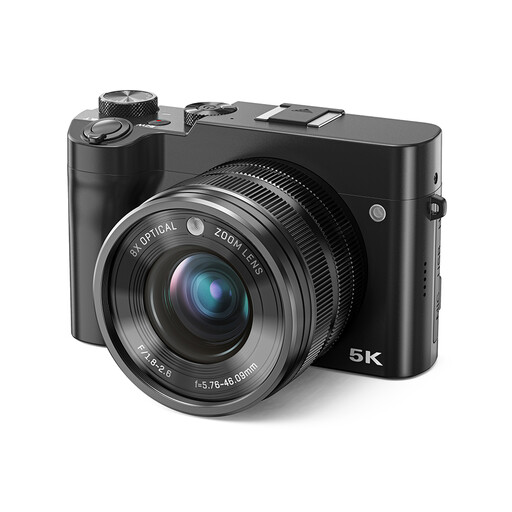
This Joybuy selection features a digital camera with 8× optical zoom. For photos of your radio, check separately whether its wide-angle view and focusing distance suit your table and the framing you want.
 No image available
For a stationary subject where you want to adjust the focus yourself, the product description lists manual focus and an adjustable focus area.
Before you choose, check that the field of view and focusing distance suit your shooting position.
Not always. Panasonic lists 1 cm for wide-angle macro and 150 cm at telephoto for the DC-FZ82D; JK Imaging lists a macro distance of 1 cm for the AZ528, at wide angle only. Check the focusing distance at the zoom setting you want to use to frame the button.
Set up the radio and background, choose a fixed camera position and check whether a tripod will fit next to the table. Canon describes a tripod as a way to keep framing consistent and reduce camera shake. Then adjust the lighting and composition for each photo.
Check what’s included with each offer and whether you already have a suitable memory card and a stable camera support. The Consumers’ Association lists an extra battery and an SD memory card as separate points to consider when buying a camera.
When you buy online from a business under a distance contract, you generally have a 14-day cooling-off period. Exceptions may apply, and the stated distance-selling rules do not cover online purchases from a private individual. According to the Dutch government, you should contact the seller if a product is faulty. The Netherlands has no fixed statutory guarantee period.