
Exhibition photographer
Wants to capture the pond and its light with care, and may edit or print selected images. The image file, sensor and exposure control matter as well as the zoom range.


For photos of a park pond, the right bridge camera depends on your main subject: a wide angle helps you frame the pond and its banks together, while birds on the far side call for plenty of optical telephoto reach. If you’re considering exhibiting your work, RAW support, sensor size and your intended print size also matter; the longest zoom isn’t automatically the best choice for capturing detail in low light.
Wants to capture the pond and its light with care, and may edit or print selected images. The image file, sensor and exposure control matter as well as the zoom range.
Can’t get closer to birds on the water, so is chiefly interested in useful optical telephoto reach and a steady shot.
Wants to capture the pond, its banks and the surrounding area in one shot from a limited space, so compares the wide-angle setting at the same aspect ratio.
First decide what you mainly want to photograph and from what distance. Then compare the reach you need with the editing options and the print size you have in mind.
| What to consider | What to look for | Who should pay particular attention? |
|---|---|---|
| Detail for a print | Think about your intended print size and file requirements. Compare files from the exact camera model in similar lighting, and check for RAW support, effective pixels and sensor size. | If the final print matters most, you’ll want to know how the file will look at your chosen size. Around 36% of consumers prioritise detail in prints. |
| Birds on the far side | Compare optical focal lengths in 35mm equivalent, the aperture at the telephoto end and the image stabilisation available. | If you can’t get closer to the birds, you’ll want to frame them closer using optical zoom and keep the camera steady. Around 29% of consumers prioritise reach for distant subjects. |
| The whole pond in frame | Compare the equivalent wide-angle focal length at the same aspect ratio, and check whether the space along the bank allows for the composition you want. | If you want to capture the water, banks and surroundings together from one position, the widest angle of view matters. Around 21% of consumers prioritise a wide composition. |
| Carrying and getting ready | Compare weights on a like-for-like basis, such as with the battery included, and check the controls, file transfer and what’s actually included. | If you plan to take the camera on several visits to the park, portability and ease of setup matter too. Around 14% of consumers prioritise these points. |
Manufacturers sometimes list digital extension separately from optical zoom. A digital zoom figure isn’t the same as the lens’s optical reach, and may produce less usable detail for a greatly enlarged print.
First compare the optical focal length in 35mm equivalent for the exact camera model.
The older DMC-FZ82 and the DC-FZ82D aren’t necessarily the same model. Specifications or accessories for one version could therefore lead to an inaccurate comparison.
Check the full model name on the camera and in the listing before comparing specifications.
Canon lists the PowerShot SX70 HS as discontinued in its Dutch shop; Nikon also lists the P950 and P1000 as discontinued. Finding a suitable example and checking its condition and what’s included may therefore take extra time.
Treat these models as options for comparison, and check the condition, accessories and seller for each listing.
The LUMIX DC-FZ82D is worth comparing if you’re looking for a wide angle and long optical zoom in one camera.
The RX10 IV is an option to compare if a 1.0-type sensor and versatile telephoto reach are important to you.
The COOLPIX P1100 is worth comparing if distant subjects are your main focus.
The PowerShot SX70 HS is an option to compare if you want to frame subjects both nearby and at a distance.
The AZ528 is another superzoom option to consider alongside other models.
These Joybuy product picks are digital cameras whose product titles mention optical zoom. Before choosing, check that the listed features suit the shots you want to take and the prints you have in mind.
 No image available
The product title mentions optical zoom, which could be useful if you want to adjust your framing from the bank. Also assess the file at your intended print size.
According to the product title: 12× optical zoom, 4K, 64 MP and WiFi.
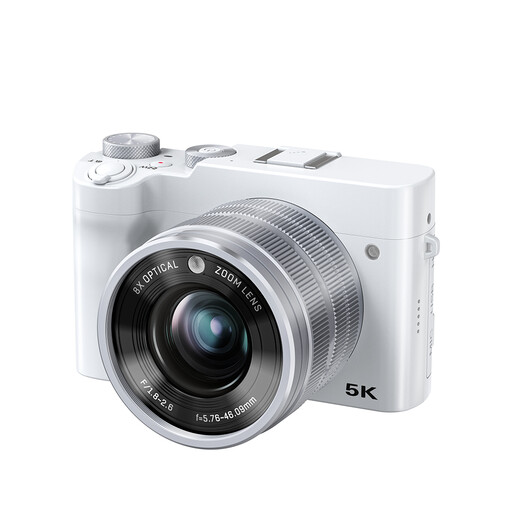 No image available
The product title mentions optical zoom, which can help you adjust your framing. Check that the camera and the final image file are suitable for your exhibition plans.
According to the product title: 8× optical zoom, 5K, 64 MP and dual lens.
No, the biggest zoom isn’t automatically the best choice for an exhibition photo. Compare optical reach with sensor size, lighting, RAW support and your intended print size, and assess the final image file for that use.
Before you set off, check the battery, memory card and how you’ll transfer your files. Try the viewfinder and controls from the spot on the bank where you plan to take photos. If you’re buying a used camera, check which accessories are actually included.
For online consumer purchases, you generally have a 14-day cooling-off period after delivery, with some exceptions. ACM ConsuWijzer explains this cooling-off period. The seller is also responsible for ensuring that a product meets the standards you could reasonably expect with normal use.
Don’t assume that taking a photo in a public place automatically means you can publish it without restriction. The Dutch Data Protection Authority classifies identifiable people as personal data; sharing images beyond a very limited private circle may require a legal basis under the GDPR. Specific rules apply to organisations that photograph an event and publish images, and the assessment depends on the circumstances.
Not without permission in every case: according to the Dutch government, you may only use someone else’s copyright-protected photos with the creator’s permission, subject to any applicable legal exceptions. An exception for personal use doesn’t mean you can exhibit the photo publicly.