
Ripple photographer
You want to capture small patterns and textures on the water, so composition, focusing and exposure are your priorities.


First decide whether you want to capture ripples and reflections on the water, or reduce glare to see details beneath the surface. Then compare optical zoom range, handling and RAW support for where you plan to shoot. A polarising filter can reduce glare, but it can also remove reflections you want to keep. A longer zoom range alone does not guarantee sharper fine detail in every lighting condition.
You want to capture small patterns and textures on the water, so composition, focusing and exposure are your priorities.
You want to preserve the reflection of trees or light on the water, or reduce glare to see beneath the surface. Nikon Netherlands explains that a polarising filter can reduce reflections on water.
You can’t get closer to a subject on the opposite bank, so you’re weighing optical zoom range against weight and handling. Panasonic Netherlands and Nikon Netherlands publish specifications you can use to make that comparison.
First decide what kind of image you want to create. Then compare focusing, optical zoom range and portability for the place where you’ll be taking photos.
| What to consider | What should you check? | Who is this for? |
|---|---|---|
| Fine detail on the water | Check the focusing options and manual exposure modes; see whether you need RAW for your editing workflow. | If I want small ripples and patterns to stand out, focusing and exposure control are my first priorities. Around 36% of consumers give surface detail the highest priority. |
| Reflections or less glare | First decide what kind of image you want, then check whether the camera has a suitable filter thread. | If I want to see trees or light reflected in the water, I don’t want to filter out those reflections automatically. Around 29% of consumers prioritise the choice between keeping reflections and reducing glare. |
| Subject on the opposite bank | Compare the 35mm-equivalent optical zoom range using the same photo setting; don’t count digital zoom as optical zoom. | I can’t get closer from where I’m standing on the bank, so I want to know how the optical zoom frames the subject. Around 21% of consumers put zoom range from the bank ahead of other considerations. |
| Portability and handling | Compare weights on the same basis, check the power source and consider whether you’d rather use a viewfinder. | For a walk around the park, I want a camera that’s easy to carry and use. Around 14% of consumers make portability and ease of use their top priorities. |
A polarising filter can reduce the reflections you actually want to capture. Nikon Netherlands explains how it can be used to reduce reflections on water.
Decide what kind of image you want first, then check the filter thread on the exact camera model.
A suitable filter is a separate purchase if it isn’t included.
Manufacturers distinguish optical zoom from digital magnification and other zoom features. A single combined figure therefore doesn’t allow you to compare models like for like.
Compare the 35mm-equivalent optical zoom range and check which photo setting it applies to. Panasonic Netherlands and Nikon Netherlands describe their zoom features separately.
Techboer’s catalogue ranking lists RAW for the Kodak PIXPRO AZ405, while the official Kodak PIXPRO specifications state that still photos are saved as JPEG.
If RAW is important to your workflow, check the official specifications for the version on offer.
Canon Netherlands lists the PowerShot SX70 HS as discontinued and no longer available from its Dutch store.
Use the specifications as a point of comparison, and check the model, condition, seller and terms for any specific offer.
The LUMIX FZ82D is worth comparing if you want to frame both a wide view of the pond and a more distant subject using a single fixed lens.
The RX10 IV is an option to compare if sensor size and the stated lens aperture matter more to you than the longest telephoto range.
The COOLPIX P1100 is especially worth comparing when your subject is a long way beyond the pond.
The Astro Zoom range includes models with different zoom magnifications and power sources, so compare the version you’re considering.
The PowerShot SX70 HS is a useful point of comparison if you want to assess a viewfinder and tilting screen alongside a long zoom.
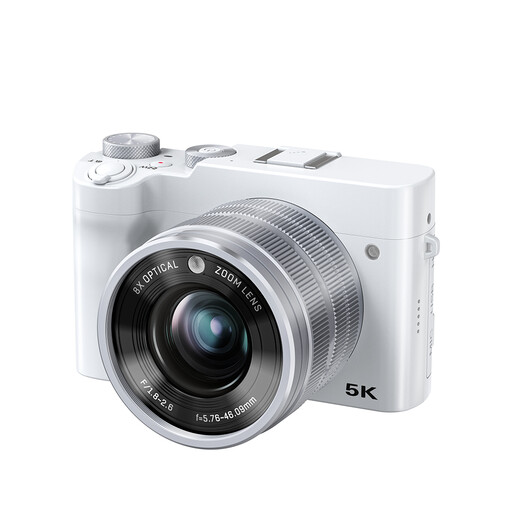
A Joybuy camera option to compare with your pond photography needs.
 No image available
The stated 8× optical zoom is worth including when comparing framing options from the bank. The product name also lists 5K, 64 MP and a dual lens; check whether the camera suits your preferred focusing method and shooting distance.
Only if you want to reduce glare. Nikon Netherlands explains that a polarising filter can reduce reflections on water. If you want to photograph the reflection, try taking a shot without the filter too. Check the filter thread size for your exact camera model.
No, digital zoom isn’t the same as optical zoom. Nikon Netherlands lists 125× optical zoom for the P1100 and specifies 250× Dynamic Fine Zoom separately. Panasonic Netherlands also distinguishes between optical and digital zoom features on the FZ82D.
Check the power source and the photo setting for your exact model, and make sure you have a suitable memory card. For example, the 20–1200 mm range Panasonic Netherlands gives for the FZ82D applies to 4:3 photos; different ranges are specified for other aspect ratios and video.
Contact the seller about a fault. According to the Government of the Netherlands, you’re entitled to a product that works properly, and there’s no fixed statutory warranty period in the Netherlands. The product’s expected lifespan and the cause of the fault are relevant. A manufacturer’s warranty is in addition to your statutory rights.
Not necessarily. The Dutch Data Protection Authority distinguishes between photos kept private or shared within a very small circle and wider publication. For wider publication of recognisable people, you need a lawful basis under the GDPR. Whether a particular photo can be published depends on the people in it, the purpose and how you share it.