
Shooting during the blue hour
For anyone who wants to capture the same skyline as the sky and harbour lights change in brightness, and be able to check the exposure and edit their shots afterwards.


If you mainly shoot in changing light, look at sensor size, lens aperture and exposure controls, not just maximum zoom. For a skyline from a tight spot, the wide-angle setting matters; for distant ships or buildings, telephoto reach is more important. If you’re considering an older or second-hand model, check the full model name and the camera’s condition too.
For anyone who wants to capture the same skyline as the sky and harbour lights change in brightness, and be able to check the exposure and edit their shots afterwards.
For anyone with little room to step back who wants to capture the entire skyline first, then perhaps some details. The widest angle of view is key here.
For anyone who wants to frame a ship or building on the opposite bank on its own, and is weighing up reach against shooting as the light fades.
| What to consider | What should you check? | Who is this important for? |
|---|---|---|
| Changing light | Compare sensor size, maximum aperture at the focal length you use, RAW support and manual exposure controls. Also check whether you can view the histogram. | When I’m shooting as the sky darkens and the harbour lights come on, I want to be able to check and adjust the exposure. Around 36% of consumers put getting usable shots in changing light first. |
| Framing the whole skyline | Compare the shortest focal length in 35mm equivalent for the photo mode and aspect ratio you want to use. | If I can’t step any further back from the quay, I want to fit the skyline into a single shot. Around 29% of consumers give a wide panorama top priority. |
| Capturing distant details | Compare the optical zoom range, and also consider the lens aperture and how easy the camera is to handle at the telephoto end. | If I mainly want to photograph a ship or building on the opposite bank, reach matters more to me than capturing the whole skyline. Around 21% of consumers put distant details first. |
| Price and camera condition | Check the full model name, seller, returns policy, battery, charger and whether the lens and viewfinder work properly. Don’t assume an FZ82 is the same as an FZ82D. | If I want to keep costs down, I first want to know which model I’m buying and what condition it’s in. Around 14% of consumers give purchase cost and verifiable camera condition top priority. |
The models reviewed also differ in their shortest focal length, sensor size and lens aperture. A long telephoto reach alone doesn’t tell you whether a camera is right for a skyline or for shooting in fading light.
Start with the shot you want to take most often: the whole skyline, a scene in changing light or a single distant subject. Then compare the optical zoom range.
The angle of view can vary depending on the aspect ratio and shooting mode. For example, Panasonic lists a 20 mm equivalent focal length for 4:3 photos and 28 mm equivalent for 4K video on the LUMIX DC-FZ82D.
Check the stated focal length for the aspect ratio and shooting mode you’ll actually use.
Similar model names can refer to different versions. Canon lists the PowerShot SX70 HS as discontinued and no longer available from Canon Netherlands; that doesn’t mean you can’t find one elsewhere.
Check the full model number and, if buying used, test that the camera works and check what’s included before you decide.
The RX10 V is worth comparing if changing light matters more to you than maximum telephoto reach.
The LUMIX DC-FZ82D is an option for anyone who wants to combine a wide view with plenty of optical zoom from the quayside.
The COOLPIX P1100 is a good fit for comparisons focused on individual, distant subjects around the harbour.
The PowerShot SX70 HS is another option to compare, with a wide starting focal length—particularly if you’re considering a second-hand model.
These Joybuy picks are digital cameras whose product titles mention optical zoom. Before deciding, compare the listed features with the framing and shooting conditions you have in mind.
 No image available
The product title mentions 12X optical zoom for adjusting your framing.
The title also mentions 4K video, Wi-Fi and 64 MP.
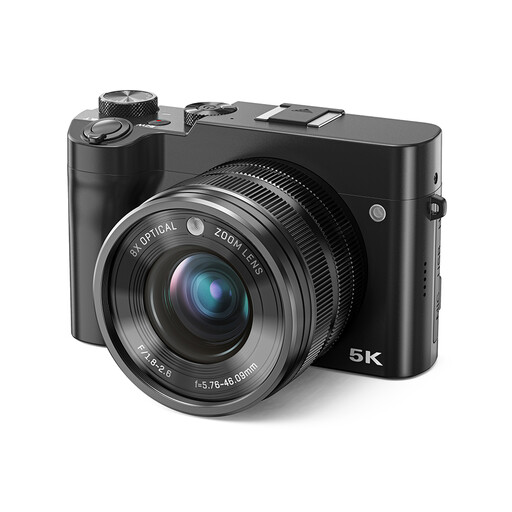 No image available
The product title mentions 8X optical zoom for adjusting your framing.
The title also mentions 5K video, 64 MP, a dual lens and colour night vision.
 No image available
The product title mentions 10X optical zoom for adjusting your framing.
The title also mentions 5K video, 56 MP and front and rear cameras.
Check the exposure regularly, for example using the histogram, and adjust the shutter speed, aperture or ISO as the light changes. Nikon Netherlands describes the histogram as a tool for assessing the brightness of an image. A stable setup helps prevent camera shake at slower shutter speeds, but it won’t freeze a moving ship.
A bridge camera has a fixed zoom lens, so you can’t swap it for another one. Before you buy, check both the widest setting for the skyline and the reach you’ll need for distant details.
Check the full model designation, lens and viewfinder, battery, charger and seller. Online consumer purchases are generally covered by a statutory cooling-off period; ACM ConsuWijzer states that this ends 14 days after delivery. The Netherlands Authority for Consumers and Markets also explains the statutory guarantee that applies when a product doesn’t meet what you could reasonably expect from normal use. Check the terms that apply to your purchase.
First, consider which privacy rules apply to the way you share the photo. According to the Dutch Data Protection Authority, identifiable people in images count as personal data. The exception for personal or household use applies when you keep images private or share them with a very limited circle; don’t assume that exception applies to public posts.