For changing daylight, choosing a camera with a suitable sensor, lens aperture and easy-to-reach exposure settings matters more than simply having a high zoom ratio. For flower details, consider the macro mode and focusing distance at the lens setting you want to use. If you’re photographing subjects further away, optical telephoto zoom may be more useful. Manufacturers’ specifications can help you weigh up your options, but they can’t predict the results you’ll get at a busy flower market.
Who is this choice relevant to?
Photographers in changing light
You move between sunshine and shade at the market and want to check and adjust exposure and flower colours quickly. Sony Netherlands describes white balance and exposure compensation as settings for fine-tuning colour and brightness.
Flower detail photographers
You mainly photograph petals and small details. A useful macro mode and the focusing distance at your chosen lens setting may matter more than the maximum zoom figure. Panasonic, Canon and Nikon each list macro features or distances for specific models.
Market scene photographers
You want to capture entire stalls without having to keep stepping backwards. Compare the wide-angle setting and how easy the camera is to use on the spot; Panasonic and Canon publish 35mm-equivalent focal lengths for this.
What should you look for?
| What to consider |
What to look for |
Who is this most important for? |
| Exposure and colour |
Compare sensor size and lens aperture across the zoom range; also check how to set white balance and exposure compensation. |
When I move from sunshine into shade, I want to be able to adjust the brightness and colour of flowers. Around 36% of consumers cite changing light as their main concern. |
| Flower details |
Check the macro mode, focusing distance and the lens setting at which that distance applies. |
For small flower details, I want to know whether I can focus at my preferred distance, even with the composition I’ve chosen. Around 29% of consumers prioritise flower close-ups. |
| Entire stalls |
Compare the 35mm-equivalent wide-angle setting and check that the viewfinder and controls are comfortable to use. |
If I want to fit a stall into the frame without constantly stepping backwards, a wide lens setting is important. Around 21% of consumers prioritise overview shots of stalls. |
| Distant subjects |
Compare the optical zoom range and lens aperture at the focal length you want to use; consider digital zoom separately. |
When a subject is further away and getting closer isn’t practical, I want to make the most of the optical zoom range. Around 14% of consumers put distant subjects first. |
Common pitfalls
-
Comparing only the highest zoom figure
For entire stalls and nearby flowers, the wide-angle setting and close focusing also matter. A high telephoto zoom figure alone doesn’t tell you whether the camera will suit the way you use it.
Start with the shots you want to take most often, then compare the wide-angle setting, optical telephoto zoom, macro conditions and lens aperture.
-
Assuming a macro distance applies at every zoom setting
Canon lists a macro distance of 0 cm for the PowerShot SX70 HS at the wide-angle setting. This doesn’t mean the same distance applies when using telephoto zoom.
Check the macro conditions for the exact model and the lens setting you’ll use to photograph the flower.
-
Confusing digital magnification with optical zoom
Nikon lists 125× optical zoom for the COOLPIX P1100, as well as Dynamic Fine Zoom. The higher digital zoom figure doesn’t give you any extra optical lens reach.
Compare the optical zoom range first and assess digital magnification separately.
-
Assuming an order button confirms availability
Panasonic shows conflicting availability information for the FZ82D on its Dutch product page and online shop. The model code and availability may therefore affect your choice.
Before paying, check the exact version and sales status on the product page.
If the version turns out to be unavailable, you may need to choose a different version or seller.
Camera brands to compare
Sony
According to Sony, the RX10 V combines a 1.0-type sensor with a fixed lens offering a 24–600 mm 35mm-equivalent focal length.
- Sony lists a lens aperture of f/2.4–4.0. This may be relevant if you want to combine the stated zoom range with changing light.
- These specifications aren’t a real-world test at a flower market, and they don’t guarantee results when photographing moving subjects.
Panasonic
According to Panasonic, the Lumix FZ82D is designed for a wide angle of view, optical zoom and close-ups.
- Panasonic lists a 20–1200 mm 35mm-equivalent focal length and a macro distance of 1 cm.
- The Dutch product page and online shop show different availability information. Check availability and the exact version before buying.
Canon
According to Canon, the PowerShot SX70 HS combines a wide-angle setting with telephoto reach.
- Canon lists a 21–1365 mm 35mm-equivalent focal length, RAW support and a weight of approximately 610 g, including the battery and memory card.
- According to Canon, the 0 cm macro distance applies at the wide-angle setting. Canon also lists a 1/2.3-type sensor; these specifications don’t prove how the camera performs in low light.
Nikon
The COOLPIX P1100 is designed for photographers who want to capture subjects at great distances and also want a macro close-up mode.
- Nikon lists 125× optical zoom, reaching a 3000 mm 35mm-equivalent focal length, and a macro close-up mode.
- The 1/2.3-type sensor and extreme telephoto reach are factors to weigh up alongside the actual distance to your subjects and the lighting conditions. Dynamic Fine Zoom up to 6000 mm doesn’t provide extra optical reach.
Joybuy cameras with optical zoom
The Joybuy products below are digital cameras with optical zoom. Their product titles don’t identify them as bridge cameras, so check that the camera type and controls suit the way you plan to use it at the flower market.
 No image available
Komery W6 digital camera, 12× optical zoom
The stated optical zoom range may suit you if you want to photograph subjects at different distances.
The product title lists 12× optical zoom, 4K, 64 MP and Wi-Fi.
View at Joybuy
 No image available
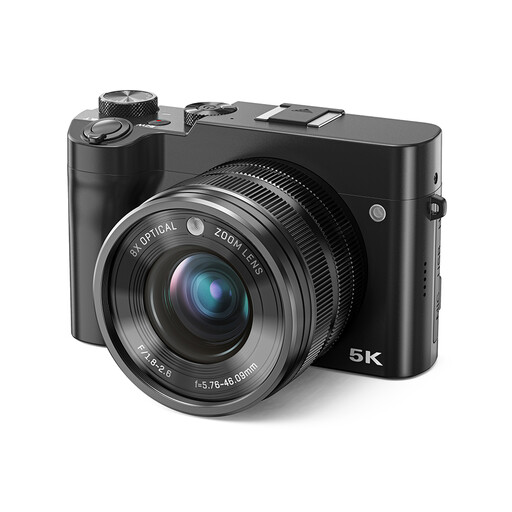
Songdian digital camera, 8× optical zoom, 5K, 64 MP
The stated optical zoom may suit you if you switch between subjects at different distances.
The product title lists 8× optical zoom, 5K, 64 MP and a dual lens; the colour is black.
View at Joybuy
 No image available
Songdian digital camera, 10× optical zoom, 5K, 56 MP
The stated optical zoom may suit you if you want to photograph subjects at different distances.
The product title lists 10× optical zoom, 5K, 56 MP and front and rear cameras; the colour is black.
View at Joybuy
Frequently asked questions
What should I do if flowers look different in sunshine and shade?
If you like, start with auto white balance and check the result again when the light changes. Adjust the white balance if the colour doesn’t look right; use exposure compensation if the brightness is the main issue. These settings let you make adjustments, but they can’t guarantee the same colour in every shot.
Can I start shooting at the closest macro distance straight away?
Not without checking the lens setting. Canon lists a macro distance of 0 cm for the SX70 HS at the wide-angle setting; Panasonic lists 1 cm for the FZ82D. First choose the composition you want, then check whether the exact model can focus at the intended distance using that lens setting.
What rights do I have when I buy a bridge camera online?
According to the Dutch Government, when you buy at a distance you generally have a 14-day cooling-off period in many cases; check which conditions apply to your purchase. You’re also entitled to a product that is fit for purpose. In the Netherlands, there is no fixed statutory guarantee period for all products, and the seller is your point of contact if something is faulty.
Can I photograph identifiable market visitors and publish the photos?
This depends, among other things, on how you use the photos. The Dutch Data Protection Authority describes an exception for personal or household use when images remain private or are shared only with a very limited group. That exception doesn’t apply to wider distribution; identifiable people are personal data, so publishing the photos requires an appropriate legal basis under the GDPR.


