
Dune landscape photographers
You want to fit the beach, dune ridges and sky into a single frame. Panasonic lists a 20 mm-equivalent wide-angle setting for the FZ82D; Sony gives the RX10 V a 24 mm-equivalent setting.


For sweeping dune landscapes, a wide-angle setting and easy-to-reach exposure controls are sensible places to start; for birds or distant details, optical telephoto reach matters more. Panasonic specifies a 20 mm-equivalent angle of view for the FZ82D, Sony lists a 1.0-type sensor and a 24–600 mm-equivalent range for the RX10 V, and Nikon gives the P1100 a maximum telephoto setting of 3000 mm-equivalent. None of these specifications automatically means a camera can withstand rain or blowing sand.
You want to fit the beach, dune ridges and sky into a single frame. Panasonic lists a 20 mm-equivalent wide-angle setting for the FZ82D; Sony gives the RX10 V a 24 mm-equivalent setting.
You want to expose bright clouds and dark dunes deliberately. Canon explains that exposure compensation can help when a scene is unusually bright or dark; the adjustment you need depends on the image you want to create.
You want to capture birds or patterns in the distance from permitted paths. Nikon specifies 125× optical zoom, up to 3000 mm-equivalent, for the COOLPIX P1100.
Choose this option: if you want to fit the beach, dunes and sky into the same frame.
Trade-off: a wide angle of view alone says nothing about sharpness or performance in overcast conditions.
Choose this option: if you want to compare the exposure settings and sensor of the exact model carefully.
Trade-off: a larger sensor type is a difference in specifications, not a guarantee of better results in every scene.
Choose this option: if optical telephoto reach from an accessible spot is your main priority.
Trade-off: greater reach will not automatically solve motion blur or limitations caused by the light or your position.
| What to consider | What should you check? | Who should pay extra attention? |
|---|---|---|
| Wide-angle for beaches and dunes | Compare the shortest focal length in full-frame equivalent: Panasonic lists 20 mm for the FZ82D and Sony 24 mm for the RX10 V. | If you want to frame the beach, dune ridges and sky together from one spot, the shortest focal length is an important starting point. Around 36% of consumers give wide-angle capability top priority. |
| Exposing the sky and dunes | Check that exposure compensation is easy to access, and review the result in both the sky and the dunes. | If you want to show bright clouds and dark dunes deliberately, pay attention to the exposure controls and sensor type of the exact model. Around 29% of consumers put these checks first. |
| Optical reach for details | Compare optical telephoto settings in mm-equivalent; Nikon lists 3000 mm-equivalent for the P1100 and Panasonic 1200 mm for the FZ82D. | If you want to fill the frame with distant birds or patterns from a permitted path, optical reach matters more. Around 21% of consumers choose this as their main consideration. |
| Handling sand and moisture | Check the weight and the precise meaning of any dust- and moisture-resistance claims; follow the model’s care instructions. | If you’re mainly thinking about carrying and protecting your camera on a coastal walk, consider how easy it is to handle and the limits of its use. Around 14% of consumers put this concern first. |
Nikon lists both 125× optical zoom and 250× Dynamic Fine Zoom for the P1100. The latter is digital and is not the same as optical zoom.
Compare the optical focal lengths in full-frame equivalent and look at sample images at the telephoto setting you actually plan to use.
The light meter doesn’t know how you want the bright sky and dark dunes to look. Canon describes exposure compensation as a way to adjust for an unusually bright or dark scene.
Check the shot and adjust the exposure compensation if necessary; there is no set adjustment that works for every dune scene.
Sony describes seals around parts of the RX10 V, but this does not provide unlimited protection against coastal weather.
Check the manual for your chosen model, protect the camera in bad weather and remove sand carefully in line with the care instructions.
Canon marks the PowerShot SX70 HS as discontinued and no longer available in its Dutch online shop.
When considering a specific listing, check the model name, condition, included accessories and seller.
The Lumix FZ82D is a fixed-lens camera with a stated 20–1200 mm-equivalent range.
According to Sony, the RX10 V combines a 1.0-type sensor with a fixed 24–600 mm-equivalent lens.
The COOLPIX P1100 is an option to compare if optical telephoto reach for distant wildlife details is a key priority.
The AZ528 is a fixed-lens camera with a stated 24–1248 mm-equivalent range.
The PowerShot SX70 HS can serve as a comparison if you’re considering a second-hand camera or one listed elsewhere.
The Joybuy options below are digital cameras with zoom. Check each model to make sure its listed features and usage limitations suit what you expect from a camera for coastal dunes.
 No image available
The stated optical zoom gives you room to adjust the framing for landscapes and detailed shots.
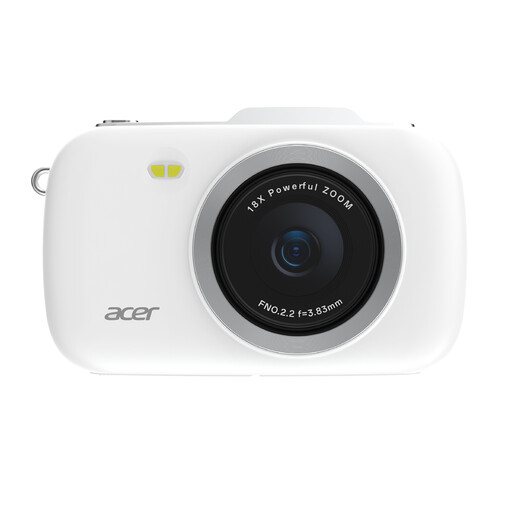 No image available
The stated zoom can help you adjust the framing; check that the controls and range suit the subjects you have in mind.
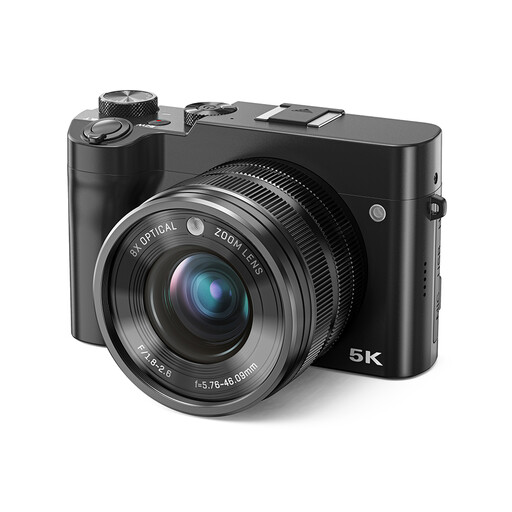 No image available
The stated optical zoom gives you room to adjust the framing; compare the telephoto setting with the distance you’ll be shooting from.
 No image available
The stated optical zoom gives you room to adjust the framing; bear the warning about dust and moisture in mind when choosing a camera for coastal use.
Check the shot and, if necessary, adjust the exposure compensation in a shooting mode that supports it. Canon explains that when a scene is unusually bright or dark, the metering may not produce the look you want; there is no set adjustment that works for every dune scene.
No. Don’t assume a camera is waterproof just because it is described as dust- and moisture-resistant. Sony describes seals around parts of the RX10 V, but they do not offer unlimited protection. Remove dust carefully in line with the care instructions for your camera model.
The focal lengths listed for the bridge camera models discussed here refer to their built-in lenses. Do check which battery, charger, memory card and protective accessories are included with the specific listing; Nikon, for example, says that no charger is included with its P1100 offer.
For a standard online purchase, you generally have a statutory cooling-off period of up to 14 days after delivery; statutory exceptions may apply. ACM ConsuWijzer also explains that if a product does not perform as you could reasonably expect under normal use, the seller must repair, replace or refund it free of charge. There is no fixed Dutch statutory warranty period of exactly two years for all cameras.
Don’t assume that the same permission applies in every dune area; check the rules and current closures for the specific location. Staatsbosbeheer says visitors to the Schoorlse Duinen must stay on the paths. The nesting season period listed there, from 1 March to 1 September 2026, has passed, but that does not automatically end the path rule or any other closure.