Who is this guide for?

Photographers capturing wide canal views

You want to frame buildings, water and reflections together, so the wide-angle setting and exposure controls are worth considering. Panasonic Netherlands describes the FZ82D as starting at a 20 mm full-frame equivalent.

Editing cloudy-day city photos

You want to expose deliberately for bright skies and dark buildings, with the option to make adjustments later. Sensor size, RAW support and exposure controls are all worth checking for the specific model. Canon Europe describes the use of exposure compensation and histograms.

Capturing distant details across the canal

You want to capture details on the opposite bank as well as the wider canal, without changing lenses. Nikon Netherlands lists the COOLPIX P1100 with an optical range of 24–3000 mm full-frame equivalent.

What should you look for?

A wide frame for buildings and reflections

Best for: capturing water and buildings in one composition from the canal-side. According to Panasonic, the FZ82D starts at a 20 mm full-frame equivalent.

Trade-off: the long telephoto zoom gives you another option, but it doesn’t prove that the camera performs better in low light.

Sensor size and scope for editing

Best for: if exposure settings and post-processing matter to you, compare the sensor size and RAW support of the exact model. Sony lists the RX10 V with a 1.0-type sensor.

Trade-off: the RX10 V starts at 24 mm, while the FZ82D starts at 20 mm. These specifications alone don’t predict how a photo of this scene will turn out.

Distant details on the opposite bank

Best for: if ornaments, birds or other small, distant details are also important subjects. Nikon lists the COOLPIX P1100 with a 24–3000 mm full-frame equivalent and RAW support.

Trade-off: the maximum telephoto range doesn’t tell you whether you can fit buildings and reflections into the same frame.

Point to consider What should you check? Who is this important to?
Wide enough frame Compare the shortest focal length in mm full-frame equivalent. Also check that the screen or viewfinder works well for the way you compose your shots. If I want to photograph buildings, water and reflections together from the canal-side, the wide-angle setting matters most. Around 36% of consumers make a wide frame their top priority.
Exposure and post-processing For each model, check the sensor size, RAW storage, exposure compensation and whether you can assess exposure using the screen, viewfinder or a histogram. If I want to expose deliberately for bright skies and dark buildings, then make adjustments later, I look at these controls and file options. Around 29% of consumers prioritise exposure and editing.
Optical range Compare optical focal lengths; digital zoom is not the same as optical zoom. If I mainly want to isolate details on the opposite bank, optical telephoto range matters more to me than having the widest possible frame. Around 21% of consumers make distant details their top priority.
Ease of use and ownership Check the controls, the exact model and the accessories included. Also review the seller’s terms and conditions. If I want to take photos easily while out walking and prefer to know in advance what I’m buying and who to contact for support, ease of use and after-sales service matter too. Around 14% of consumers prioritise ease of use and ownership.

Common pitfalls

  • Looking only at the biggest zoom figure

    The maximum telephoto setting doesn’t tell you how much of the canal and its reflection will fit in the frame.

    First compare the shortest focal length in mm full-frame equivalent, then look at the telephoto range.

  • Using a polarising filter when the reflection is your subject

    According to Nikon USA, a polarising filter can reduce reflections on water, even though those reflections may be an important part of your photo.

    Try a shot without a filter first, and check before buying whether the camera and any adapter support one.

  • Confusing digital zoom with optical zoom

    Nikon distinguishes between the COOLPIX P1100’s 125× optical zoom and its digital Dynamic Fine Zoom. They are different zoom functions.

    Compare the stated optical focal length separately from the digital zoom settings.

  • Assuming the manufacturer’s warranty covers all your statutory rights

    A manufacturer’s warranty doesn’t replace your rights against the seller. According to the Dutch government, there is no fixed statutory warranty period in the Netherlands; if a product is faulty, contact the seller.

    Check who the seller is and keep your proof of purchase and the warranty terms provided.

Camera brands to consider

Panasonic Lumix

Panasonic Netherlands lists the FZ82D with a range of 20–1200 mm full-frame equivalent. Panasonic Support Netherlands describes the FZ1000 II as having a 1-inch sensor and 16× zoom.

  • The models listed offer different combinations of wide-angle capability, sensor size and zoom.
  • These specifications alone don’t prove a difference in photo quality in cloudy weather.

Sony

Sony Netherlands lists the RX10 V with a 1.0-type sensor and a 24–600 mm zoom range.

  • The stated combination includes a 24–600 mm range and a 1.0-type sensor.
  • Its 24 mm starting point is less wide than the stated 20 mm starting point of the Panasonic FZ82D.

Nikon

Nikon Netherlands lists the COOLPIX P1100 with an optical range of 24–3000 mm full-frame equivalent, RAW support and a 1/2.3-type sensor.

  • The stated optical focal length reaches 3000 mm full-frame equivalent.
  • Nikon distinguishes the optical range from digital Dynamic Fine Zoom; they are not the same.

Canon

Canon’s European specifications list the PowerShot SX70 HS with a fixed 21–1365 mm full-frame equivalent lens and a 1/2.3-type sensor.

  • The stated starting point is 21 mm full-frame equivalent.
  • The specifications listed alone don’t determine whether the camera suits your preferred composition or exposure controls.

Cameras at Joybuy

The product titles below list different zoom specifications for these cameras. The titles alone don’t confirm that they are bridge cameras or that their wide-angle setting is suitable for capturing a full canal reflection.

Komery W6 camera with 12× optical zoom

Komery W6 camera, 12× optical zoom

The title lists 12× optical zoom, which is worth comparing if you also want to capture subjects at a distance.

Joybuy
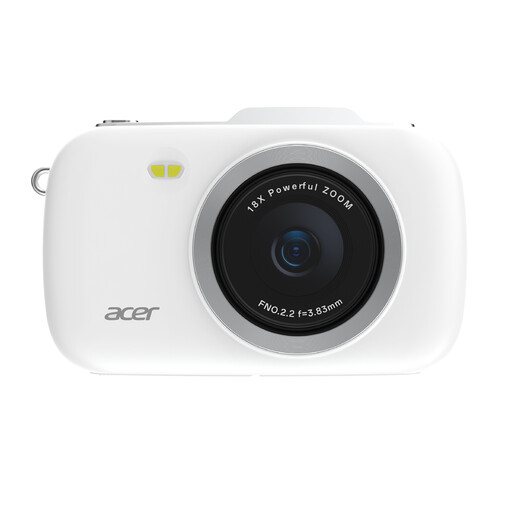
KOMERY G7-A camera with 18× zoom

KOMERY G7-A camera, 18× zoom

The title lists 18× zoom, but doesn’t specify that it’s optical zoom. If you’re considering this camera for distant details, check the type of zoom and the focal lengths.

Joybuy
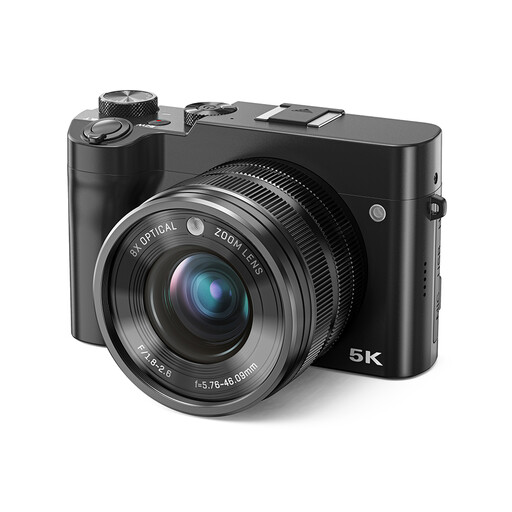
Songdian camera with 8× optical zoom

Songdian camera, 8× optical zoom

The title lists 8× optical zoom. If you want to frame buildings and reflections together, also compare the shortest focal length.

Joybuy
Songdian 5K camera with 10× optical zoom

Songdian 5K camera, 10× optical zoom

The title lists 10× optical zoom. That figure doesn’t tell you how much of a wide canal scene will fit in the frame, so check the wide-angle setting too.

Joybuy

Frequently asked questions

Should I use a polarising filter to capture reflections?

Not necessarily. According to Nikon USA, a polarising filter can reduce reflections on water. If the reflection is your subject, try a shot without a filter first. Before buying, check that the exact camera model and any adapter support fitting one.

How can I stop a cloudy sky from looking too bright?

Check the exposure on the screen or in the viewfinder and, if your camera offers them, use a histogram and exposure compensation. Canon Europe describes these as tools for assessing and adjusting exposure; there is no single compensation value that works for every scene.

What warranty applies when I buy a bridge camera in the Netherlands?

When you buy as a consumer, you’re entitled to a product that works as it should, and the seller is your point of contact if there’s a fault. According to the Dutch government, there is no fixed statutory warranty period in the Netherlands. A manufacturer’s warranty is an addition to, not a replacement for, your rights against the seller.

Can I publish canal photos that show identifiable passers-by?

That depends on the circumstances and privacy rules. The Dutch Data Protection Authority explains that the exception for personal or household use applies when images remain private or are shared with only a very limited group; this exception does not automatically apply to public publication.

Do I have a cooling-off period for a camera bought online?

According to the Dutch government, distance purchases are often covered by a 14-day cooling-off period, including purchases of second-hand products. Check whether your transaction counts as a distance purchase and what return terms were provided.
