
Canal walker with a lightweight kit
You want to frame a building, the water’s edge and its reflection without carrying separate lenses. Consider the wide-angle setting, dimensions and ready-to-shoot weight together.


For a canal-side scene with a building and its reflection, start at the wide-angle end rather than with the highest zoom figure: your composition needs to fit in the frame from where you’re standing. Then weigh up carrying weight, RAW and manual exposure against how often you take photos in low light; none of the models discussed offers every feature without a trade-off. A polarising filter isn’t an automatic choice, as it can reduce reflections.
You want to frame a building, the water’s edge and its reflection without carrying separate lenses. Consider the wide-angle setting, dimensions and ready-to-shoot weight together.
You want to control exposure yourself in changing light and perhaps edit RAW files afterwards. Bear in mind that a polarising filter can reduce reflections; Canon UK explains this effect for reflections on water.
As well as wide canal scenes, you photograph distant architectural details. Weigh the extra telephoto reach against the carrying weight and how difficult it can be to keep a tightly zoomed-in frame steady.
Start with a wide-angle setting that can capture your whole composition, then decide whether ease of use, low-light performance or telephoto reach matters most.
| What to consider | What should you check? | Which consumers? |
|---|---|---|
| Wide compositions | Compare the 35mm-equivalent wide-angle focal length at the same aspect ratio, and compare dimensions and weight on a like-for-like basis. | If I want to capture a building and its reflection together without carrying lots of equipment, a wide frame comes first. Around 36% of consumers give this need top priority. |
| Exposure and reflections | Check whether the model offers RAW and manual exposure. Consider the effect of a polarising filter and check that it fits the exact model. | If I want to set the exposure myself and preserve the reflection, I’ll consider both the controls and filter use. Around 29% of consumers put this combination first. |
| Taking photos in low light | Compare the sensor type and maximum aperture at the zoom setting you use; assess images taken in similar lighting conditions. | If I mainly take photos in low light, I want to weigh these features against the wide-angle setting I need. Around 21% of consumers give low-light photography top priority. |
| Distant details | Work out how often you need optical telephoto zoom and weigh this against carrying weight and framing at high zoom. | If I mainly photograph architectural details across the canal, telephoto reach may matter more than having a small walking kit. Around 14% of consumers put distant details ahead of other needs. |
For a building and its reflection, the first thing to consider is whether the scene fits in the wide-angle frame from where you’re standing. The Consumers’ Association also notes that a subject can be harder to keep in frame when you zoom in a long way.
So compare the wide-angle setting and carrying weight first. Only prioritise extreme telephoto reach if distant details are genuinely your main subject.
According to Canon, a polarising filter reduces reflections on water. That can work against your aim if the reflection is your subject.
First compare the same frame without a filter, and before buying, check that the filter fits the exact camera model.
A filter or adapter that doesn’t fit could mean an extra purchase.
Specifications may list a weight with or without the battery and memory card. So don’t compare figures based on different criteria as if they mean the same thing.
Look for clearly defined ready-to-shoot weights, and check any unclear figures before deciding based on compactness.
The LUMIX DC-FZ82D is a useful point of reference for a wide starting angle and a fixed superzoom lens.
The PowerShot SX70 HS is a useful point of reference for framing shots from different positions along the quayside.
The DSC-RX10M4 is a useful point of reference for buyers who take sensor size and lens aperture into account.
The AZ528 is a useful reference model for comparing wide-angle reach, telephoto reach and file format.
The COOLPIX P1100 is a useful point of reference if you mainly want to photograph distant details.
The Joybuy cameras below list optical zoom. Focus on the stated range, and check that the wide-angle setting suits your composition before choosing one for canal reflections.
 No image available
The stated 12× optical zoom may be useful if you want to take different shots from one position; also check whether the wide-angle setting captures your scene.
The product title lists 4K, 64MP and WiFi. Before buying, check which features and accessories are included with the version you choose.
 No image available
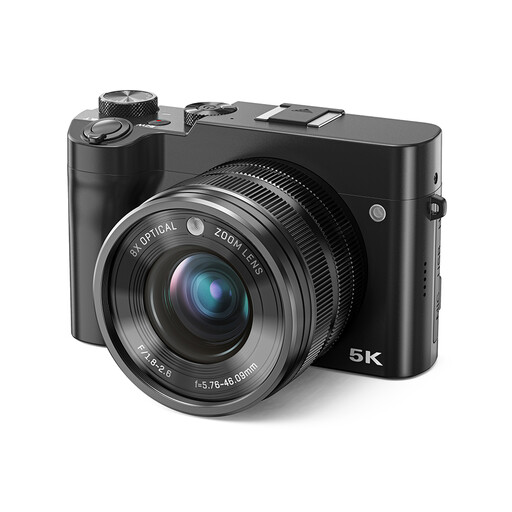
The product title lists 8× optical zoom; compare the wide-angle setting with the space you need to capture the building and its reflection.
The title also mentions 5K, 64MP, a dual lens and colour night vision. Before buying, check how these features are described for the exact version.
 No image available
The product title lists 10× optical zoom; check whether the wide-angle setting is wide enough for the whole canal-side scene.
The title mentions 5K, 56MP and front and rear cameras. The product description lists electronic image stabilisation with a built-in 6-axis gyroscope; this information alone doesn’t tell you how steady your shot will be.
Not necessarily: according to Canon, a polarising filter reduces reflections on water, which may not be ideal if the reflection is your subject. If you’re considering buying one, also check that it fits your exact camera.
Take photos where the water is calmer: Canon explains that still water can create a more tranquil mirror effect than moving water. Also try different camera heights and check the exposure in the image.
Check the exact listing to see what’s included and which storage medium the model uses. When you buy as a consumer in the Netherlands, your statutory warranty applies alongside any manufacturer’s warranty. According to ACM ConsuWijzer, if a product breaks sooner than could reasonably be expected under normal use, the seller must resolve the issue free of charge under the applicable terms, for example by repairing or replacing it, or refunding your money.
The GDPR may apply if people are recognisable. The Dutch Data Protection Authority distinguishes between private use and wider or commercial publication. The exception for personal or household use does not automatically apply to public or commercial sharing, which requires an appropriate legal basis under the GDPR.