
Photographing a row of façades
You’re photographing a whole row of buildings from a quayside and want to know how much will fit in the frame at the wide-angle setting. The stated angle of view and aspect ratio are important factors to consider.


When you’re photographing an entire row of façades from a narrow quayside, the shortest focal length matters more than the maximum zoom range. In overcast conditions, sensor size and lens aperture are also worth considering. According to Panasonic UK, the Panasonic LUMIX DC-FZ82D has a 20 mm setting at 4:3, while Sony specifies a 1.0-type sensor and a 24–600 mm range for the RX10 V. A longer telephoto range is mainly useful for distant details, but it can make framing more difficult and isn’t automatically the best choice for capturing an entire façade.
You’re photographing a whole row of buildings from a quayside and want to know how much will fit in the frame at the wide-angle setting. The stated angle of view and aspect ratio are important factors to consider.
You want to capture brickwork and façade ornaments, and are weighing up zoom range against sensor size and available light.
You want to switch between wide views and details on a city walk without changing lenses, while also considering ease of use and the overall cost.
| What to consider | What to look for when buying | Who is this important to? |
|---|---|---|
| Framing an entire row of façades | Compare the shortest full-frame-equivalent focal length at the same aspect ratio. Panasonic UK lists 20 mm at 4:3 for the DC-FZ82D. | If I want to fit several buildings into one shot from a narrow quayside, I focus on the widest setting. Around 36% of consumers say framing a row of façades is their top priority. |
| Capturing brickwork details in overcast conditions | Check the sensor size and maximum aperture at the focal length you plan to use, and compare the specifications of the exact models. | If I want to capture brickwork and ornaments in overcast weather, I factor in both the sensor and the lens. Around 29% of consumers prioritise image quality in overcast conditions. |
| Reaching distant details | Compare the maximum optical focal length and how easy the camera is to handle when zoomed in. The Consumers’ Association notes that it becomes harder to keep your subject in frame at high zoom levels. | If I want to photograph details across the canal, usable optical zoom range is the deciding factor for me. Around 14% of consumers put distant architectural details first. |
| Comfortable to carry and use | Assess the viewfinder, grip and controls, and check which accessories are included with the exact version. | If I want to carry my camera with me on a city walk, ease of use and the overall cost matter. Around 21% of consumers prioritise having one camera and weighing up the cost. |
The maximum telephoto range doesn’t tell you how wide the shortest setting is. What’s more, framing can become more difficult at high zoom levels.
First compare the full-frame-equivalent wide-angle setting, then check whether the telephoto range suits the details you want to photograph.
The full-frame-equivalent focal length of the Panasonic LUMIX DC-FZ82D varies depending on the aspect ratio and shooting mode.
Check the stated angle of view for the photo or video mode you actually plan to use.
According to the Dutch government, there is no fixed statutory warranty period in the Netherlands. The retailer is your point of contact if a product is faulty; the manufacturer’s warranty is in addition to your statutory rights.
Keep your proof of purchase and check what extra cover a paid extended warranty provides.
The LUMIX DC-FZ82D is worth considering if you’re looking for a wide starting setting to frame rows of façades.
According to Sony UK, the RX10 V combines a 1.0-type sensor with a 24–600 mm range.
The COOLPIX P1100 is particularly relevant if distant ornaments or roof details are a priority.
According to Canon UK, the PowerShot SX70 HS combines wide-angle coverage with a telephoto range.
This Joybuy selection includes digital cameras with zoom features mentioned in their product names. For photographing canal houses, it’s a good idea to compare the full-frame-equivalent wide-angle setting for the exact version too.
 Image unavailable
The stated zoom may be useful if you want to switch between different compositions while taking photos; for rows of façades, check the full-frame-equivalent wide-angle setting too.
The product name lists 12× optical zoom, 4K, Wi-Fi and 64 MP.
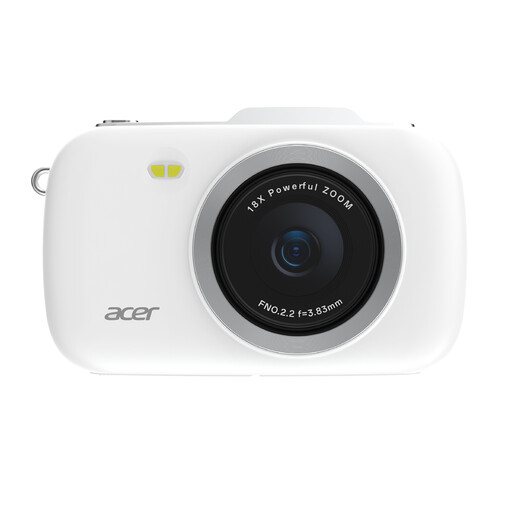 Image unavailable
This camera may suit anyone looking for zoom for different compositions; when photographing architecture, compare the equivalent starting setting first.
The product name lists 18× zoom, 4K and 80 MP.
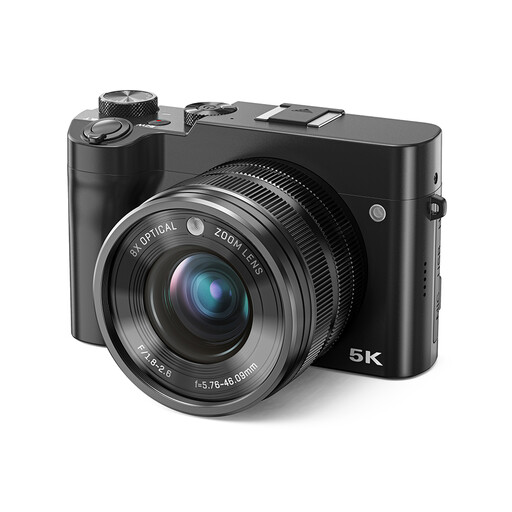 Image unavailable
The stated optical zoom is useful if you want to switch between different framing options on a city walk; check that the wide-angle setting is suitable for an entire row of façades.
The product name lists 5K, 64 MP, a dual lens and night vision.
 Image unavailable
The stated zoom can be handy if you want different compositions from one camera; for a row of buildings, the full-frame-equivalent wide-angle setting is still a separate consideration.
The product name lists 5K, 56 MP and front- and rear-facing cameras.
Compare the shortest full-frame-equivalent focal length at the aspect ratio you plan to use. The zoom figure alone doesn’t tell you how many buildings will fit in the photo. When photographing architecture, also consider your shooting angle and composition.
No. Image stabilisation helps reduce camera shake, but it doesn’t make framing at high zoom levels any easier. The Consumers’ Association says a tripod is needed at 80× zoom; also consider your shooting distance and zoom setting.
Check what’s included with the exact version and how to charge the battery. Sony states that the Dutch RX10 V version consulted doesn’t come with an electronic charger; don’t assume this applies to other models.
According to the Dutch government, you’re entitled to a product that works properly, and there is no fixed statutory warranty period in the Netherlands. If a product is faulty, the retailer is your point of contact; the manufacturer’s warranty is in addition to your statutory rights.
The Dutch Data Protection Authority distinguishes between photos kept private or shared with a limited group and those published publicly. The exception for personal or household use doesn’t apply to publicly shared photos showing recognisable people; check the privacy rules for the specific publication.