
Maker with limited workspace
You’re photographing a small basket on a cluttered table and want to know in advance whether there’s room for the camera, subject and lighting.


Start by considering the space available for the camera, basket and lighting. A short macro focusing distance can help you capture the weave in detail, but it doesn’t guarantee that the whole basket will fit in the frame at that distance. Panasonic specifies macro focusing from 1 cm at wide angle for the FZ82D, along with Focus Stacking; Canon lists a vari-angle screen and macro focusing from 0 cm at wide angle for the SX70 HS. The Sony RX10 IV has a Type 1.0 sensor, but needs more focusing distance when zoomed in. Check the framing and lighting in your own set-up.
You’re photographing a small basket on a cluttered table and want to know in advance whether there’s room for the camera, subject and lighting.
You want both a clear photo of the whole basket and detail shots that show the weave and colours.
You want to photograph the basket’s opening and shape, and be able to see the frame when the camera is positioned above the table.
A good fit for: close-up wide-angle macro shots of woven details and multiple focus points.
Bear in mind: the stated focusing distance increases from 1 cm at wide angle to 150 cm when zoomed in.
A good fit for: a tabletop set-up where an adjustable screen helps you frame your shot from an awkward angle.
Bear in mind: the stated macro focusing distance of 0 cm doesn’t guarantee that the whole basket will fit in the frame or leave room for lighting.
A good fit for: anyone who photographs subjects other than baskets and values a Type 1.0 sensor.
Bear in mind: Sony specifies a focusing distance of approximately 3 cm at wide angle and approximately 72 cm when zoomed in, measured from the front of the lens.
The percentages show which concern matters most to consumers in this particular tabletop set-up.
| Consideration | What should you check? | Who is it most relevant to? |
|---|---|---|
| Focusing and framing | Measure the available distance and check both focus and framing at the zoom setting you plan to use. | If you’re taking photos on a crowded table, you’ll want to know whether the camera can focus close up without cropping out the whole basket. Around 36% of consumers prioritise having enough workspace. |
| Weave details | Check each model’s macro mode, manual focusing and any Focus Stacking feature; also take a separate overview shot. | If you want the texture of the weave to remain visible in close-up photos, assess the focus plane and framing together. Around 29% of consumers prioritise detail. |
| Lighting and colour | Leave room for lighting and a stable set-up; don’t assume that a larger sensor guarantees better photos. | If true-to-life colour and texture are your priorities, consider how much lighting you can fit into your small tabletop set-up. Around 21% of consumers prioritise lighting and image quality. |
| Framing from a high angle | Check how the screen moves on the model and whether a support or tripod will fit in the available space. | If you want to see the basket’s opening from above while framing your shot, an adjustable screen can be useful. Around 14% of consumers consider this viewing angle essential. |
The focusing distance can change with the zoom setting. For the Panasonic FZ82D, the manufacturer lists 1 cm at wide angle and 150 cm at telephoto; for the Sony RX10 IV, the stated distances are approximately 3 cm and approximately 72 cm.
Compare the focusing distance at each zoom setting and take photos from a distance that works for your set-up.
A minimum focusing distance doesn’t tell you how much of the basket will fit in the frame. Getting very close to the subject can also block light. Focus, framing and lighting are separate considerations.
Check your planned set-up with both a photo of the whole basket and a close-up.
If necessary, leave extra room for lighting or a stable set-up.
ACM ConsuWijzer distinguishes between a manufacturer’s or seller’s guarantee and your statutory rights against the seller.
Keep your proof of purchase and the product description. If a product is faulty, ask the seller for an appropriate solution.
The Lumix DC-FZ82D is worth considering if you want close-up shots and multiple focus points for photographing woven details.
The PowerShot SX70 HS is worth considering if an adjustable screen would help you frame shots on a small table.
The Cyber-shot DSC-RX10M4, also known as the RX10 IV, is an alternative if a Type 1.0 sensor and a versatile fixed zoom lens matter to you.
These Joybuy products are digital cameras with zoom options, for anyone who wants to adjust the framing of a small subject. Before buying, check that the product features suit your needs for an overview shot, close-up and enough room for lighting.
 No image available
The listed 12× optical zoom gives you the option to adjust the framing. Check whether you can capture both the whole basket and the details you want.
The product title lists 4K video, WiFi and 64MP.
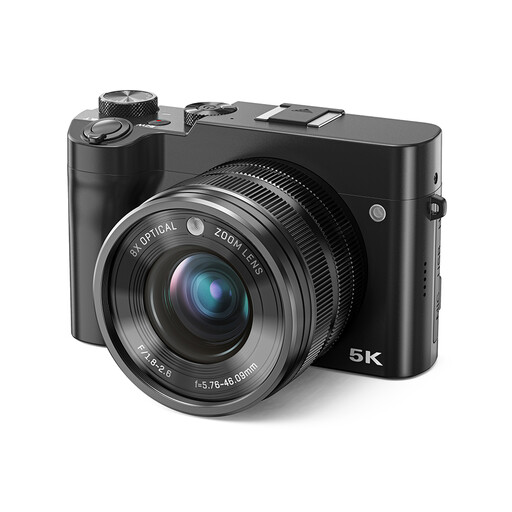 No image available
The listed 8× optical zoom may be useful if you want to adjust the framing of the basket.
The product description mentions manual focusing and an adjustable focus area. Check whether these controls suit the close-up shots you want to take.
No. That distance describes focusing in the specified mode, not how much of the basket will fit in the frame. Check the composition from a distance that works on your table, and take a separate close-up if needed.
Set up the camera securely, for example on a suitable tripod if there’s room, and keep the framing, background and lighting the same. Canon recommends this approach for consistent product photos.
Before ordering, check whether you already have a suitable memory card and, if needed, a compatible tripod. The Consumers’ Association lists an extra battery and SD memory card as things to consider; what you need depends on the camera and your set-up.
According to ACM ConsuWijzer, for a standard online consumer purchase you have up to 14 days to change your mind after the product has been delivered; exceptions may apply. Your statutory guarantee is separate from a manufacturer’s or seller’s guarantee. If a product doesn’t do what you could reasonably expect when used normally, the seller is responsible for providing an appropriate solution.