
People who want a small bite to eat shortly before training
There’s no time for a large meal, but you don’t want to start feeling hungry either. Check the amount per slice and choose something you know sits well with you when you exercise.


When choosing breakfast cake before exercise, focus on when you plan to eat it, portion size and how well you tolerate it, rather than a label such as ‘premium’. A small portion of plain breakfast cake may work if you want a bite to eat before a recreational workout. A high-fibre variety or one containing sweeteners needs more thought if you’ll be exercising soon afterwards. Compare the label and try a new option on a regular training day.
There’s no time for a large meal, but you don’t want to start feeling hungry either. Check the amount per slice and choose something you know sits well with you when you exercise.
You’re choosing between plain, wholegrain and lower-sugar varieties. Compare the nutritional information per 100 g and per portion: a different recipe doesn’t automatically make a cake suitable just before exercise.
A portion measured out in advance is handy when you’re fitting training around work and travel. As well as checking the packaging, look at the portion weight and allergen information.
First, work out how long you have until your training session and what portion size you prefer. Then compare the sugar, fibre and any sweeteners, as well as how easy it is to take with you. A premium flavour doesn’t, by itself, tell you whether a product is suitable around exercise.
| What to consider | What to check when buying | Who it matters to |
|---|---|---|
| A small portion | Check the weight and carbohydrate content per slice, and choose an amount that suits when you’re eating. | If I’m hungry shortly before training, I don’t want to eat a large meal. For around 40% of consumers, a small, familiar portion comes first. |
| Sugars and fibre | Compare carbohydrates, including sugars, and fibre per 100 g and per portion; for varieties with sweeteners, check the ingredients too. | If you’re choosing between plain, wholegrain or a lower-sugar variety, you’ll want to know what’s actually in a slice. For around 30% of consumers, the ingredients and nutritional composition matter most. |
| Taking it with you and portioning it | Check whether the cake is pre-sliced or individually wrapped, and how much a portion weighs. | On my way to training, I want to take a familiar amount with me without having to cut it. Around 20% of consumers prioritise this portioning convenience. |
| Flavour and variety | Check the ingredients in a flavoured variety and choose a slice size that suits when you’re eating. | If flavour is what makes the difference for me, I still want to know what I’m eating before exercise. For around 10% of consumers, flavour is the main reason for choosing a product. |
The Netherlands Nutrition Centre recommends having a meal with a drink around two to three hours before exercising. Breakfast cake is better thought of as a possible small snack, rather than a replacement for that meal. According to the Netherlands Nutrition Centre’s nutrition table, an average 30 g slice of breakfast cake contains 20,8 g of carbohydrates. Check the values for the product you buy, as portion sizes and ingredients vary.
Jumbo Ontbijtkoek Gesneden 475 g lists 52,7 g of carbohydrates and 17,4 g of fibre per 100 g. This variety contains maltitols and carries a warning that excessive consumption may have a laxative effect.
Check the carbohydrates, fibre and ingredients list as well as the sugars. Don’t try a variety containing sweeteners for the first time just before an important training session.
A high-fibre breakfast cake may be a better choice when you have more time between eating and training. A high-fibre snack may feel less comfortable just before exercise.
Choose when to eat it based on what you tolerate well, and try a new high-fibre variety on a regular training day first.
Plain, wholegrain and sweetened varieties from the same brand can differ in their ingredients and nutritional values. If you’re trying a new pack, it’s also worth checking the allergen information.
When you buy it, check the current ingredients, nutritional information and allergen labelling for the exact variety.
A slice of breakfast cake is no substitute for a meal or a drink. The Netherlands Nutrition Centre emphasises the importance of everyday food and staying hydrated when eating around exercise.
Consider your snack alongside your earlier meal, the time of day and the length of your training session.
Compare specific varieties rather than brands as a whole: portion size, nutritional values and ingredients are what determine which breakfast cake suits when you plan to eat it.
Peijnenburg offers plain breakfast cake, individually portioned packs and a wholegrain variety, among other options.
AH offers pre-sliced plain breakfast cake as well as other varieties.
Jumbo offers plain and pre-sliced varieties, among others, with different nutritional compositions.
ALDI lists pre-sliced varieties and an unsliced ginger breakfast cake from Koek & Bakker, among other options.
This Snelle Jelle breakfast cake is an option if you want to take a snack with you. Use the nutritional information on the packaging to work out which portion size and eating time suit you.
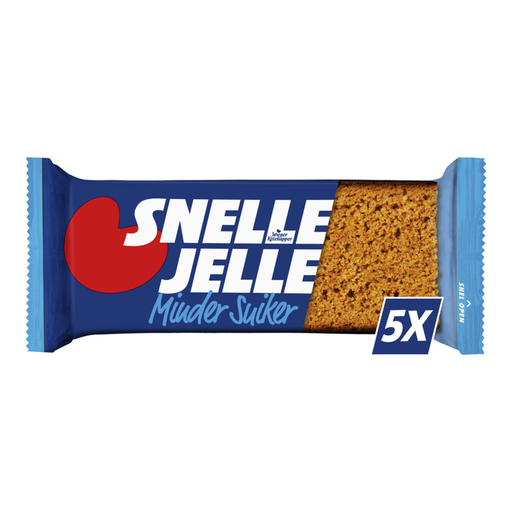 Image unavailable
For anyone who wants to take breakfast cake as a snack and decide how much to eat before training. The pack contains 250 g; check the latest nutritional information per portion and per 100 g before choosing how much to have.
If you have allergies, check the label for rye, gluten-containing cereals and possible traces of nuts or milk.
A small portion may work if you know you tolerate it well. The Netherlands Nutrition Centre recommends having a meal around two to three hours before exercise. If you’re eating closer to your training session, don’t automatically go for a large or high-fibre portion.
No. Having less or no added sugar doesn’t tell you how much carbohydrate or fibre a breakfast cake contains. For example, Jumbo lists its Ontbijtkoek Gesneden 475 g as containing 52,7 g of carbohydrates and 17,4 g of fibre per 100 g. Check whether the ingredients list includes sweeteners too.
It depends on the product, but the plain AH and Peijnenburg varieties mentioned here list rye and gluten-containing cereals. If you have coeliac disease or a cereal allergy, always check the latest allergen information on the specific pack.
Don’t assume that every breakfast cake uses the same type of salt. Check the ingredients list for baker’s salt, and if you’re unsure which salt has been used, ask the manufacturer for product information.
According to the Netherlands Nutrition Centre, most people who exercise don’t need special sports products. Tailor your everyday food and drinks to your training. You may have different needs during prolonged, intensive exercise than you would for a short recreational workout.