
Fibre seekers with busy mornings
You want a crunchy breakfast that takes little preparation, and you’re comparing wholemeal options by their fibre content. Also consider the portion you actually eat.


If you’re mainly comparing fibre for a weekday breakfast, look at wholemeal toast, crackers, crispbread or rusks, and check the nutritional information per 100 g and per portion. Plain melba toast is another crisp base. If you need to avoid gluten strictly, choose a suitable product and check the current label for ingredients and allergens.
You want a crunchy breakfast that takes little preparation, and you’re comparing wholemeal options by their fibre content. Also consider the portion you actually eat.
You’re mainly looking for a crisp base that’s quick to top. The nutritional information and allergens for the specific variety will tell you whether it suits your needs.
If you have coeliac disease or a diagnosed gluten sensitivity, it’s important to check that the specific product is labelled gluten-free. If you have a wheat allergy, you’ll also need to check the ingredients and allergen information for wheat.
First, decide what matters most for your weekday breakfast: fibre, convenience, avoiding gluten or the make-up of the whole meal. Then compare products within the right category by checking the label.
| What to consider | What to check when buying | Who it matters to |
|---|---|---|
| Fibre | Check whether the product is wholemeal and compare fibre per 100 g and per portion. | If fibre is my priority, I want to know what my usual portion contributes. For around 40% of consumers, this is their top priority when buying. |
| Convenience and toppings | Check the portion size and think about what you’d like to put on top. | On a busy morning, I’m mainly looking for a crisp base that I can top quickly. Convenience comes first for around 30% of consumers. |
| Gluten and allergens | Read the gluten-free claim, ingredients and allergen information on the packaging; if you have a wheat allergy, check separately for wheat. | If I need to avoid gluten strictly, whether the specific product is suitable matters more than taste or convenience. Around 20% of consumers put this requirement first. |
| The whole breakfast | Compare fibre and salt on the same basis, and take the toppings you plan to use into account. | I don’t want to judge by the name or crunch alone; I also want to see how the toast fits into my breakfast. For around 10% of consumers, this is the main consideration. |
Toast, melba toast, crackers and crispbread can differ in their grains and nutritional value. The Netherlands Nutrition Centre lists 0.5 g of fibre in a 6 g wholemeal crispbread; Albert Heijn lists 3.9 g of fibre per 100 g for AH Melba Toast naturel. These are different amounts and units of measurement.
Compare the fibre in the products you’re considering per 100 g, then check what your portion contributes.
Choosing a different toast product isn’t a treatment for ongoing symptoms. The Netherlands Nutrition Centre discusses fibre, drinking fluids and exercise in relation to constipation.
Don’t choose your breakfast based on a promised effect on your symptoms, and speak to a doctor if they persist.
Wholemeal describes the grain product; it doesn’t mean that it’s free from gluten. Bolletje lists grains and sesame, among other ingredients, for Oerknäck Waldkorn. So a wholemeal variety isn’t automatically suitable for every dietary requirement or allergen restriction.
If you have coeliac disease, check for a gluten-free claim and avoid cross-contamination. If you have a wheat allergy, also check for a separate declaration of wheat.
Ingredients and nutritional information can change when a recipe is updated. This is particularly important if you’re monitoring salt or specific allergens.
Check the packaging of the variety you buy and use.
These brands offer examples of different crunchy breakfast bases. Compare the specific products: a brand name alone won’t tell you how much fibre or salt a variety contains.
For anyone comparing wholemeal crispbread or light wholemeal crackers.
AH Melba Toast naturel is an example of plain melba toast to compare with wholemeal varieties.
For anyone comparing plain toast, wholemeal varieties or crispbread at ALDI.
Lidl lists 140 g of wholemeal rusks, article number 10007003.
These Joybuy products are crunchy crackers and crispbread that you can compare as a base for breakfast. If fibre is your priority, check the nutritional information on the specific pack; this isn’t a selection of gluten-free products.
 Image unavailable
An option if you’re looking for rye crackers as a crunchy base for breakfast. Compare the fibre per 100 g and per portion on the packaging; if you have dietary requirements or allergen restrictions, check the ingredients too.
 Image unavailable
A wholemeal crispbread option to compare if you’re looking for a base to add toppings to. Check the nutritional information per 100 g and per portion for fibre and salt, and read the allergen information on the packaging.
 Image unavailable
A cracker to include when comparing breakfast bases and fibre content. Read the nutritional information per 100 g and for the amount you eat; the product name doesn’t replace this comparison.
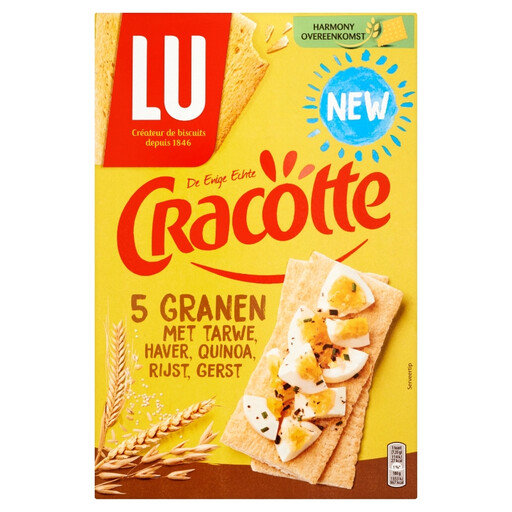 Image unavailable
A multigrain cracker to compare as a crunchy base for toppings. Multigrain doesn’t automatically mean wholemeal: check the ingredients and nutritional information if fibre is your main priority.
Wholemeal toast isn’t a treatment for constipation. The Netherlands Nutrition Centre highlights fibre, drinking enough fluids and exercise as points to consider for constipation; speak to a doctor if your symptoms persist.
Ordinary toast isn’t automatically suitable for people with coeliac disease: check that the specific product is explicitly labelled gluten-free and avoid cross-contamination. Toast made with wheat, rye or barley needs particular attention.
Use toast as a base, then add foods and toppings that suit your own eating habits. The Netherlands Nutrition Centre lists fruit, yoghurt and wholegrain cereal products among breakfast options; if you have dietary requirements, check the ingredients in the whole combination.
For AH Melba Toast naturel, Albert Heijn recommends storing it in a sealed tin after opening. For another variety, follow the storage advice on its packaging.