
Parents looking to vary breakfast beyond bread
The Netherlands Nutrition Centre recommends porridge oats, muesli and other wholegrain breakfast cereals with no added sugar or salt as alternatives for children aged 1 to 3.


According to the Netherlands Nutrition Centre, you can occasionally alternate bread at breakfast with porridge oats, muesli or other wholegrain breakfast cereals with no added sugar or salt for a child aged 1 to 3. Don’t choose on fibre content alone: check the ingredients, allergens and texture too. If you serve cereal instead of bread at breakfast, the Netherlands Nutrition Centre recommends offering two slices of bread at another time of day.
The Netherlands Nutrition Centre recommends porridge oats, muesli and other wholegrain breakfast cereals with no added sugar or salt as alternatives for children aged 1 to 3.
If you’re sending breakfast cereal to nursery or school, or need to take a food intolerance into account, check the ingredients and allergen information on the current packaging. A claim on the front of the pack is no substitute for checking the details.
Warm porridge can be an alternative to crunchy cereal. Consider what texture your child can eat safely; the Netherlands Nutrition Centre warns against whole nuts for young children, among other things.
Start with the ingredients, then compare the nutritional information per 100 g. Finally, check that the allergens and texture are suitable for your child.
| What to consider | What to check when buying | Who it matters to |
|---|---|---|
| Ingredients | Check whether wholegrain cereal is the main ingredient and whether sugar or salt has been added. | I want to alternate bread with breakfast cereals that follow the Netherlands Nutrition Centre’s guidance for children aged 1 to 3. Around 50% of consumers prioritise this when choosing. |
| Fibre | Always compare fibre, sugars and salt per 100 g, rather than relying on a claim on the front of the pack. | When comparing products for fibre, I want to know what else they contain. Around 30% of consumers prioritise this comparison. |
| Allergens and texture | Check the allergens on the packaging and consider whether the pieces are safe to eat. | If your child has a food intolerance or finds crunchy pieces difficult to eat, the product needs to be suitable in practice too. Around 20% of consumers prioritise this. |
A fibre claim doesn’t tell you how much sugar or salt a product contains as well. Albert Heijn lists 8.4 g of fibre and 20 g of sugars per 100 g for Kellogg's Oaties Original Crunch.
Compare the nutritional information per 100 g and read the ingredients list before choosing a breakfast cereal.
The Netherlands Nutrition Centre describes wholegrain breakfast cereals for children aged 1 to 3 as an alternative to bread at breakfast, not a replacement for bread throughout the day.
If you serve breakfast cereal instead of bread, the Netherlands Nutrition Centre recommends offering two slices of bread at another time of day.
A fibre claim doesn’t remove the choking risk posed by whole nuts. The Netherlands Nutrition Centre warns against whole nuts and peanuts, among other foods, for young children.
Choose a texture your child can eat safely, and don’t give whole-nut muesli to a young toddler or toddler.
For breakfast cereals containing gluten or other allergens, check the packaging of the product you’re using and the arrangements at your child’s nursery or school.
Read the current label and ask the nursery or school directly about its allergy policy before sending in breakfast cereal.
Quaker offers both plain porridge oats and crunchy Cruesli varieties; they call for different checks when choosing breakfast for a toddler.
Brinta Wholegrain cereal breakfast is an option if you want to make warm wheat porridge.
AH Wholegrain cereal breakfast shows why a high fibre content shouldn’t be the only selection criterion.
The ingredients in each Kellogg's variety matter more than any general impression of the brand.
These products are porridge oats or grain cereals for anyone looking to offer an alternative to bread at a toddler’s breakfast. Brinta contains added salt; for all three products, check the current packaging and choose a preparation method and texture your child can eat safely.
 Image unavailable
For anyone looking to prepare porridge oats as a warm alternative to bread. The pack contains 324 g.
The oats contain gluten; according to the product information, the product may also contain wheat and barley. Check the nutritional information per 100 g on the current packaging and adjust the portion and texture to suit your child.
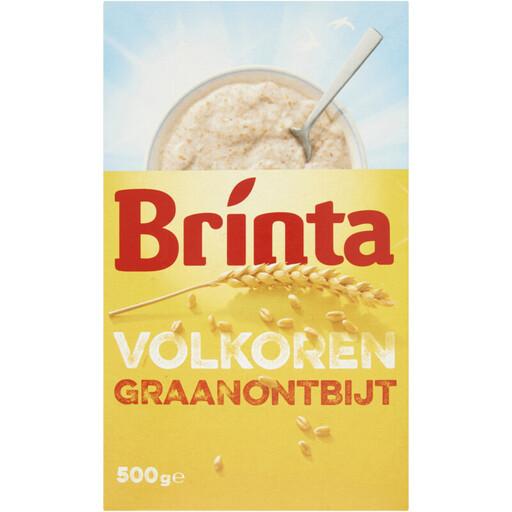 Image unavailable
For anyone looking to make warm wholemeal wheat porridge.
Albert Heijn’s product information lists 10 g of fibre per 100 g and salt among the ingredients. This means the variety doesn’t follow the Netherlands Nutrition Centre’s guidance for breakfast cereals with no added salt. The product contains wheat and gluten.
 Image unavailable
For anyone looking for plain wholegrain porridge oats as an alternative at breakfast.
Joybuy lists 100% wholegrain oats as the ingredient and 9 g of fibre per 100 g for this variety. The oats contain gluten and may contain wheat and barley. If you’re strictly following the guidance to choose products with no added salt, check the salt content on the current packaging too.
Yes. According to the Netherlands Nutrition Centre, you can occasionally alternate bread at breakfast with porridge oats or other wholegrain breakfast cereals with no added sugar or salt. If you serve cereal instead of bread, offer two slices of bread at another time of day.
Compare the fibre per 100 g so you’re using the same amount of product as your basis. Also read the ingredients and check the sugar and salt content; a fibre claim alone doesn’t tell you whether the ingredients are suitable for a toddler’s breakfast.
No. The product information for Quaker Oatmeal 375 g lists oats containing gluten and the possible presence of wheat and barley. According to the Netherlands Nutrition Centre, people with coeliac disease cannot tolerate gluten; always check the current packaging if your child has a food intolerance.
Don’t give whole-nut muesli to a young toddler or toddler. The Netherlands Nutrition Centre warns that young children can choke on foods including whole nuts and peanuts; also check that other breakfast cereals have a safe-to-eat texture.