
Vandaag of morgen in huis

Kwaliteit gegarandeerd

Welkomstaanbiedingen ontgrendelen: GRATIS bezorging | Tot 80% korting | Gratis 30 dagen JoyPlus-proefperiode
Download de app
A box of breakfast cereal may seem easy to choose, but the difference between muesli, crunchy muesli, granola, porridge oats and cereal bars is not just about flavour. Claims such as “no added sugar”, “high in fibre” or “high in protein” only tell you so much when you also consider the ingredients list, nutritional values and serving size.
For families, active consumers and people looking for breakfast on the go, three pitfalls are particularly important.
A product with no added sugar may still contain naturally occurring sugars. Some bars also contain sweeteners or polyols. These can affect the nutritional value and may have a laxative effect when consumed excessively, as stated in the product information for certain Hero B’Tween bars.
So always check:
This makes it fairer to compare chocolate breakfast cereals, fruit muesli and breakfast cereals with no added sugar than to look only at the front of the packaging.
High-fibre breakfast cereals may obtain some of their fibre from ingredients such as chicory root fibre, inulin or soluble maize fibre. This is not the same as a product made mainly from wholegrain cereals. So check which ingredient appears first on the list.
The same applies to high-protein breakfast cereals. A high protein percentage may, for example, come from wheat protein or peanuts. This is relevant to vegans, active consumers and people with allergies.
Oats are not naturally wheat, but oat products may be listed as allergens in the product information. Products may also contain traces of milk, soya, nuts, peanuts or other cereals containing gluten.
For a gluten-free granola bar or muesli bar:
Product compositions can change. Always check the latest information on the product page and packaging before buying.
The values per 100 grams make it easier to compare different products. The serving value helps you estimate what you will actually eat. For example, Quaker lists a 45-gram serving with yoghurt for some products, while a muesli bar often weighs around 20 to 30 grams.
Pay particular attention to:
Crunchy muesli often contains more energy per 100 grams than ordinary porridge oats because of the oil, syrup or chocolate. That does not automatically make it unsuitable, but it is important to consider when making your choice.
Ingredients are listed in descending order by quantity. If wholegrain oats appear first, they make up a significant proportion of the product. If sugar, glucose syrup or agave syrup appears near the top of the list, the product is likely to have a sweeter formulation.
Examples from the available product information:
For use at home, 375 to 450-gram bags are practical. Individual portions are more convenient for the office, school or travel. The Family Whole variants contain 20 sachets of 35 grams, for example. According to the instructions, you add approximately 175 millilitres of boiling water.
Individually wrapped bars are easier to take with you. Pay attention to the serving size: a bar with few calories may also provide less fibre or protein. So do not compare just the packaging—compare the values per bar too.
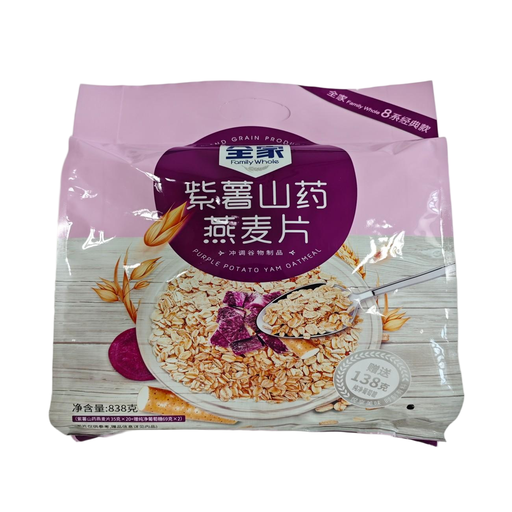
Why it suits this profile: The 35-gram sachets are easy to portion and can be prepared quickly with boiling water.
The portion is pre-measured. However, note that the ingredients list includes sugar, wheat, soya and sesame.
20 sachets, instant preparation and 25% oats, according to the product information.
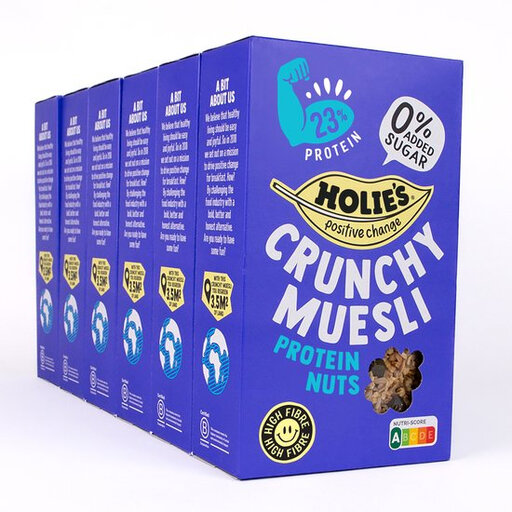
Why it suits this profile: An option for anyone who wants to include protein and fibre in a substantial breakfast with yoghurt or plant-based alternatives.
The nutritional values list 22 to 23 grams of protein and 19 to 21 grams of fibre per 100 grams. Check which table appears on your packaging.
43% wholegrain oats, wheat protein, seeds and 0% added sugar according to the product description.
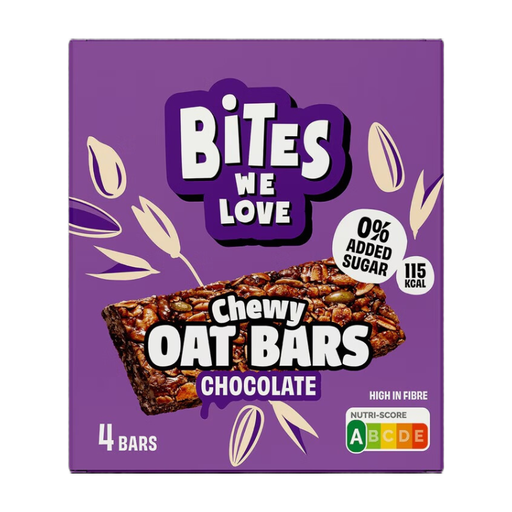
Why it suits this profile: Individual bars fit in a bag or desk drawer and are designed as a practical snack for when you are out and about.
The nutritional value is also provided per 30-gram bar. For a gluten-free choice, always check the latest allergen information.
115 kcal, 8.6 grams of fibre and 2.7 grams of protein per 30 grams, according to the product table.
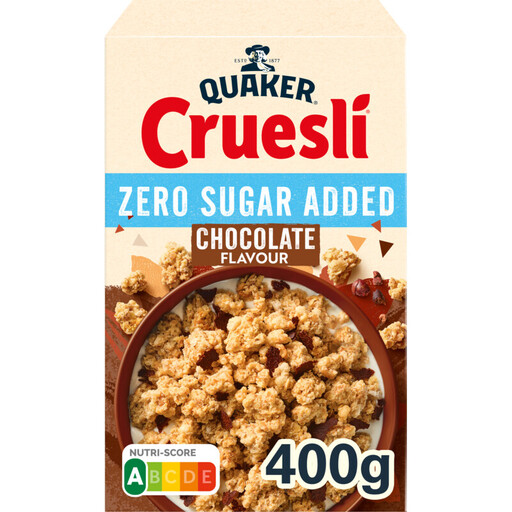
Why it suits this profile: The chocolate flavour is ideal for anyone who finds ordinary porridge too bland but wants to avoid added sugar and sweeteners.
The product information states that it contains no added sugars or sweeteners. It is still a high-calorie crunchy muesli, with 435 kcal per 100 grams.
40% wholegrain oats, 21 grams of fibre and 3.4 grams of sugar per 100 grams according to the listed table.
We have put together a complete, up-to-date list of products that fully meet these strict selection criteria and the applicable European safety regulations.
That depends on the product and when you eat it. Packaging often gives a serving size of 30 to 45 grams. Use the serving value on the label when comparing energy, sugar or protein. Add yoghurt, milk or a plant-based alternative separately to your calculation.
Not automatically. Also check the total amount of carbohydrates, fat, fibre and calories. A product may contain no added sugar but still be high in energy because of oil, nuts or chocolate. Bars may contain sweeteners such as maltitol, so check the warnings on the packaging.
Follow the best-before date on the packaging and store the product in a cool, dry place. Seal an opened bag securely to limit moisture and loss of crunch. With bars and individual portions, it is important not to use the product if the packaging is damaged.
