
Vandaag of morgen in huis

Kwaliteit gegarandeerd

Welkomstaanbiedingen ontgrendelen: GRATIS bezorging | Tot 80% korting | Gratis 30 dagen JoyPlus-proefperiode
Download de app
A box of breakfast cereal might seem simple to choose. Yet terms like “wholegrain”, “no added sugar” or “high in protein” don’t tell you everything about what’s inside. The difference between a sensible everyday choice and a disappointing purchase often lies in the nutritional information table, portion size and allergen details.
Whether you’re looking for muesli, granola, porridge oats or crispy cereals: look beyond the front of the packet.
A product can state 0% added sugar and still contain naturally occurring sugars. Always check the of which sugars line per 100 grams. For example, Holie's Crunchy Loops Cinnamon has 4.9 grams of sugar per 100 grams, even though the product description says 0% added sugar.
Glucose syrup, date concentrate and syrups can also affect the overall composition. “Sugar-free breakfast cereals” is therefore not a claim you should judge based on the front of the pack alone.
In Europe, nutritional values are usually listed per 100 grams. Some packs also show a small recommended serving size. That can be handy, but always compare different brands on the same basis first.
Granola often contains oil, nuts and seeds. This can give a satisfying crunch, but also a higher energy value per 100 grams. A smaller portion doesn’t change the values per 100 grams.
“Wholegrain breakfast cereals” can indeed contain a high proportion of wholegrain ingredients, but check the ingredients list. According to the product information, Weetabix Original is made up of 95% wholegrain wheat. Holie's Crunchy Muesli Protein Nuts includes wholegrain oat flakes, wheat protein, seeds and nuts, among other things.
A product high in protein isn’t automatically suitable for every diet. Also pay attention to allergens such as gluten, peanuts, soya, milk and nuts.
Use the nutritional information table as your fixed point of comparison. As a practical guide, look at:
If you’re looking for healthy breakfast cereals, it’s a good idea to examine the full nutritional profile. There’s no universal choice that suits every household the same way.
Ingredients are listed in descending order by weight. If wholegrain oats, wheat or spelt appear at the top, they form a significant part of the product. Also look for specific percentages.
Examples:
This makes it easier to compare muesli, granola and wholegrain breakfast cereals objectively.
Check the allergen declaration before you buy. Different products contain wheat, oats, peanuts, soya, almonds or other nuts. “May contain traces” is also relevant if you have an allergy.
Also consider the quantity:
Store opened breakfast cereals in a dry, airtight container. This keeps crispy cereals and granola pleasantly crunchy for longer. Always check the best-before information on the packaging.
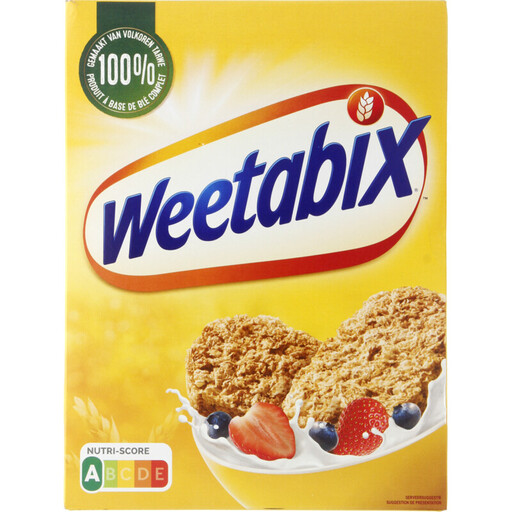
Why this fits the profile: A straightforward pack with 95% wholegrain wheat according to the product information. Can be combined with milk, yoghurt, fruit or honey.
The product information lists specific percentages and values: 4.2 grams of sugar and 10 grams of fibre per 100 grams.
95% wholegrain wheat; 10 grams of fibre per 100 grams; 430 gram pack.
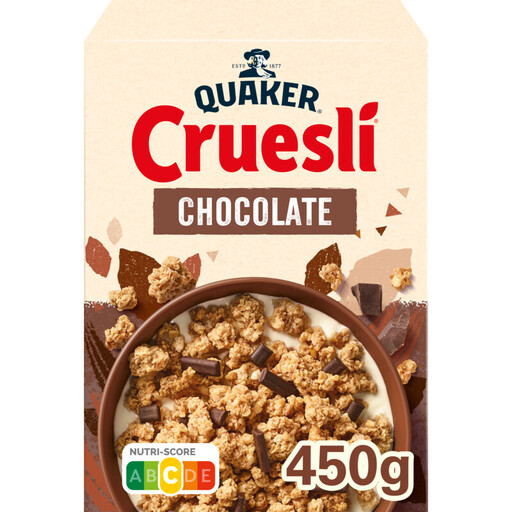
Why this fits the profile: For those looking for a pronounced chocolate flavour and a crunchy texture in a product with oats as a key ingredient.
The composition mentions 37% wholegrain oats and the table lists 16 grams of sugar and 10 grams of fibre per 100 grams.
450 gram pack; 95% wholegrain according to the product description; 65% cocoa solids in the chocolate.
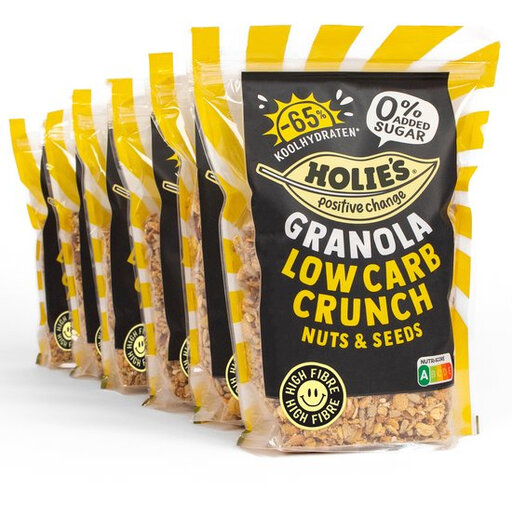
Why this fits the profile: For consumers specifically looking for low-carb granola with nuts and seeds, and a multipack for regular use.
The product page lists 18 grams of carbohydrates, 3.2 grams of sugar and 22 grams of protein per 100 grams. Check the packaging on receipt.
22 grams of protein; 16 grams of fibre; 6 x 350 grams; 0% added sugar according to the product description.
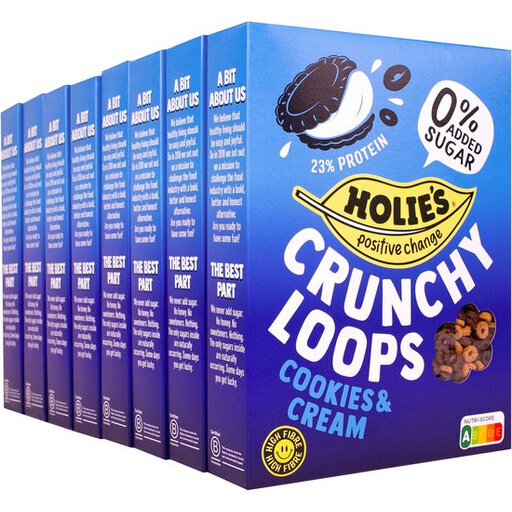
Why this fits the profile: A multipack with a familiar flavour for households where several portions are eaten each week.
The nutritional values are listed per 100 grams: 4.9 grams of sugar, 26 grams of fibre and 23 grams of protein. Allergens are clearly stated.
8 x 350 grams; 23 grams of protein; 26 grams of fibre; wholegrain wheat flour as the first main ingredient.
We’ve put together a full, up-to-date list of products that fully meet these strict selection criteria and comply with current European safety regulations.
Compare the amount of sugar per 100 grams and look at the ingredients list. Products such as Weetabix Original list 4.2 grams of sugar per 100 grams. Holie's Crunchy Muesli Chocolate Chunks lists 2.1 grams. A claim like “0% added sugar” doesn’t automatically mean the product contains no sugars.
No. Muesli is usually a mix of flakes, seeds, nuts and sometimes fruit. Granola is often baked, which creates a crunchy texture. This means granola can contain extra oil or other ingredients. Check the ingredients and nutritional values for each product.
That depends on the packaging, humidity and storage. Seal the bag or box tightly and store breakfast cereals in a cool, dry place. With a multipack, you can keep unopened packs sealed and use the oldest pack first. If in doubt, check the best-before date and the product’s smell, colour and texture.
