
Vandaag of morgen in huis

Kwaliteit gegarandeerd

Welkomstaanbiedingen ontgrendelen: GRATIS bezorging | Tot 80% korting | Gratis 30 dagen JoyPlus-proefperiode
Download de app
A bowl of breakfast cereal is quick to prepare, but not every box suits your eating habits. Muesli, cruesli, granola, porridge oats and wholegrain cereals vary widely in sugar, fibre, protein, portion size and ingredients. If you only go by what’s on the front of the packet, you could end up paying more for a product that doesn’t really fit your daily routine.
Pay particular attention to these three common pitfalls:
Use the table per 100g to compare products fairly. A portion size on the packet may be smaller than your usual bowl. If you’re watching out for high-fibre breakfast cereals, the dietary fibre values are key. In the range, these vary from, for example, 3.6g in Kellogg’s Tresor Chocolate Hazelnut to 24g in Quaker Cruesli Zero Sugar Added Strawberry & Peach.
If you exercise or want to feel fuller for longer, you might also look at protein-rich breakfast cereals. Holie’s Crunchy Muesli Protein Nuts lists 22g of protein and 21g of fibre per 100g. Quaker Oats Express Protein lists 22g of protein and 7.2g of fibre per 100g.
Watch out for the phrase “no added sugars”. This is not the same as “sugar-free”. For example, Quaker Cruesli Choco Zero Sugar states 3.4g of sugar per 100g, even though the product description says it contains no added sugars or sweeteners.
Ingredients are usually listed in descending order by quantity. So check whether porridge oats, wholegrains, nuts or seeds appear near the top. With a muesli with nuts and fruit, the percentage of nuts and fruit is more useful than a big picture on the packet.
B+ Muesli Nuts and Fruit lists, among other things, wholegrain flakes, 22% dried grapes, 5% apricot, hazelnuts and almonds. According to the product information supplied, this mix contains 0g of added sugars, but 20.8g of sugars per 100g. That difference shows why you need to check both labels.
Many breakfast cereals contain gluten, milk, soya, nuts or sesame. Check the allergens before you order, especially if you’re feeding a household with different dietary needs. With individual sachets, it’s also important to look at how much water or milk you need and the required preparation time.
A quick breakfast option could be cold muesli with yoghurt, or instant porridge oats made with hot water. Individual portions are practical for work, school or travel. A larger resealable packet can be better value if you use it every day.
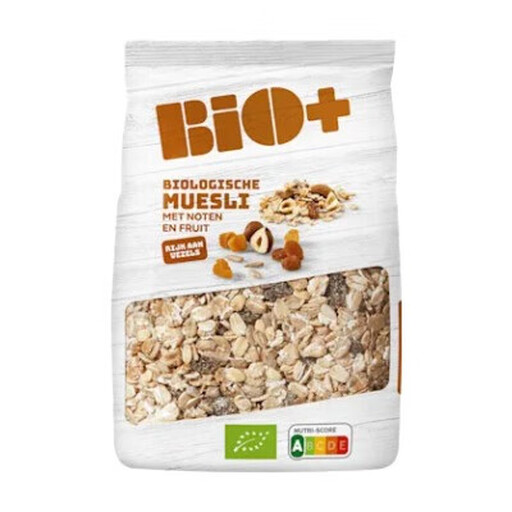
Why this fits the profile: This mix combines grains, dried fruit, seeds and nuts, and can be used with milk, yoghurt or as a topping.
The ingredients and nutritional values separately list the added sugars, fibre and fruit percentages, so you don’t have to rely on the packaging alone.
9g of fibre and 10.9g of protein per 100g; according to the product information, 0g of added sugars and ingredients of organic origin.
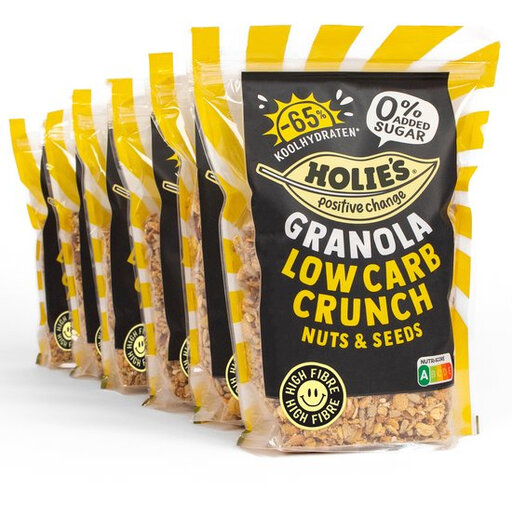
Why this fits the profile: The mix is aimed at consumers who specifically look at carbohydrates, protein, fibre and nuts.
The claim about fewer carbohydrates is backed up with concrete values: 18g of carbohydrates and 3.2g of sugar per 100g.
22g of protein, 16g of fibre and 33g of fat per 100g; the ingredients include sunflower seeds, soya, almonds and linseed.
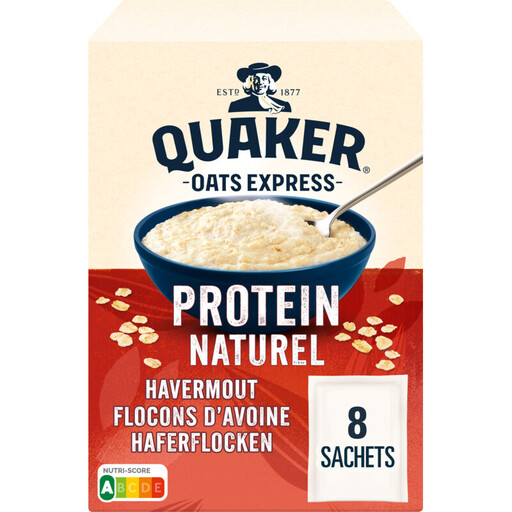
Why this fits the profile: The individual portions are designed for anyone who wants to prepare porridge quickly on busy mornings.
The preparation time is clearly stated: according to the product description, the porridge is ready in 2 minutes. So you know exactly what to expect from this quick breakfast option.
85% wholegrain porridge oats, 15% soya protein, 22g of protein and 7.2g of fibre per 100g; according to the product information, no added sugars.
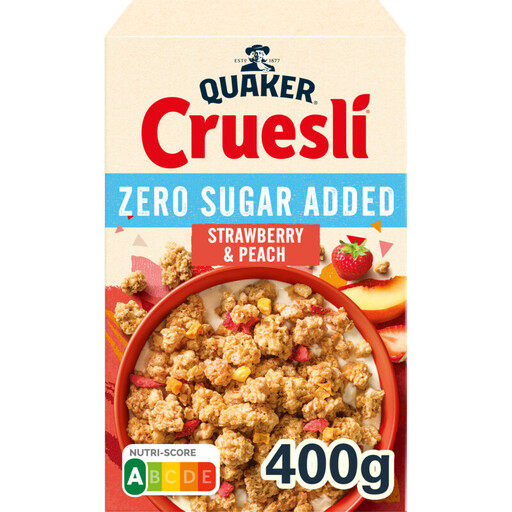
Why this fits the profile: This crunchy muesli combines wholegrains with small pieces of strawberry and peach, and can be eaten with yoghurt, milk or a plant-based alternative.
The product description distinguishes between no added sugars and naturally occurring sugars. The table states 4.4g of sugar per 100g.
24g of fibre per 100g, 41% wholegrain oats and 17% wholegrain wheat flakes according to the ingredients list.
We’ve put together a full, up-to-date list of products that fully meet these strict selection criteria and comply with current European safety regulations.
Don’t just look at terms like “zero sugar” or “no added sugars”. Check the nutritional values per 100g and read the ingredients list. For example, Quaker Cruesli Choco Zero Sugar states 3.4g of sugar per 100g and, according to the product description, contains no added sugars or sweeteners.
No. Muesli is usually an untoasted mix of grains, nuts, seeds and dried fruit. Cruesli is typically baked or toasted to make it crunchy, and may contain oil, sugar or syrup. Always compare the ingredients, calories, fibre and sugar per 100g.
Store breakfast cereals in a cool, dry place, away from sunlight and moisture. Seal a bag or packet tightly to keep the crunchy texture. With individual sachets, you can store unopened portions at room temperature according to the instructions on the packet. Also check the best-before date when you receive your order, and don’t use any product where the packaging is damaged.
