
Regular breakfast cake eater at home
You buy breakfast cake often and want to leave room in your budget for a café stop. A larger pack may suit you if you prefer to slice the cake yourself; consider how much you actually use.


If you regularly buy breakfast cake for home and want to leave room in your budget for a café stop, start with a large own-brand loaf that you can slice yourself. Sliced cake or individual portions are more useful if you eat it on the go. Only choose a version with a specific labelling claim after checking the ingredients and nutritional information on the exact pack.
You buy breakfast cake often and want to leave room in your budget for a café stop. A larger pack may suit you if you prefer to slice the cake yourself; consider how much you actually use.
You want to take slices or individual portions with you without having to cut a loaf first. Check what kind of pack you’re getting and whether it suits how often you take some with you.
You might be looking for wholemeal breakfast cake, or want to check a claim about added sugars or allergens. Read the ingredients and nutritional information for the exact version you’re buying; the front-of-pack label doesn’t tell you everything.
First decide whether you’ll mainly eat the cake at home or on the go. Then compare pack sizes and check any labelling claims on the version you want to buy.
| What to consider | What to look for | Who it matters to |
|---|---|---|
| Pack size | Compare the pack size and check whether the cake is sliced. PLUS Natural comes as an unsliced 550 g loaf; the Albert Heijn and ALDI wholemeal versions mentioned are 485 g. | If I often eat breakfast cake at home, I want a size that suits how much I use, without having to open a separate pack for every slice. For around 42% of consumers, finding a pack size that suits everyday use is the top priority. |
| Labelling claims | Check the ingredients, allergens and nutritional information for the exact version. Look for claims about wholemeal ingredients or added sugars on the pack itself. | If I have a specific requirement relating to ingredients or allergens, the cake I choose needs to meet it. Around 25% of consumers give this kind of labelling claim top priority. |
| Convenience and taking it with you | Choose between slicing it yourself, buying a pre-sliced loaf or picking individual portions, depending on how you use the cake. | When I’m out and about, I want to take a portion with me without slicing it first; around 17% of consumers value this convenience most. |
| Flavour and brand | Check which version you’re choosing: Natural, wholemeal and flavoured varieties aren’t the same product. | If I want a particular flavour or brand, I won’t simply choose a different version. Around 16% of consumers put this preference first. |
According to the Netherlands Nutrition Centre, bakers don’t always use baker’s salt. So you can’t tell whether a product contains iodine just from its category.
If iodine is important to you, check the ingredients list on the pack or ask the manufacturer which salt was used.
A claim about added sugars doesn’t tell you which allergens a cake contains. For example, the PLUS Natural version mentioned lists rye and cereals containing gluten.
For the exact product, check the ingredients and allergens as well as the nutritional information per 100 g or per portion.
PLUS offers a 550 g loaf of Natural breakfast cake that isn’t pre-sliced.
Albert Heijn offers pre-sliced own-brand varieties, including 485 g Natural and Wholemeal versions.
Koek & Bakker at ALDI offers, among other options, a pre-sliced Wholemeal version and a 485 g pre-sliced Zero version.
Jumbo lists several types of breakfast cake, including 350 g Oude Wijven Ontbijtkoek and a version sold as gluten-free.
Peijnenburg offers Natural and wholemeal varieties, as well as individual portions.
Lidl has shown Tastino breakfast cake in pack sizes ranging from 465 to 550 g.
These products suit two of the needs discussed above: pre-sliced wholemeal breakfast cake, and a pack of Snelle Jelle to consider for taking with you. For both products, check the current label if ingredients or allergens will affect your choice.
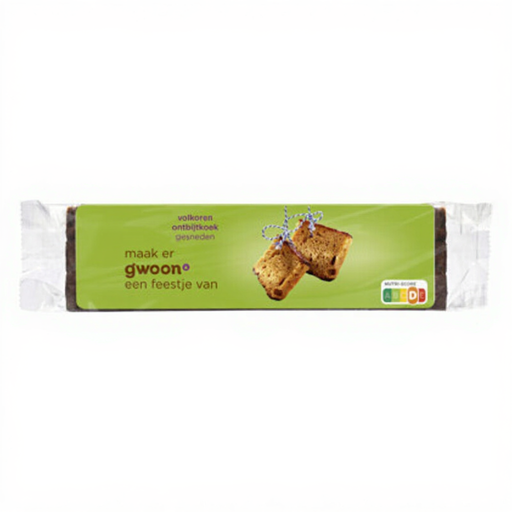 Image unavailable
An option if you want wholemeal breakfast cake without having to slice it yourself.
Check the ingredients and allergens on the exact pack, especially if rye or gluten is a concern for you.
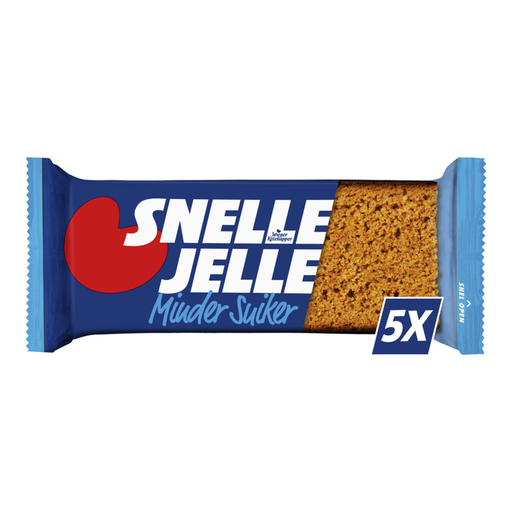 Image unavailable
Consider this pack if you want to take breakfast cake with you; check the pack to see how the portions are wrapped.
Check the exact statements about sugars and added sugars in the nutritional information and ingredients list. Also check the allergen information if rye, gluten, nuts or milk is a concern for you.
Start with a pack that suits how often and where you eat breakfast cake. With a large unsliced loaf, you’ll need to cut the slices yourself; if you often take some with you, a pre-sliced version or individual portions may be more practical.
No. Wholemeal and pre-sliced describe different features. The Albert Heijn and Koek & Bakker versions mentioned combine both; for another pack, check the type of product and whether it’s sliced separately.
It doesn’t replace the nutritional information. For the exact breakfast cake, check the ingredients and the amount of sugars per 100 g or per portion, so you can compare versions on the same basis.
No, don’t assume so just because it’s called breakfast cake. According to the Netherlands Nutrition Centre, bakers don’t always use baker’s salt. For a packaged product, check the ingredients or ask the manufacturer which salt was used.
Read the allergen and ingredients information on the exact pack. The PLUS Natural version mentioned lists rye and cereals containing gluten; don’t assume the same applies to other brands or versions.