What should you look for when choosing?
First, check whether the eater likes the flavour and portion format. Then compare the price per kilo of suitable varieties, and read the label if you have specific dietary or allergen requirements.
| What to consider |
What to check when buying |
Who is this important for? |
| Everyday cost |
Compare the price per kilo of similar plain varieties and check the pack size. |
If I buy breakfast cake often, I want to know how much more a larger pack really costs compared with a smaller one. For around 36% of consumers, the price per kilo is the top priority. |
| Flavour and texture |
Choose a flavour and format the eater is willing to try; a plain variety could be a good first choice. |
When choosing for a fussy eater, I don’t want to risk buying a large pack before I know whether they’ll eat the cake. Around 29% of consumers put acceptability first. |
| Nutritional information and allergens |
Compare ingredients, sugars and fibre on the same basis, and check the allergen declaration for the specific variety. |
If ingredients or nutritional values influence my choice, I don’t want to rely on the variety name alone. The label is the top priority for around 21% of consumers. |
| Portions and taking it with you |
Check whether the cake is sliced or individually wrapped, and compare the pack format with what you need. |
For school, work or when I’m out and about, I want to be able to take a portion with me without having to slice it there and then. For around 14% of consumers, this convenience comes before the other criteria. |
Brands to consider
These brands offer different recipes and pack formats. Compare the variety you want to buy, not just the brand name.
Peijnenburg
Offers plain breakfast cake, as well as individually wrapped slices.
- According to Peijnenburg, the Naturel 10-pack contains ten individually wrapped 28 g slices, designed to take with you.
- Check the allergen declaration for this variety; individual wrapping does not mean it’s suitable for someone with an allergy.
AH
Albert Heijn’s own brand offers a basic breakfast cake in a 600 g pack.
- The larger pack gives you a useful point of comparison if you buy breakfast cake regularly.
- Albert Heijn says product information can change, so check the pack for ingredients and allergens.
PLUS
Its own brand has a 485 g plain sliced variety.
- The sliced format suits anyone who wants to serve slices straight from the pack.
- The product information for this variety lists rye flour and gluten, and says it may contain wheat, barley and oats; check the current label.
Koek & Bakker
ALDI’s brand offers, among other options, a sliced wholemeal variety and a separate zero variety.
- The varieties offer a choice between different product descriptions; ALDI describes the zero variety as having no added sugars.
- That claim is not a complete nutritional comparison. Read the ingredients and nutritional information for each variety.
Tastino
A breakfast cake brand available at Lidl, where you can compare it with other varieties while you shop.
- If you shop at Lidl, you can check the pack size and shelf price of the available product in store.
- Lidl directs shoppers to its stores for current food prices; a previous offer is not a reliable guide to your next purchase.
Breakfast cake on Joybuy
These products may be worth a look if you want breakfast cake to take with you or a sliced loaf. For a budget-friendly choice, compare the current price per kilo and check that the flavour, portion format and information on the pack suit the eater.
 No image available
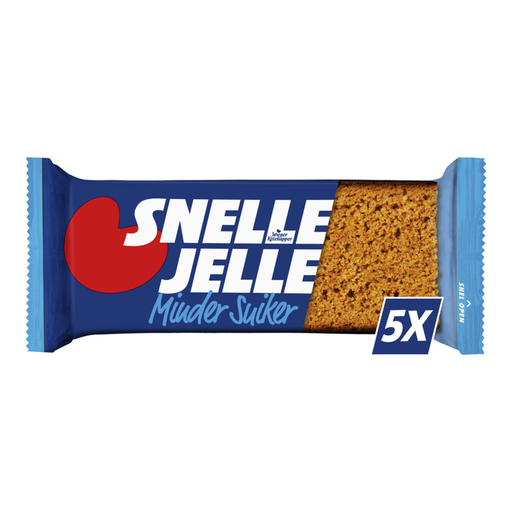
Snelle Jelle breakfast cake 250 g
An option to consider if you want breakfast cake to take with you. Check the pack for the portion format, ingredients and what the sugar claim means for this specific variety; the product name alone doesn’t confirm that it’s sugar-free.
View on Joybuy
 No image available
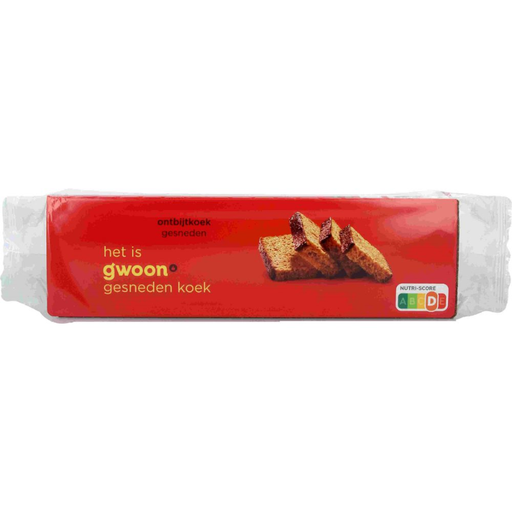
g'woon sliced breakfast cake 485 g
The sliced format suits anyone who wants to serve slices without having to cut the cake themselves. Try it before deciding whether you like the flavour, and check the pack label for nutritional information and allergens.
View on Joybuy
Frequently asked questions
Is breakfast cake the same as everyday bread?
No, don’t automatically treat breakfast cake as an equivalent replacement. The Voedingscentrum lists average breakfast cake as containing 11.2 g of sugars and 1.1 g of fibre per 30 g slice; the values for the variety you buy are shown on the pack.
Is breakfast cake with no added sugars also sugar-free?
No, ‘no added sugars’ doesn’t mean a product contains no sugars. Compare the nutritional information on the specific packs on the same basis, such as per 100 g, and don’t rely only on the claim on the front.
Should I check breakfast cake for gluten and other allergens?
Yes, check the allergen declaration for each variety separately. The PLUS plain variety described contains rye flour and gluten and may contain wheat, barley and oats; Peijnenburg says its Naturel 10-pack may contain milk, hazelnuts, almonds and other gluten-containing cereals.
How should I store an opened pack of breakfast cake?
Follow the storage instructions and best-before information on the pack. Reseal a larger pack once opened; for individually wrapped slices, check the information on the pack.
Does all breakfast cake contain iodine because it uses baker’s salt?
No, you can’t tell from the product category. The Voedingscentrum says bakers are not required to use baker’s salt; check the pack or ask the manufacturer about a specific breakfast cake.


