Who is this choice relevant to?

Shoppers looking for strictly sugar-free options

For you, the total amount of sugars per 100 g is what counts. A pack labelled ‘zero’ or ‘no added sugars’ does not automatically meet the sugar-free limit; check ‘of which sugars’ in the nutrition table.

Sugar-conscious cinema-goers

You’re looking for a snack to take with you and want to distinguish between less sugar, no added sugars and sugar-free. The total sugars and portion size matter more than the name on the front of the pack alone.

Snackers who consider portions and allergens

You want to decide in advance how much to take with you, and may need to account for rye and gluten or other allergens that vary by variant. If a product contains polyols, the warning on the pack is relevant too.

What should you look for when choosing?

First, decide whether ‘sugar-free’ is a firm requirement for you. Then choose a portion size and pack format that suit what you want to take to the cinema.

What to consider What to check when buying Who should pay particular attention?
Strictly sugar-free Compare ‘of which sugars’ per 100 g with the limit of 0.5 g per 100 g for the ‘sugar-free’ claim. If I have a strict sugar limit, I don’t want to have to rely on the word ‘zero’. Around 40% of consumers put this first.
Less sugar or no added sugar Check the total sugars per 100 g and per portion; if sweeteners are used, look for polyols and any relevant warnings too. I want to adjust my sugar choices, but I don’t require my snack to be completely sugar-free. For around 40% of consumers, this is the first consideration.
A portion to take with you Check the weight per portion, the pack format and the allergen information for the variant you choose. During a film, I’d rather take a defined portion than a whole opened pack. Ease of carrying matters most to around 20% of consumers.

Common mistakes

  • Assuming ‘zero’ means sugar-free

    Under European rules on nutrition claims, ‘sugar-free’ may only be used when a product contains no more than 0.5 g of sugars per 100 g. Albert Heijn states that AH Ontbijtkoek zero contains 4.9 g of sugars per 100 g; Peijnenburg states the same amount for its sliced plain variant with no added sugars.

    If you have a strict sugar-free requirement, check ‘of which sugars’ in the nutrition table rather than relying on the product name.

  • Assuming ‘less sugar’ means a low sugar content

    Jumbo compares its Ontbijtkoek Minder Suiker with its own plain bar and says it contains at least 30% less sugar. The bar reviewed here still states 22.7 g of sugars per 100 g.

    Use the comparison with the plain variant to understand the relative reduction, then check the sugar content per 100 g and per portion as well.

  • Overlooking polyols and portion size

    Certain zero and no-added-sugar products from Albert Heijn and Peijnenburg carry a warning that excessive consumption may have a laxative effect.

    Check the ingredients, weight per portion and any warnings before taking several portions with you.

  • Assuming a sugar claim tells you about allergens

    The breakfast cake variants reviewed here contain rye and therefore gluten. Other allergens or possible traces vary by product.

    Check the allergen information on the pack of the exact variant, even if you’ve bought another product from the same brand before.

Brands to consider

Peijnenburg

Peijnenburg offers sliced breakfast cake with no added sugars, as well as individually wrapped cake bars.

  • For its sliced plain variant with no added sugars, Peijnenburg states 4.9 g of sugars and 17 g of fibre per 100 g.
  • That sugar content does not meet the ‘sugar-free’ limit. Peijnenburg also warns that excessive consumption of certain Tussendoor+ bars may have a laxative effect.

Albert Heijn

Albert Heijn offers both sliced AH Ontbijtkoek zero and individually wrapped AH Kruidkoekreep zero bars.

  • For its sliced breakfast cake, Albert Heijn states 4.9 g of total sugars per 100 g and compares the sugar content with AH Ontbijtkoek naturel gesneden.
  • At 4.9 g of sugars per 100 g each, the sliced breakfast cake and the spiced cake bar reviewed here do not meet the ‘sugar-free’ limit. The bar also contains polyols.

Jumbo

Jumbo offers a breakfast cake bar with a sugar claim based on a comparison with its own plain variant.

  • According to Jumbo, the Ontbijtkoek Minder Suiker reviewed here contains at least 30% less sugar than Jumbo ontbijtkoekreep naturel.
  • The bar states 22.7 g of sugars per 100 g. This relative reduction does not make it sugar-free.

Koek & Bakker (ALDI)

ALDI describes a pre-sliced 485 g Koek & Bakker Ontbijtkoek Zero as a product with no added sugars.

  • The pre-sliced format makes it easy to prepare a portion at home.
  • If you have a strict sugar-free requirement, check the total sugars per 100 g on the pack; ‘no added sugars’ does not answer that question.

Lidl

Lidl lists a 485 g Ontbijtkoek zero as a product available in store.

  • The 485 g pack is an option if you want to portion it out yourself at home.
  • In store, check the ingredients, allergens and total sugars per 100 g before deciding whether this variant meets your requirements.

Breakfast cake-style snacks on Joybuy

This product selection is relevant if you’re looking for a breakfast cake-style snack to take to the cinema. Check separately whether it meets a strict sugar-free requirement by consulting the nutrition table on the pack.
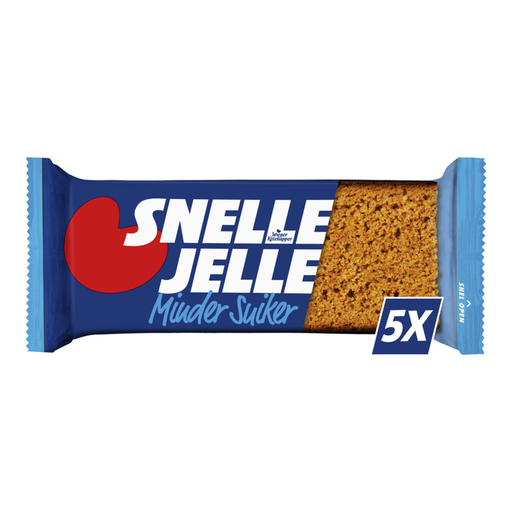
Snelle Jelle Breakfast Cake Less Sugar-Free, 250 g

Snelle Jelle Breakfast Cake Less Sugar-Free, 250 g

An option to consider if you want to set aside a portion of breakfast cake-style snack for the film in advance. The pack states 250 g; the words ‘Sugar-Free’ in the product name do not prove that its contents are sugar-free. Check the label for total sugars per 100 g and the ingredients if you want to avoid added sugars. Also check the allergen information for rye, nuts and milk.

View on Joybuy

Frequently asked questions

Is breakfast cake with ‘zero’ in the name automatically sugar-free?

No. Under European rules on nutrition claims, the limit for ‘sugar-free’ is no more than 0.5 g of sugars per 100 g; Albert Heijn states that AH Ontbijtkoek zero contains 4.9 g of sugars per 100 g. So always check the nutrition table for the product you choose.

Can breakfast cake with no added sugars still contain sugar?

Yes, it can. For its plain variant with no added sugars, Peijnenburg states 4.9 g of sugars per 100 g and explains that sugars can occur naturally in rye. So ‘no added sugars’ does not mean the total sugar content is zero.

Why do some products carry a warning about a laxative effect?

Some of the products reviewed contain polyols, such as xylitol, and carry a warning that excessive consumption may have a laxative effect. If you want to take more than one portion, check the ingredients, portion size and warning on the pack.

Is zero breakfast cake gluten-free?

Not just because it is labelled ‘zero’. The AH zero products reviewed contain rye and therefore gluten. Check the allergen information and any warnings about traces for each specific variant.

Does breakfast cake always contain iodine from baker’s salt?

No, you can’t assume that for every breakfast cake. The Netherlands Food and Consumer Product Safety Authority says that iodine compounds may be present in bakery products through baker’s salt; this does not mean that every product contains this salt. Check the label of your chosen breakfast cake or ask the manufacturer.
