Who is this choice relevant to?

If you want to serve breakfast cake as a treat

An unsliced cake lets you cut your own portions, while varieties with ingredients such as nuts, raisins or ginger add a different flavour to breakfast or a coffee break. Check the ingredients of your chosen variety if you’re serving it to someone else.

If you care about ingredients and origin

If organic or wholemeal matters to you, look for that specific claim on the packaging. Also compare the grains and nutritional information for the exact breakfast cake you’re considering.

If you need to check for allergens

The product name alone isn’t enough to assess a variety. For example, a Jumbo plain variety lists rye, wheat and gluten; check the allergen information and any warnings on the packaging you buy.

What should you look for when choosing?

Start by deciding what would make your Valentine’s Day occasion special: the flavour and presentation, a particular origin, the ingredients or a suitable size. Then compare only the varieties that meet your main requirement.

What to consider What should you check? Who is it important to?
Flavour and presentation Check the flavour variety and whether you can slice the cake yourself or would prefer portions that are already cut. If I’m having breakfast with someone, I want to choose a distinctive flavour or arrange the slices myself. Around 40% of consumers put this festive touch first.
Origin and type of grain Check for an organic claim if that matters to you, and see which grains are used in the exact variety. I’d rather choose based on a clear origin or grain base than a festive product name. Around 30% of consumers prioritise this choice of ingredients.
Nutritional information and allergens Compare sugars and fibre per 100 g and, where stated, per portion; also read the allergen information. When the ingredients determine what I can serve, I want to be able to check the label for the exact cake. For around 20% of consumers, this is their main concern.
Size and leftovers Compare the pack size and number of portions, and check how to store the cake after opening. For breakfast for two, I want a size that lets me use any leftover cake. Around 10% of consumers put choosing a suitable size first.

Common mistakes

  • Assuming ‘premium’ is a consistent measure of quality

    A name such as ‘luxury’ or ‘richly filled’ doesn’t automatically tell you anything about organic origin, sugars, fibre or allergens.

    Choose the feature that matters for your breakfast, then compare the ingredients and nutritional information of the exact varieties.

  • Trying to work out allergens from the product name

    Breakfast cake can contain different grains. For example, Jumbo Ontbijtkoek Naturel 6 Stuks lists rye, wheat and gluten; that doesn’t tell you which allergens another variety contains.

    Read the allergen information and any warnings on the current packaging of the product you want to serve.

  • Assuming a claim applies to every variety

    A claim about ingredients applies to the product it appears on. PLUS also notes that product information may change.

    Check the product name and label again if you switch to a different pack or variety.

  • Assuming ‘breakfast cake’ means it contains iodine

    The category name doesn’t tell you what type of salt has been used in a particular cake.

    If this information matters to you, check the packaging or ask the manufacturer about the specific variety.

Comparing brands and supermarket own-labels

Peijnenburg

Peijnenburg offers plain breakfast cake as well as varieties with ingredients including nuts, raisins, ginger and pearl sugar.

  • The different flavours let you choose a familiar breakfast cake with a distinctive twist.
  • Check the ingredients and allergens for each variety; the brand name alone doesn’t tell you enough.

Jumbo

Jumbo lists both plain breakfast cake and an organic variety made with rye and spelt flour.

  • For its organic variety, Jumbo lists NL-BIO-01 and EU/non-EU agriculture.
  • Organic doesn’t replace an allergen check: the separate Jumbo plain variety lists rye, wheat and gluten.

Albert Heijn

Albert Heijn lists AH Biologisch Ontbijtkoek plain, unsliced, alongside Peijnenburg varieties with nuts and raisins.

  • You can compare a plain organic option with a range of flavoured varieties.
  • Check the ingredients and allergens on the packaging of the variety you choose.

PLUS

PLUS lists its own unsliced plain breakfast cake as well as Peijnenburg varieties.

  • An unsliced plain cake gives you the freedom to choose your own portions.
  • PLUS warns that ingredients and origin, among other details, may change, so check the current packaging.

KOEK&BAKKER

ALDI lists a richly filled luxury breakfast cake and a sliced wholemeal breakfast cake under this label.

  • The two varieties let you choose between a generously filled option and a cake specifically labelled wholemeal.
  • For the variety you choose, compare the ingredients, nutritional information and allergens on the packaging.

Breakfast cake on Joybuy

This sliced wholemeal breakfast cake is an option if the grain base matters more to you than a distinctive flavour for Valentine’s Day.
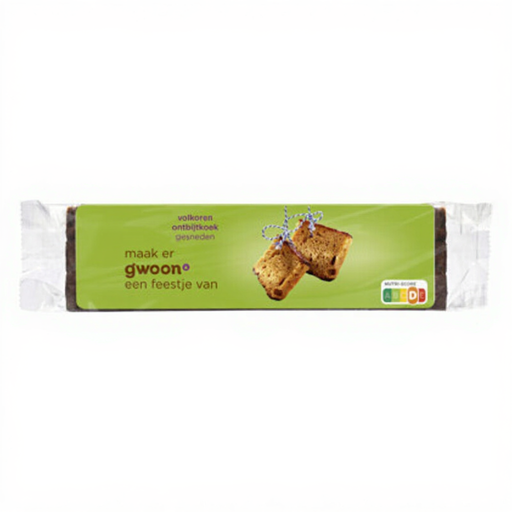
g'woon sliced wholemeal breakfast cake, 485 g

g'woon sliced wholemeal breakfast cake, 485 g

Suited to anyone who wants a sliced cake with a wholemeal base and doesn’t want to cut the slices themselves.

The product information lists 43% wholemeal rye flour. Compare the nutritional information and allergens on the packaging if they’re relevant to your choice.

View on Joybuy

Frequently asked questions

What does ‘premium’ mean for breakfast cake on Valentine’s Day?

Don’t use ‘premium’ as a substitute for specific product information. Decide whether you’re mainly looking for a particular flavour, an organic claim, a wholemeal base or a certain presentation, then check the exact packaging.

Which breakfast cake can I cut into portions for two?

An unsliced breakfast cake lets you decide how thick to cut the slices. If you’d prefer portions that are already divided, look for a sliced or individually wrapped variety and compare the pack size with how much you want to serve.

Should I check for gluten and other allergens in breakfast cake?

Yes. Check the exact variety: breakfast cake may contain rye and wheat, for example. The Netherlands Food and Consumer Product Safety Authority states that allergens must be clearly listed on the label; also read any warnings on the current packaging.

Does less sugar also mean more fibre?

No. A claim about sugars doesn’t, by itself, tell you how much fibre a product contains. Compare both values in the nutritional information per 100 g and, if listed, per portion for the specific breakfast cake.

Can I tell from the name whether breakfast cake contains iodised baker’s salt?

No. The name ‘breakfast cake’ doesn’t tell you what type of salt has been used in a particular variety. Check the packaging or ask the manufacturer about the product you want to buy.
