
Smaller households looking to minimise leftovers
If only a few people will be eating, the pack weight matters more than the term ‘half loaf’. Jumbo lists 280 g loaves; compare these with the number of portions you want to serve.


For a small Halloween party, a 280–300 g breakfast cake is a practical choice if you want to minimise leftovers; Jumbo lists loaves in these sizes. If you’re expecting more guests or would like to keep some for later, a larger 485–550 g pack may be a better fit. Work out how many portions you need and whether you want to slice it yourself, and check the current packaging if you have specific dietary or allergen requirements.
If only a few people will be eating, the pack weight matters more than the term ‘half loaf’. Jumbo lists 280 g loaves; compare these with the number of portions you want to serve.
For a party table, pre-sliced breakfast cake or individually wrapped portions may be more convenient than an unsliced loaf. Check the total pack contents too: easy serving doesn’t automatically mean fewer leftovers.
If you’re keeping an eye on sugars, fibre or allergens, check the nutritional information and ingredients for the variant you choose. A gluten-free label doesn’t mean a product is free from other allergens.
Start with the number of guests and the portions you want to serve. Then compare pack weight and whether it’s sliced; nutritional information and allergens may further narrow down your choice of variant.
| What to consider | What to check when buying | Who it matters to |
|---|---|---|
| Size and leftovers | Compare the weight with the number of portions you want. Jumbo lists breakfast cake loaves weighing 280 g and 300 g; weight alone doesn’t tell you how many slices you can serve. | When I’m hosting a small group, I don’t want to open much more cake than we’ll eat. An estimated 40% of consumers prioritise minimising leftovers. |
| Quick serving | Check whether the cake is sliced, unsliced or individually wrapped, and how many portions the pack contains. | If guests are helping themselves from the table, I want to be able to put out portions without slicing the cake first. An estimated 30% of consumers say ease of serving is their main reason. |
| Nutritional information | Compare sugars and fibre per 100 g and per portion on the current packaging; don’t assess a label such as ‘zero’ or ‘wholemeal’ without considering the full nutritional information. | When choosing between variants, I want to know what one portion contains and how the nutritional values compare. An estimated 20% of consumers prioritise this comparison. |
| Allergens | Check the product-specific labels and the full ‘contains’ and ‘may contain’ statements. For its 300 g gluten-free breakfast cake, Jumbo lists milk and lupin among the allergens. | If a guest needs to avoid an allergen, I want to check the exact packaging before serving anything. This is a deciding factor for an estimated 10% of consumers. |
The term alone tells you nothing about the weight or number of slices. An unsliced loaf, pre-sliced breakfast cake and individually wrapped portions can all contain very different amounts.
Make a note of how many people you’re serving, then compare the weight, portions and slicing information on the pack. The 280–300 g loaves listed by Jumbo are a starting point for a small group, not a standard definition of ‘half loaf’.
A label such as ‘zero’ or ‘wholemeal’ doesn’t tell you how much sugar and fibre are in the portion you’ve chosen. The Netherlands Nutrition Centre recommends checking the label for information about the product’s composition.
Compare the nutritional information per 100 g and per portion, and check the ingredients list too.
According to Jumbo, its 300 g Jumbo Lekker Vrij van Gluten Ongesneden Ontbijtkoek contains milk and lupin. Jumbo also lists ingredients that the product may contain, including various nuts, egg and sesame.
Ask which allergens are relevant to your guests, and check both the ‘contains’ and ‘may contain’ statements on the current packaging before serving.
The Netherlands Nutrition Centre says that baker’s salt isn’t even compulsory in bread. That doesn’t mean a particular breakfast cake is made with iodised baker’s salt.
If you want to know whether a specific breakfast cake contains it, check the ingredients on the packaging.
The main differences between products from these brands are pack weight and how they’re served. So check the variant you’re considering rather than relying on the brand name alone.
Albert Heijn and PLUS list Peijnenburg breakfast cake in various formats, including sliced loaves and individually wrapped portions.
Jumbo lists plain and wholemeal breakfast cake weighing 280 g, as well as an unsliced gluten-free variant weighing 300 g.
Albert Heijn lists its own-brand breakfast cake and Peijnenburg variants, including sliced breakfast cake.
PLUS lists its own-brand breakfast cake in sliced and unsliced formats, as well as bars and Peijnenburg products.
ALDI lists Koek & Bakker Gesneden Ontbijtkoek Zero, weighing 485 g.
Lidl lists breakfast cake zero weighing 485 g.
This option is a larger, pre-sliced breakfast cake for anyone serving several guests or deliberately keeping leftovers. For a small group, it’s still worth comparing the number of portions you want with the pack contents.
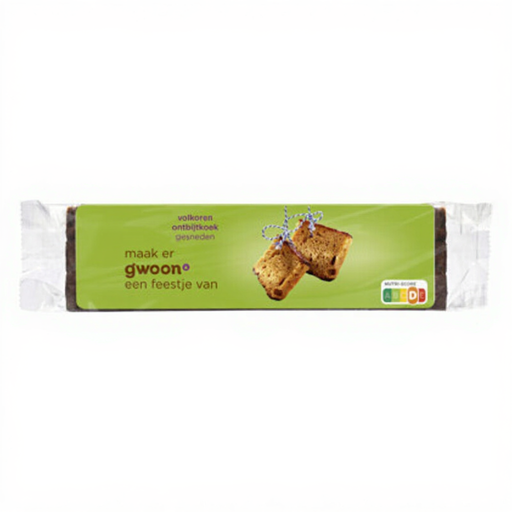 Image unavailable
The pre-sliced format is handy for a party table where you want to serve slices straight away; at 485 g, this is a larger pack than the 280–300 g loaves.
Joybuy’s product information states that it contains 43% wholemeal rye flour. Check the number of slices, nutritional information and allergens on the current packaging.
No, don’t choose based on that term alone. Compare the weight, whether it’s sliced and the number of portions: Jumbo, for example, lists loaves weighing 280 g and 300 g, while Albert Heijn also lists a sliced Peijnenburg variant weighing 345 g.
No. According to Jumbo, its 300 g Jumbo Lekker Vrij van Gluten Ongesneden Ontbijtkoek contains milk and lupin, and may contain nuts, egg and sesame, among other ingredients. Read the full allergen information on the packaging before serving the cake.
You can’t assume this is the case for a particular breakfast cake. The Netherlands Nutrition Centre says baker’s salt isn’t compulsory in bread; for breakfast cake, check the ingredients on the packaging rather than assuming it has the same properties as bread.
Follow the storage instructions on the packaging you’ve chosen. For g'woon breakfast cake in a pack of 6, Joybuy recommends storing it in a cool, dry place away from sunlight, heat and moisture, and keeping the pack tightly closed after opening. This advice doesn’t automatically apply to every other variant.