
Small households with fewer occasions to enjoy it
If you only eat a little breakfast cake after a coffee, a 265–280 g sliced pack may suit you better than a larger loaf. Compare the net weight with the amount you actually plan to serve.


For a small coffee break, a sliced 265–280 g breakfast cake is a good starting point if you don’t want to open a large loaf. Individually wrapped slices are a better fit if you’d like to spread portions over several occasions. Choose a larger loaf if you expect to finish it within the storage period stated on the packaging, and check the ingredients and nutritional information for the exact variant, whatever the size.
If you only eat a little breakfast cake after a coffee, a 265–280 g sliced pack may suit you better than a larger loaf. Compare the net weight with the amount you actually plan to serve.
If you enjoy coffee on different days, you could consider individually wrapped slices. Peijnenburg lists ten individually wrapped 28 g slices in its 10-pack of original breakfast cake.
If you’re looking for a particular recipe, the label on the variant you choose is more useful than the pack size alone. Compare the ingredients, fibre and sugars per 100 g, and read the allergen information.
Choose a size based on how much breakfast cake you’ll eat during each coffee break and how soon you expect to finish the rest. A smaller loaf means less product to open at once; individual portions let you open one pack at a time.
Choose this when: You want to serve a few slices and a loaf of around 265–280 g suits your planned coffee breaks.
Consider: Once opened, the remaining slices stay together in the same pack.
Choose this when: You want to take one slice per guest or coffee break and keep the other portions sealed.
Consider: Check that the weight per slice and individual wrapping suit the way you’ll use them.
Choose this when: Several guests or members of your household will finish the breakfast cake within the storage period stated on the packaging.
Consider: If you’re serving a small group, you may have more opened product left after coffee.
| What to consider | What to check when buying | Who it matters to |
|---|---|---|
| Leftovers once opened | Compare the net weight with how much you expect to use over one or a few coffee breaks. | If I’m having coffee with just a few people, I don’t want much opened cake left afterwards. For around 50% of consumers, keeping leftovers to a minimum matters most. |
| Ingredients and nutritional profile | Read the ingredients, allergen information and nutritional values per 100 g on the exact pack. | The right size isn’t enough for me if I also want to check whether it’s wholegrain, how much sugar it contains or what ingredients it uses. For around 30% of consumers, the ingredients and nutritional profile come first. |
| Serving portions | Check whether the cake is sliced or individually wrapped, and how much each slice weighs. | I want to serve slices easily to a small group, or open one portion at a time on different days. For around 20% of consumers, this convenience is the top priority. |
Peijnenburg describes one specific variant as 100% wholegrain and with no added sugars. Those claims don’t automatically apply to another breakfast cake or individually wrapped portions.
For the pack you choose, read the ingredients list, allergen information and nutritional information.
According to the Netherlands Nutrition Centre, bakers aren’t required to use baker’s salt. So you can’t tell from the product category alone whether a particular breakfast cake contains iodine.
When choosing based on ingredients, check the information on the exact pack rather than relying on a general assumption about baker’s salt.
Peijnenburg offers several breakfast cake variants, including a 265 g sliced pack and individually wrapped 28 g original slices.
Jumbo lists own-brand breakfast cake in 280 g packs, including original and wholegrain varieties.
Albert Heijn lists sliced original and wholegrain breakfast cake in 485 g packs under its own brand.
This 250 g pack is one option to compare with smaller breakfast cake sizes for a small coffee break. Before you choose, check the portion size you want and the information on the pack.
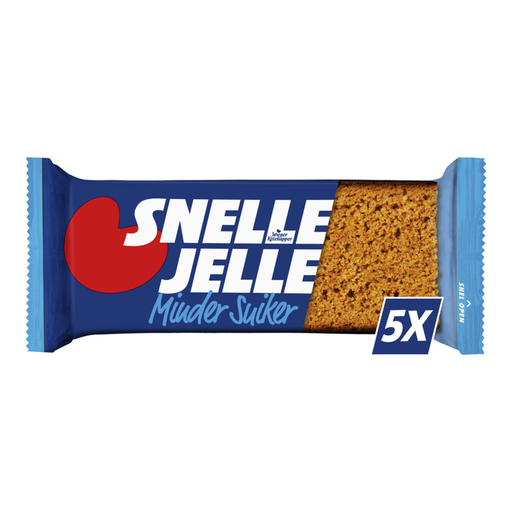 Image unavailable
The 250 g net weight is worth considering if you don’t want to open a large loaf for a small coffee break. For this variant, check the portion size, ingredients and nutritional information on the pack. Don’t rely on the product name alone to tell you what it contains.
Don’t use this term as a measure when choosing breakfast cake. Compare the net weight and number of slices instead: Jumbo, for example, lists a 280 g loaf, while a sliced Peijnenburg variant weighs 265 g.
No, you can’t assume that’s the case for every breakfast cake. The Netherlands Nutrition Centre says bakers aren’t required to use baker’s salt, so check the information for the specific pack to find out what it contains.
Not necessarily: these are separate product claims. Peijnenburg describes one specific variant as both 100% wholegrain and with no added sugars, but check both claims again for any other variant.
No, you can’t use those findings to determine the acrylamide content of any pack mentioned here. In 2025, the Netherlands Food and Consumer Product Safety Authority reported on breakfast cake and gingerbread products labelled as artisan, not on product-specific testing of these options.