Choose a compact loaf of around 265–285 g if you have a slice of breakfast cake at home now and then and don’t want to open too much at once. Individual portions are more convenient to take with you, while a larger loaf may suit a household where several people eat it. Also compare the number of slices, storage instructions and ingredients: a small pack doesn’t, by itself, tell you anything about sugars or allergens.
Which pack is best for you?
Small households looking to reduce leftovers
If you only eat a few slices a week, it’s worth comparing a compact pack of around 265–285 g. As well as the net weight, check the number of slices and the storage instructions to make sure the pack suits how you’ll use it.
Shoppers comparing nutritional information
If you choose breakfast cake based on sugars, fibre or ingredients, the nutritional information per 100 g and per portion is more useful than the pack size alone. For varieties labelled ‘no added sugars’, check which sweeteners they contain too.
Shoppers who take breakfast cake with them
For work or when you’re out and about, an individual portion may be more convenient than a loaf you need to slice first. Check how many pieces are in the pack and whether they’re individually wrapped.
What should you look for when choosing?
First, think about how much breakfast cake you eat at home and whether you want to take it with you. Then compare the nutritional information and ingredients on packs that suit the way you’ll use it.
| What to consider |
What to check |
Who is it important for? |
| Pack size and leftovers |
Compare the net weight, number of slices and storage instructions after opening. |
If I only eat a few slices a week at home, I don’t want to open more than I’ll use. That’s why around 50% of shoppers prioritise a small pack. |
| Sugars, fibre and ingredients |
Read the nutritional information per 100 g and per portion; if the product contains sweeteners, check the ingredients and any warnings too. |
When choosing between varieties, I want to know what’s in a slice rather than rely on the front of the pack. For around 30% of shoppers, that comparison is the deciding factor. |
| Taking it with you and portion sizes |
Check the number of pieces, the weight per piece and whether portions are individually wrapped. |
When I’m out and about, I want to be able to grab a portion without taking or slicing a whole loaf. That convenience is a priority for around 20% of shoppers. |
Common mistakes
-
Not all small packs have the same ingredients
The compact 280 g Jumbo Wholemeal Breakfast Cake lists 35.5 g of sugars per 100 g. According to the product information, the 265 g Peijnenburg variety labelled ‘no added sugars’ contains xylitol and 23 g of polyols per 100 g.
Compare the nutritional information per 100 g and per slice, and check the ingredients and any warnings for the variety you choose.
-
Gluten-free doesn’t mean free from all allergens
According to the product information, the 285 g Peijnenburg Gluten-Free Breakfast Cake lists lupin and milk as allergens.
If either of these ingredients is a concern for you, check the allergen information on the specific pack.
Brands to consider
Peijnenburg
Peijnenburg offers, among other products, a compact 265 g sliced breakfast cake and a 285 g gluten-free variety.
- According to Jumbo’s product information, the 265 g variety is sliced into nine pieces.
- That variety contains rye and xylitol; the gluten-free variety lists lupin and milk as allergens.
Jumbo
Jumbo offers a 280 g wholemeal breakfast cake as a more compact option for home.
- The product information lists around eleven portions and 8.2 g of fibre per 100 g.
- This variety contains gluten, rye and wheat; check the label if these ingredients are relevant to you.
Albert Heijn
Albert Heijn listed a 280 g sliced wholemeal breakfast cake.
- The net weight gives you a useful point of comparison for a compact pack.
- Albert Heijn marks this variety as discontinued. Check which alternatives are available.
PLUS
PLUS lists own-brand breakfast cake in larger sizes, as well as a 285 g Peijnenburg variety.
- The own-brand sizes listed include a 485 g sliced breakfast cake and a 550 g unsliced breakfast cake.
- The allergen information for the 285 g Peijnenburg variety lists lupin and milk.
Koek & Bakker
ALDI lists sliced Koek & Bakker breakfast cake in 485 g packs.
- The wholemeal variety listed is pre-sliced.
- A 485 g pack is larger than the compact loaves of around 265–285 g, so choose a size that matches how much you’ll use.
Breakfast cake on Joybuy
These products show two ways to buy breakfast cake as a snack: a smaller pack to take portions with you, and a larger, sliced loaf for home. A smaller pack isn’t necessarily half a sliced loaf.
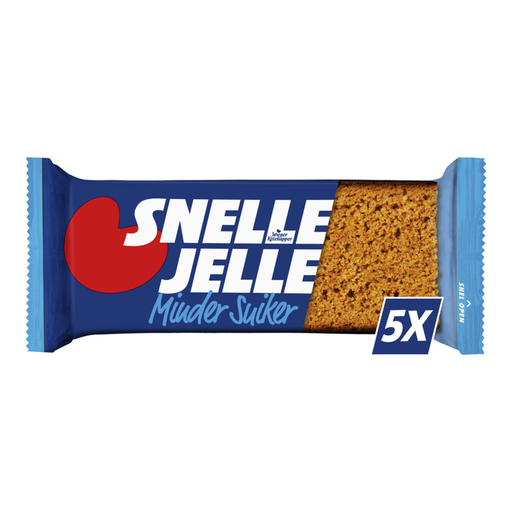 Image unavailable
Snelle Jelle Breakfast Cake Less Sugar-Free 250 g
A handy choice if you want to take breakfast cake with you and prefer individual portions to slicing a loaf. The pack weighs 250 g; it isn’t half a sliced loaf. To compare sugars and fibre, check the nutritional information per 100 g and per portion on the pack.
View on Joybuy
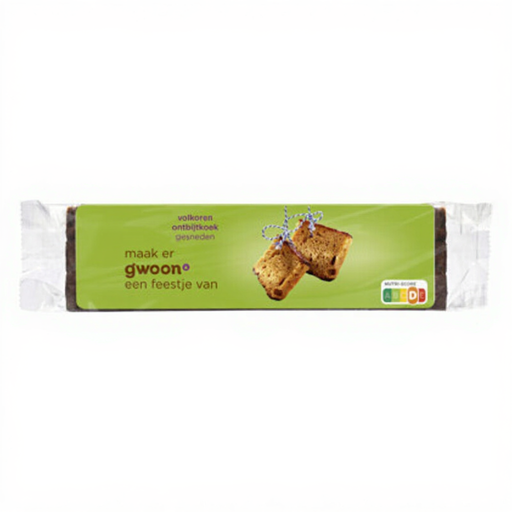 Image unavailable
g'woon wholemeal breakfast cake, sliced, 485 g
A sliced loaf for anyone who eats breakfast cake more often at home or shares a pack with others. At 485 g, it’s larger than a compact loaf of around 265–285 g, so choose it based on how much you expect to use.
View on Joybuy
Frequently asked questions
Does a ‘half loaf’ of breakfast cake have a standard weight?
No. Don’t use ‘half loaf’ as a standard measure when comparing products. The compact products mentioned weigh 265 g, 280 g or 285 g; check the net weight and number of slices on the pack to help you choose.
Does breakfast cake with no added sugars also contain no sweeteners?
Not necessarily: according to the product information, the 265 g Peijnenburg variety with this label contains xylitol and 23 g of polyols per 100 g. Check the ingredients, nutritional information and warnings for the specific product.
Is gluten-free breakfast cake also free from milk and lupin?
Not necessarily. According to the product information, the 285 g Peijnenburg Gluten-Free Breakfast Cake lists both milk and lupin; always check the allergen information on the pack you buy.
How should I store an opened pack of breakfast cake?
Seal the pack tightly after opening and follow the storage instructions on the packaging. The product information consulted recommends storing it in a cool, dark and dry place.
How can I tell whether my breakfast cake contains iodine-enriched baker’s salt?
Check the ingredients list for the specific breakfast cake. Don’t rely solely on the product category or a general reference to baker’s salt to find out what’s in your pack.


