For a school lunchbox, start by choosing a pack whose number of slices and portion size suit your routine. Then compare regular, wholemeal and no-added-sugar options on the label: wholemeal does not automatically mean less sugar, and no-added-sugar varieties may contain polyols. Before packing, check the latest allergen information and any school guidelines.
Who is this choice relevant to?
Parents with a regular lunchbox routine
If you often pack a slice on school days, the number of slices and the portion size can help you choose a suitable pack. For example, Peijnenburg lists 12 slices for its sliced wholemeal variety and 18 for its sliced plain variety; Albert Heijn lists 16 portions for its sliced plain variety.
Shoppers comparing wholemeal options and fibre
You’re looking for clearly identified wholemeal ingredients and checking the fibre per 100 g. Compare sugars separately: according to its own product information, Peijnenburg’s sliced wholemeal variety contains more fibre than its plain variety, but not less sugar.
Shoppers who check ingredients and allergens carefully
If you choose a no-added-sugar option, you’ll also want to know whether it contains polyols. If a child needs to avoid gluten or rye, check the current packaging and any school guidelines before packing it.
What should you look for when choosing?
Start with any allergens that could rule out a product. For the remaining options, compare the pack size, then the ingredients and nutritional values per 100 g.
| What to consider |
What to check when buying |
Who it matters to |
| Slices and portions |
Check the weight, number of slices and portion size; don’t rely on the word ‘medium’ alone. |
On school days, I want to know how many slices I can pack and how large a portion is. For around 31% of consumers, this practical convenience would be the main reason for their choice. |
| Wholemeal and fibre |
Compare the ingredients and fibre per 100 g; check sugars as a separate value. |
I’m looking for wholemeal breakfast cake because of its ingredients, so I compare the fibre content. For around 31% of consumers, wholemeal and fibre would also be the first thing they consider. |
| Added sugars |
Alongside the claim, check the sugars and polyols per 100 g, as well as any warnings. |
If I choose a no-added-sugar variety, I want to know which sweeteners it contains and how much sugar is still in the product. This would be the main consideration for around 23% of consumers. |
| Allergens and school guidelines |
Check the current label for gluten, rye and warnings about possible traces; ask what guidelines apply at school. |
If a child needs to avoid gluten, I wouldn’t look for an option among ordinary rye breakfast cakes. I’d choose a separate product labelled gluten-free instead. For around 15% of consumers, checking allergens would be the deciding factor. |
Common mistakes
-
Assuming wholemeal means less sugar
Peijnenburg lists 5.1 g of fibre and 39 g of sugars per 100 g for its sliced wholemeal variety, compared with 3.1 g of fibre and 38 g of sugars for its sliced plain variety. So, for these two products, the difference in fibre does not mean the one with more fibre has less sugar.
Check fibre, sugars and ingredients separately on the label of the variety you’re buying.
-
Skipping the rest of the label when you see ‘zero’
The no-added-sugar varieties described still contain sugars and use polyols. The products reviewed carry a warning that excessive consumption may have a laxative effect.
Check the nutritional information, ingredients and portion size. If the label lists xylitol, keep the product out of reach of pets; the Peijnenburg variety in question carries this warning.
-
Relying on outdated product information for allergen details
The sliced breakfast cakes described list rye or cereals containing gluten, among other ingredients. Ingredients and warnings about possible traces are especially important when choosing a specific pack for someone with an allergy.
Read the label on the pack you’re actually putting in the lunchbox, and bear in mind the school’s guidelines.
-
Treating ‘medium sliced’ as a standard size
A 345 g sliced breakfast cake with 12 slices and a 550 g pack with 18 slices call for different lunchbox plans, even if you’re looking for a medium-sized pack.
Use the pack weight, number of slices and stated portion size to work out what suits your household.
Brands to consider
Peijnenburg
Peijnenburg lists a 550 g sliced plain variety with 18 slices and a 345 g sliced wholemeal variety with 12 slices.
- The product information makes it possible to compare the number of slices, ingredients and nutritional values of these varieties.
- According to Peijnenburg, the wholemeal variety contains more fibre but not less sugar than the plain variety mentioned. One no-added-sugar variety described contains polyols and carries a warning about excessive consumption.
Jumbo
Jumbo lists its own 475 g sliced breakfast cake.
- The product information gives a specific pack weight to compare with other sliced varieties.
- Jumbo lists gluten, rye and wheat as allergens for this product; check the current packaging when you buy it.
Albert Heijn
Albert Heijn’s sliced plain breakfast cake is a regular 485 g variety, with 16 stated portions of 30 g.
- The stated portion size can help you plan how many school days the pack will cover.
- The product information lists cereals containing gluten and rye. Albert Heijn notes that ingredients and allergen information may change.
PLUS
PLUS lists a 485 g sliced Ontbijtkoek Zero as an option for anyone specifically looking for a product with no added sugars.
- The product information distinguishes added sugars from total sugars and also lists fibre and polyols.
- This variety lists rye and gluten, as well as possible traces of other cereals. No added sugars does not mean no sugars or polyols.
Koek & Bakker
ALDI lists a sliced Zero variety and a sliced wholemeal variety under Koek & Bakker, both weighing 485 g.
- Both varieties described are pre-sliced.
- If you’re choosing based on nutritional values or allergens, check the information on the current packaging.
Sliced breakfast cake at Joybuy
These two products are suitable for packing breakfast cake for school: a 485 g pack of sliced wholemeal cake and a breakfast cake described as a pack of six. Compare the portions and check the allergens on the current packaging for both products.
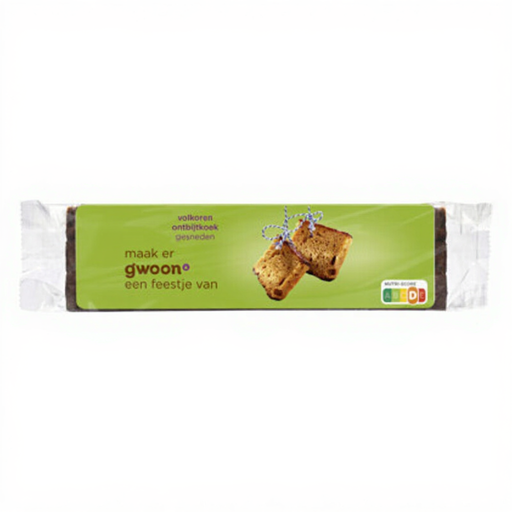 Image unavailable
g'woon sliced wholemeal breakfast cake, 485 g
An option if you’re looking for sliced wholemeal breakfast cake for a school lunchbox. Check the number of slices and portion size on the packaging to work out how much to pack for each school day.
Also check the current allergen label before packing: the available product description gives conflicting information about rye and allergens.
View at Joybuy
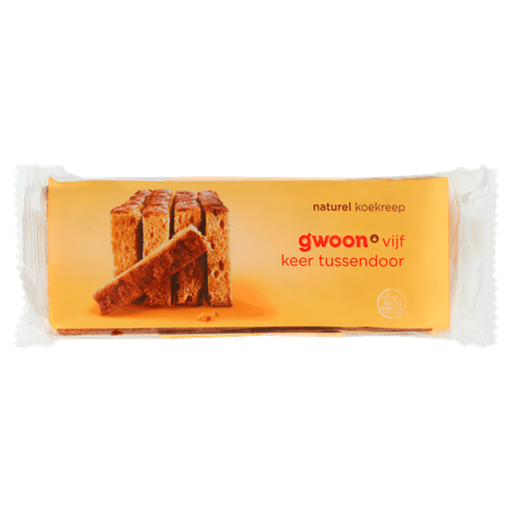 Image unavailable
g'woon breakfast cake, 6 pieces
An option to consider if you want a pack of six for school days. Check the total weight and size of each piece on the pack before comparing it with a medium-sized sliced option.
Read the current allergen information before packing, and bear in mind any school guidelines.
View at Joybuy
Frequently asked questions
Can a child who needs to avoid gluten have regular sliced breakfast cake?
The regular, wholemeal and Zero varieties described here aren’t suitable: their product information lists rye or cereals containing gluten. Instead, check a separate product labelled gluten-free, using the current label and including any warnings about possible traces.
Does breakfast cake with no added sugars contain no sugar at all?
It can still contain sugar: the no-added-sugar varieties from Peijnenburg and PLUS described here each list 4.9 g of sugars per 100 g. They also contain polyols, so read the full nutritional information and the warning about excessive consumption.
How should you store opened breakfast cake between school days?
Follow the storage advice on the packaging of the product you’ve bought. For the plain variety described, Albert Heijn recommends storing it somewhere cool, dark and dry; advice may differ for other varieties.


